Make this page easier to read
Your choices are saved on this device.
Early machines could agitate clothes, while rollers squeezed out water. Museum objects and a 1940 photograph show why operating a wringer washer remained active work.
A wringer washer changed washday without making it effortless. The tub could churn water and clothes while someone watched the load, prepared the rinse, and fed wet pieces through rollers. Sheets came out heavy; fingers had to stay clear. The machine reduced one kind of hand work and created a new rhythm around the tub.
What were the washer and wringer doing separately?
The Smithsonian's history of Maytag machines explains that the agitator churned water while a wringer attachment squeezed excess water from clothing. A 1950–55 Hotpoint wringer attachment in the Science Museum collection shows the rollers as a distinct part of an electric washer. The terms can overlap with a separate laundry mangle, but the machine beside a household tub had a particular layout.
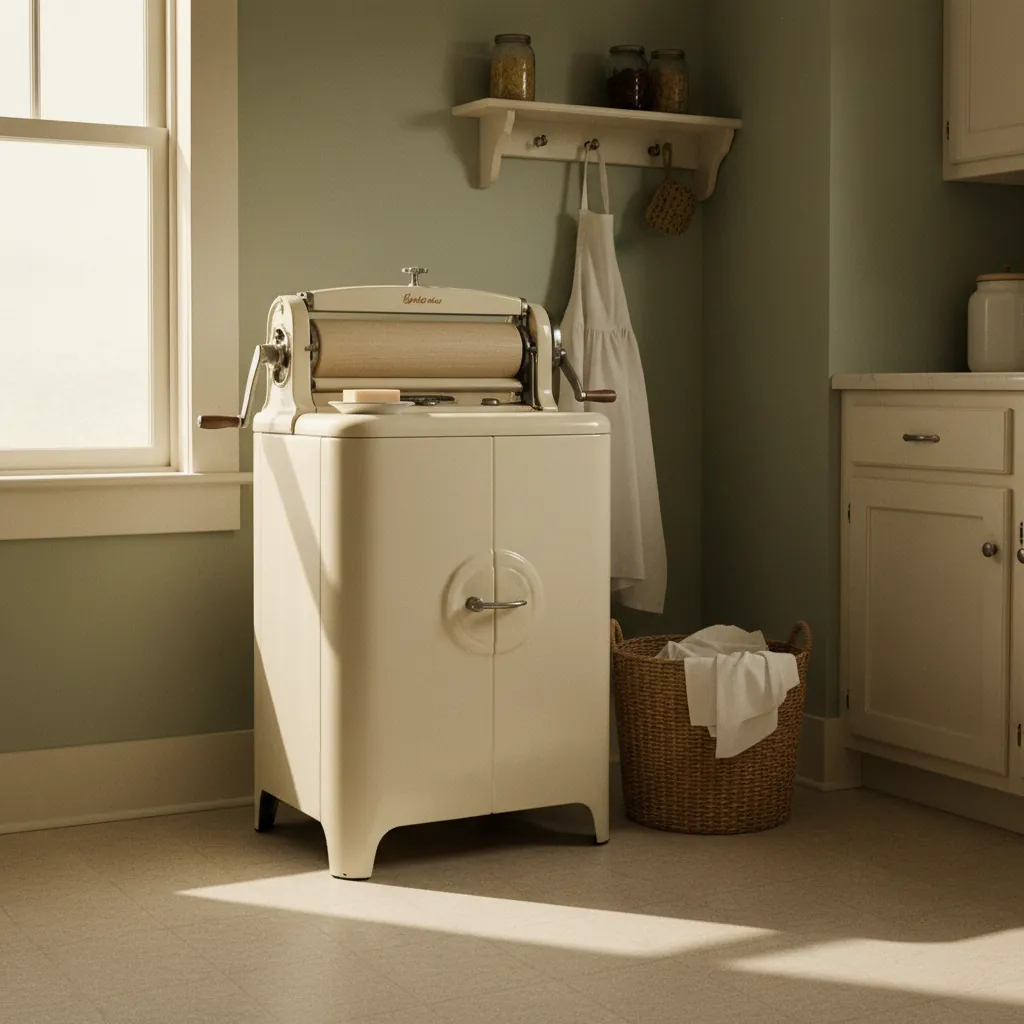 Illustration created for WistMem; not an archival photograph.
The Library of Congress holds a 1940 photograph of a woman using a motor-driven washing machine in Vermont. Another 1942 photograph of Mrs. Babcock in Rochester specifically identifies an electric washer and wringer. These images put a person back in the process: the technology did not lift each garment into its own rinse or onto the line.
Which details identify a family washer?
Ask whether the motor was electric or gasoline-powered, how water reached the tub, and where the rinse basin stood. The Smithsonian notes Maytag offered a gasoline-motor option in 1914 for farms without electricity, a reminder that a model name alone does not describe a home's power supply. A maker's badge, photograph, or manual can narrow the machine; a relative can tell how it changed the household's week.
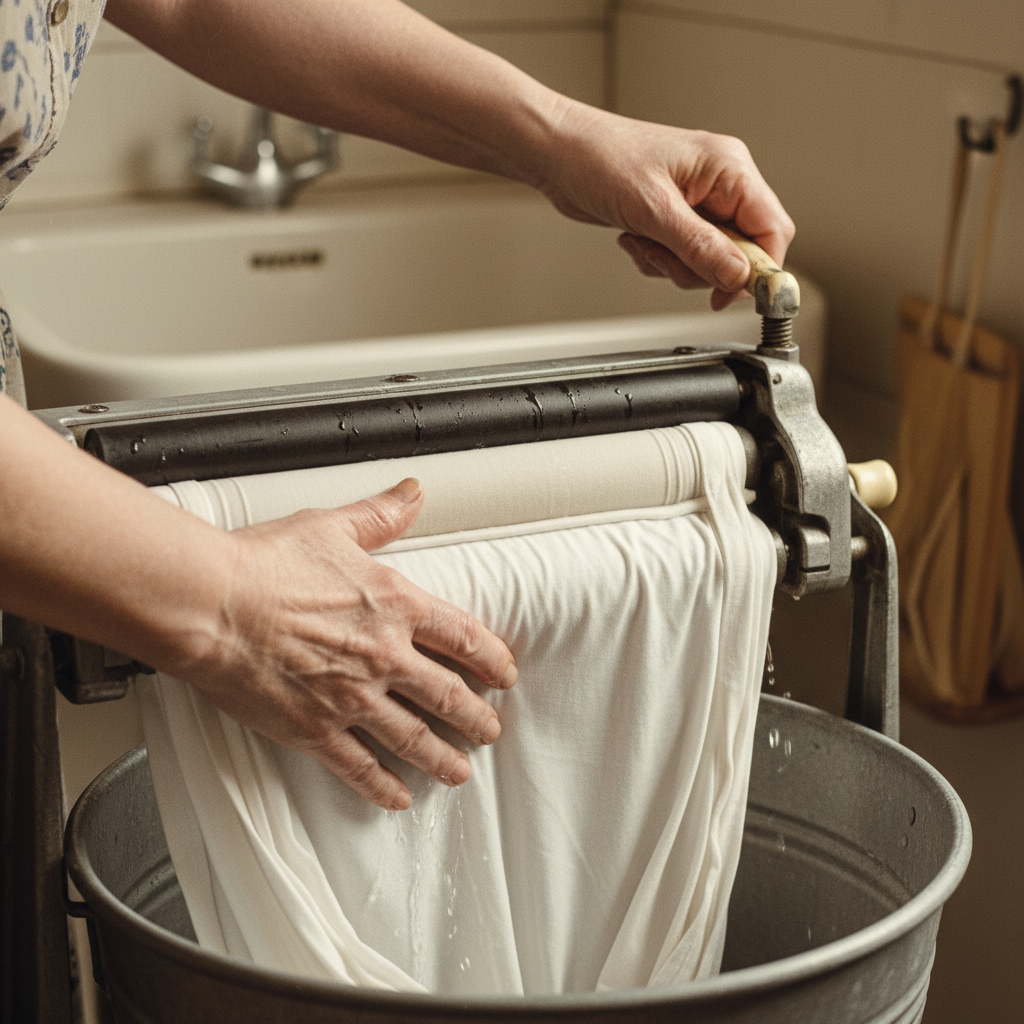 Illustration created for WistMem; not an archival photograph.
An automatic washer later changed the sequence again. The wringer washer belongs to the period between hand-scrubbing an entire load and leaving a machine to complete more stages unattended. For the earlier work, read The Wooden Washboard and Soap Bar.
What does it bring back for you?
Ask someone who remembers, or begin with your own version. A few words can be enough.
What everyday sound or smell brings back a home you remember?
Then ask: Who was there, and what were they doing?
Find more conversation starters Choose what feels comfortable. Ask before recording or sharing someone’s words.Relive the Memory
Find a little of the story.
Something here bring back a memory? Take a look at what you can find today.
Searching for: vintage antique wringer washing machine
Vintage & collectible finds
Look for older objects and collectibles connected to this memory.
Search eBay (opens in a new tab)Related finds on Amazon
Explore items related to the same topic, from familiar styles to things made today.
Search Amazon (opens in a new tab)These links open search results. Items, prices, and availability vary.
Affiliate links. We may earn a commission at no extra cost to you.
As an Amazon Associate I earn from qualifying purchases. As an eBay Partner, WistMem may earn from qualifying purchases.
Does this bring back memories?
Share this story with someone who would remember.