Make this page easier to read
Your choices are saved on this device.
A hand crank drove paired beaters through gears, turning one person's motion into rapid mixing. A surviving 1920s tool makes the mechanism easy to see.
A rotary egg beater makes its own little soundtrack: the whirr of two metal beaters and the soft click of gears. It seems simple because it fits in one hand, but its motion is a clever transfer of effort. One hand steadies the tool; the other turns a wheel that spins the beaters much faster.
What happens when you turn the handle?
The large crank wheel meshes with smaller gears. Those gears rotate the two beaters in the bowl. The National Museum of American History's A&J beater, made between 1923 and 1929, shows the crankwheel, cog wheels, metal beaters, and wooden handle. Its wheel carries a 1923 patent date. If an inherited beater has a similar mark, it can help identify the maker or earliest possible date.
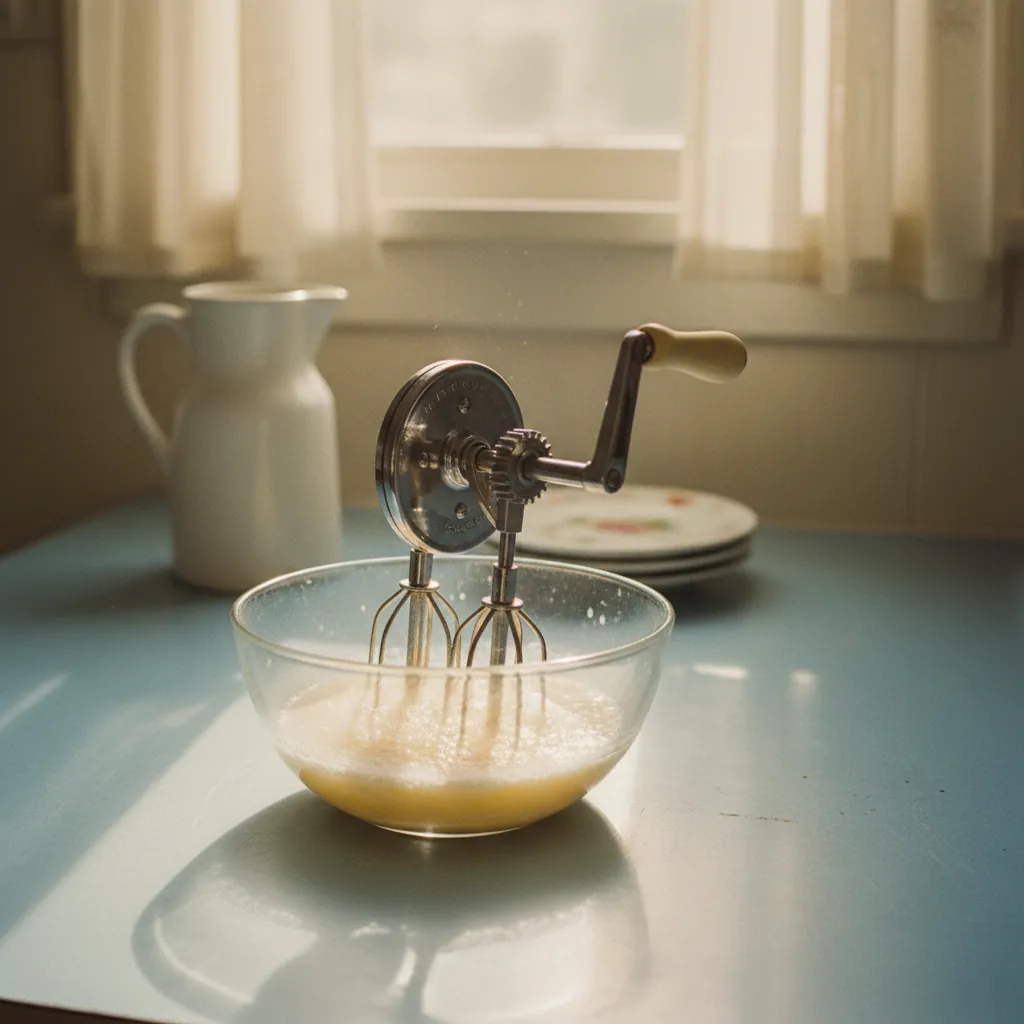 Illustration created for WistMem; not an archival photograph.
The tool multiplied turning motion, but it still required someone to hold the bowl and keep a steady pace. A slippery bowl, a stiff mixture, or a loose gear made the job different from turning a handle in empty air. Ask who held the bowl during baking and whether the beater was reserved for eggs or also used for batter and cream.
Did all hand beaters look alike?
No. The museum's 1908–1915 Ladd model has different markings and metal construction, while a one-hand squeeze mixer used a spring-loaded arm instead of a side crank. These variations make an old beater worth looking at closely rather than labeling every metal mixer the same.
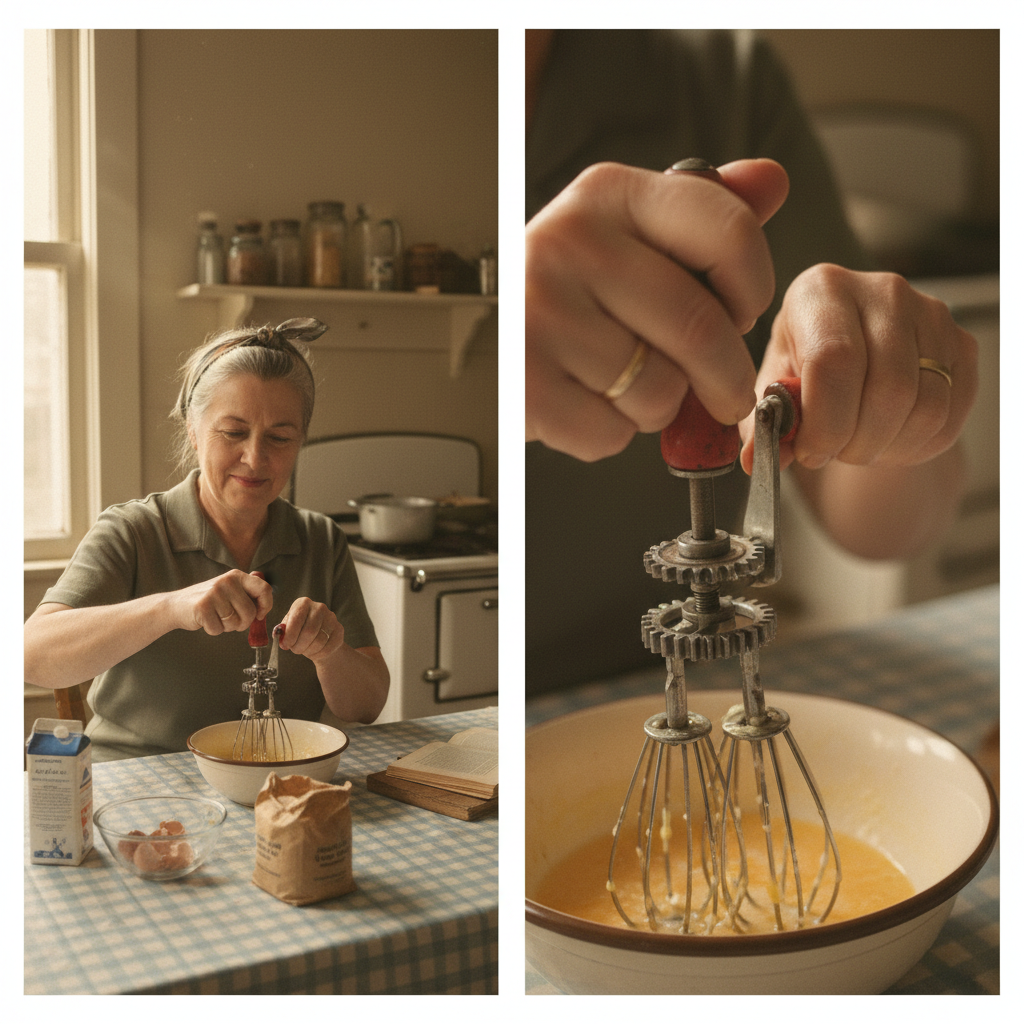 Illustration created for WistMem; not an archival photograph.
The sound may bring back a cake more quickly than the patent date does. Once you know how the tool worked, ask which recipe made someone reach for it. For the dishes and textures the beater helped make, see What a Rotary Beater Mixed.
What does it bring back for you?
Ask someone who remembers, or begin with your own version. A few words can be enough.
What everyday sound or smell brings back a home you remember?
Then ask: Who was there, and what were they doing?
Find more conversation starters Choose what feels comfortable. Ask before recording or sharing someone’s words.Relive the Memory
Find a little of the story.
Something here bring back a memory? Take a look at what you can find today.
Searching for: vintage kitchen rotary egg beater
Vintage & collectible finds
Look for older objects and collectibles connected to this memory.
Search eBay (opens in a new tab)Related finds on Amazon
Explore items related to the same topic, from familiar styles to things made today.
Search Amazon (opens in a new tab)These links open search results. Items, prices, and availability vary.
Affiliate links. We may earn a commission at no extra cost to you.
As an Amazon Associate I earn from qualifying purchases. As an eBay Partner, WistMem may earn from qualifying purchases.
Does this bring back memories?
Share this story with someone who would remember.