Make this page easier to read
Your choices are saved on this device.
An inherited cast-iron skillet carries clues in its maker’s mark, wear, and family recipes. Its care is simpler than many handed-down rules suggest, and soap is not forbidden.
An old skillet is easy to recognize by weight, but weight alone does not reveal whose meals it cooked. A family may remember cornbread, fish, or a particular Sunday breakfast; another may know only that the pan lived on the stove. The difference matters. The object is evidence of use. The names and occasions need a person or record to supply them.
What can the pan itself tell you?
Turn a cool, empty skillet over and look for a cast-in name, size, pattern number, or heat ring. The Smithsonian's catalog of a Griswold skillet records exactly this kind of underside marking. Such marks can help identify a manufacturer or model, but they do not establish which relative owned a particular pan. Photograph the front, handle, and underside before cleaning or restoring an inherited example, and write down the account of whoever passed it along.
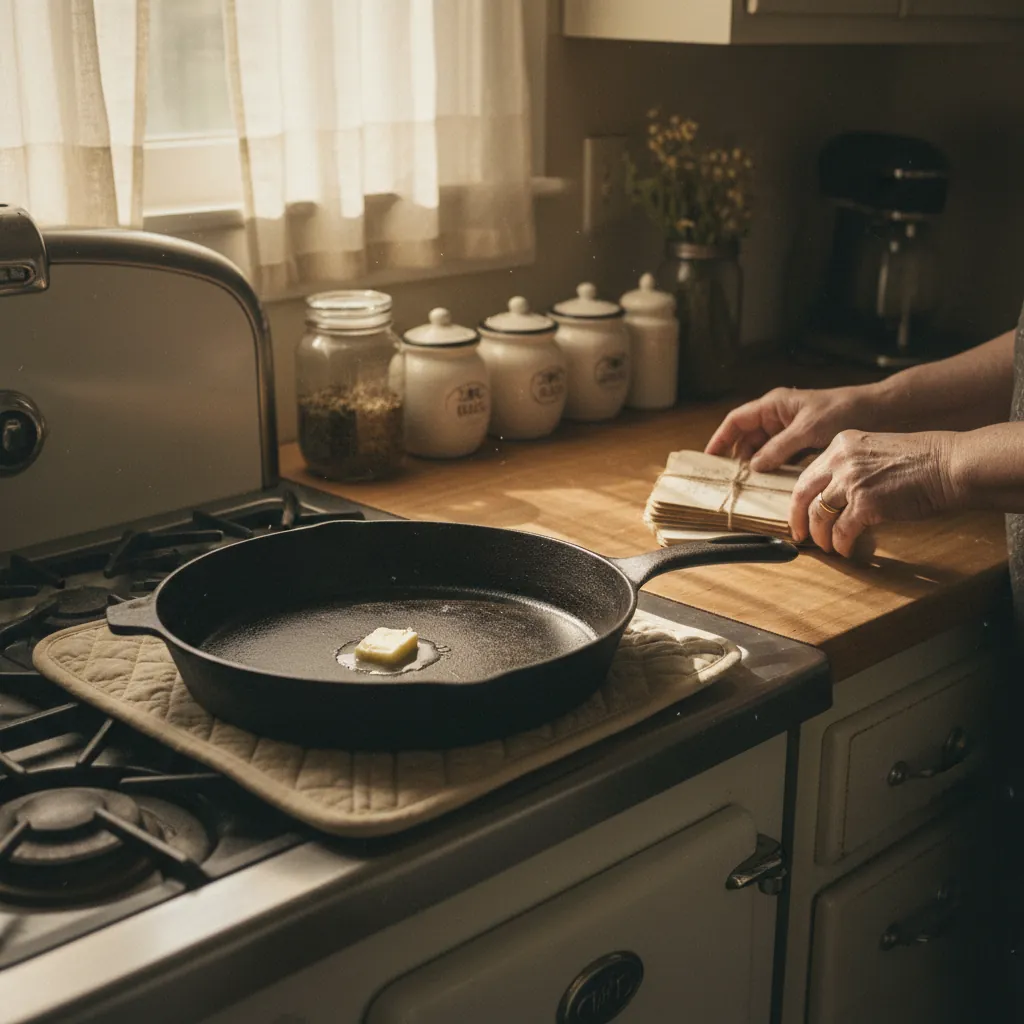 Illustration created for WistMem; not an archival photograph.
The cooking surface tells a different story. Seasoning is a thin layer of oil changed by heat, giving the iron a more protective, easier-release finish. Lodge's explanation of seasoning describes that process. Earlier Lodge pans were sold with a protective wax coating that owners washed off before seasoning at home, according to the company's manufacturing history. A dark surface may have built up over many uses or been restored much later; appearance alone cannot date it.
Was soap really forbidden?
Many families taught a strict “no soap” rule. It was part of their care routine, but it need not be repeated as a universal requirement. Lodge's current cleaning instructions say warm, soapy water is fine, followed by complete drying and a thin coat of oil. Soaking and dishwashers are poor choices because they can promote rust or strip seasoning. A little rust is repairable; Lodge's restoration guide describes removing it and reseasoning the pan.
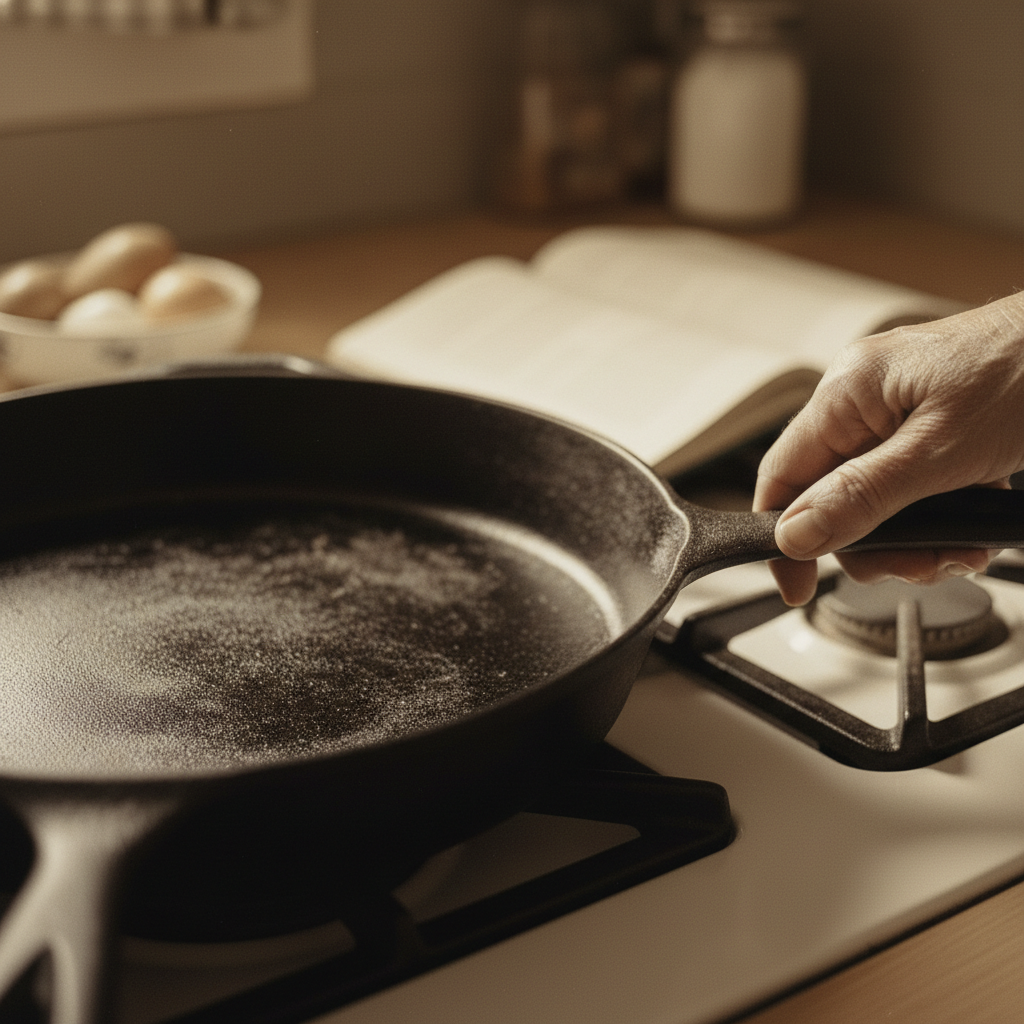 Illustration created for WistMem; not an archival photograph.
What is worth passing on?
Ask what dish the pan was brought out for, who taught the technique, and whether the household rule about washing it changed. Save a photo of the mark and a written version of the recipe with the skillet's history. A pan can survive for generations; its family story still needs someone to tell it.
For the written instructions that often travelled with a family dish, visit The Handwritten Recipe Box.
What does it bring back for you?
Ask someone who remembers, or begin with your own version. A few words can be enough.
What everyday sound or smell brings back a home you remember?
Then ask: Who was there, and what were they doing?
Find more conversation starters Choose what feels comfortable. Ask before recording or sharing someone’s words.Relive the Memory
Find a little of the story.
Something here bring back a memory? Take a look at what you can find today.
Searching for: vintage kitchen cast iron skillet
Vintage & collectible finds
Look for older objects and collectibles connected to this memory.
Search eBay (opens in a new tab)Related finds on Amazon
Explore items related to the same topic, from familiar styles to things made today.
Search Amazon (opens in a new tab)These links open search results. Items, prices, and availability vary.
Affiliate links. We may earn a commission at no extra cost to you.
As an Amazon Associate I earn from qualifying purchases. As an eBay Partner, WistMem may earn from qualifying purchases.
Does this bring back memories?
Share this story with someone who would remember.