Make this page easier to read
Your choices are saved on this device.
A washboard provided a ribbed surface for working soap through cloth. A Smithsonian example and laundry demonstration show the sequence of washing, rinsing, wringing, and drying.
Laundry began with water and sorting, then with the work of rubbing cloth against a ridged board. A bar of soap and a tub could turn a stained collar or a child's sleeve into several minutes of attention. The sound of scrubbing is easy to remember. The effort in a whole load is harder to see in a single picture.
What did the board contribute?
The Smithsonian's washboard made around 1941 has a wooden frame and brass and zinc rubbing surfaces. The museum records its retailer and owners, so it is an identifiable object rather than a generic prop. The ridges helped work soapy water through fabric as someone moved the garment by hand. A board's metal or glass surface, size, and maker varied; look at the family's own board before naming its type.
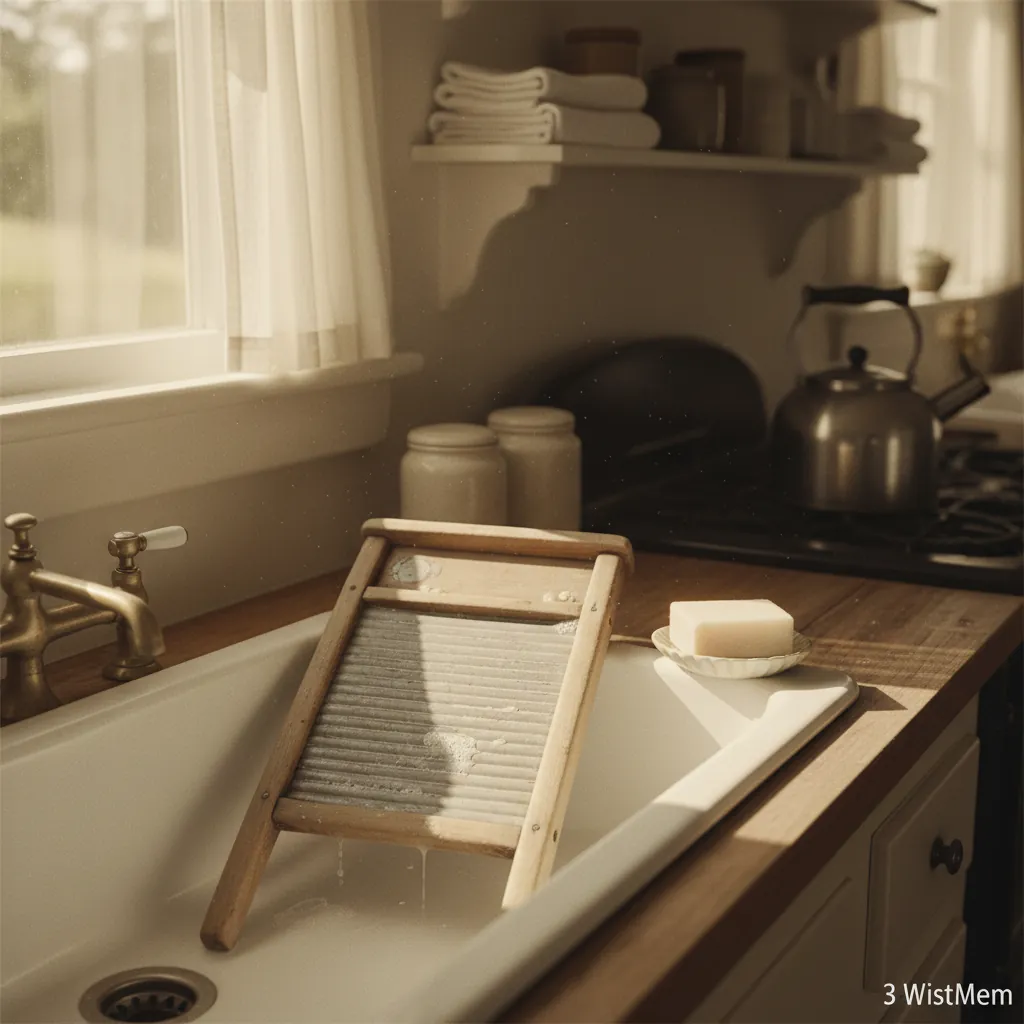 Illustration created for WistMem; not an archival photograph.
A Smithsonian laundry demonstration follows the sequence wash, rinse, wring, and hang to dry. Visitors described memories of laundering in their own lifetimes. That sequence matters because scrubbing was only one stage. Water had to be obtained, refreshed, and carried away; wet cloth had to be squeezed before it could go on the line.
What should you ask about washday?
Ask which garments were done first, what kind of soap was used, and whether the board stood in a kitchen, washhouse, or outside space. Did the same person rinse and hang everything? A relative's answer can reveal the labor divided among household members, or the paid worker whose contribution was overlooked. A photograph of a washboard in the family should be captioned with that person's name if it is known.
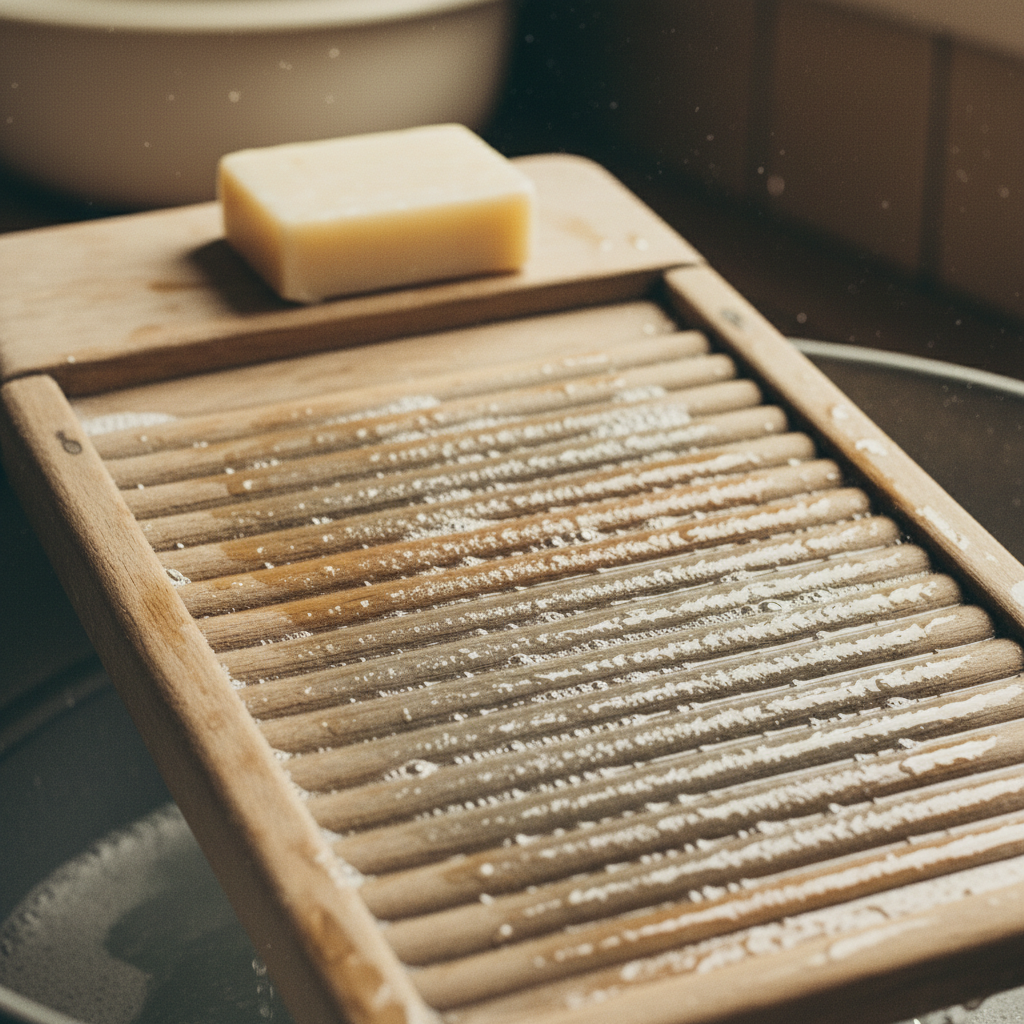 Illustration created for WistMem; not an archival photograph.
The washboard does not have to become a symbol that all older life was harder. It was one tool for a specific task. To see how later machines changed washing while leaving other work to hands, continue to The Wringer Washing Machine.
What does it bring back for you?
Ask someone who remembers, or begin with your own version. A few words can be enough.
What everyday sound or smell brings back a home you remember?
Then ask: Who was there, and what were they doing?
Find more conversation starters Choose what feels comfortable. Ask before recording or sharing someone’s words.Relive the Memory
Find a little of the story.
Something here bring back a memory? Take a look at what you can find today.
Searching for: vintage kitchen wooden washboard soap
Vintage & collectible finds
Look for older objects and collectibles connected to this memory.
Search eBay (opens in a new tab)Related finds on Amazon
Explore items related to the same topic, from familiar styles to things made today.
Search Amazon (opens in a new tab)These links open search results. Items, prices, and availability vary.
Affiliate links. We may earn a commission at no extra cost to you.
As an Amazon Associate I earn from qualifying purchases. As an eBay Partner, WistMem may earn from qualifying purchases.
Does this bring back memories?
Share this story with someone who would remember.