Make this page easier to read
Your choices are saved on this device.
Late-summer canning turned a glut of produce into jars for later meals. The sounds and shared labor are worth remembering; old processing instructions still need checking against current tested guidance.
A row of jars can make an entire season visible at once: fruit picked before it softened, vegetables prepared while they were plentiful, and labels written before anyone knew which winter meal would open them. For some households, canning was a necessary way to use a garden crop. For others it was a chosen annual ritual. Neither experience belongs to every family.
What happened on canning day?
The work began well before a jar met the water or pressure canner. Someone washed and sorted produce, prepared the recipe, checked jars and lids, and cleared a place for hot jars to cool. The kitchen could become crowded, especially when relatives or neighbors divided the tasks. The remembered metallic ping of a cooling lid marks a change in the seal, but it does not by itself prove that the food was processed safely.
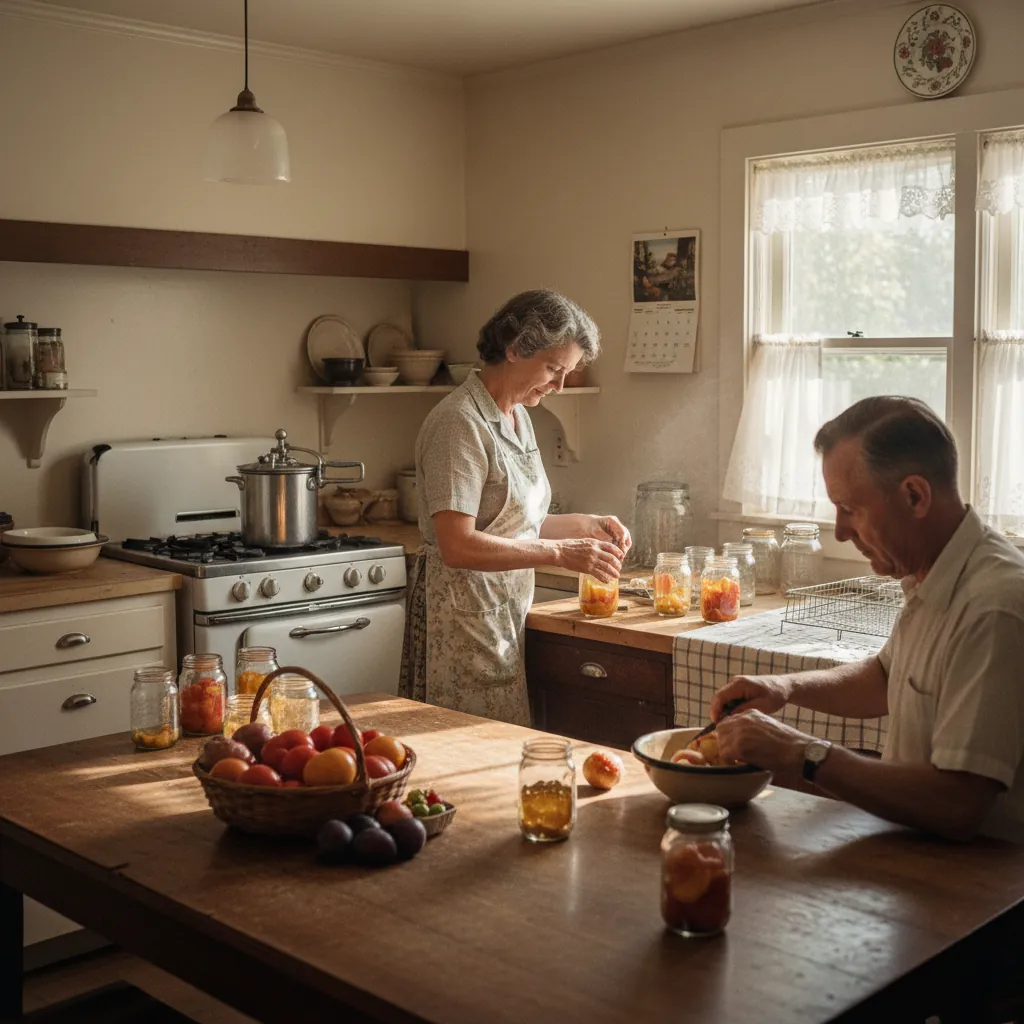 Illustration created for WistMem; not an archival photograph.
The distinction between a boiling-water canner and a pressure canner is more than a preference for one old piece of equipment. The National Center for Home Food Preservation explains that low-acid foods require pressure canning under tested conditions; many acid foods can use a boiling-water process. Its history of USDA canning recommendations shows that guidance changed as research improved. A family card can be a valuable record of what people did without being a current safety instruction.
Reading an old pantry label
A date, a fruit variety, or a name on the lid can open a better question than “Who made this?” Ask who grew or bought the produce, who taught the recipe, and who cleaned the kitchen afterward. One household might remember the peach harvest; another might remember the neighbor who lent the canner. These details make the work specific without assuming every jar was made by a grandmother or every family had a cellar full of supplies.
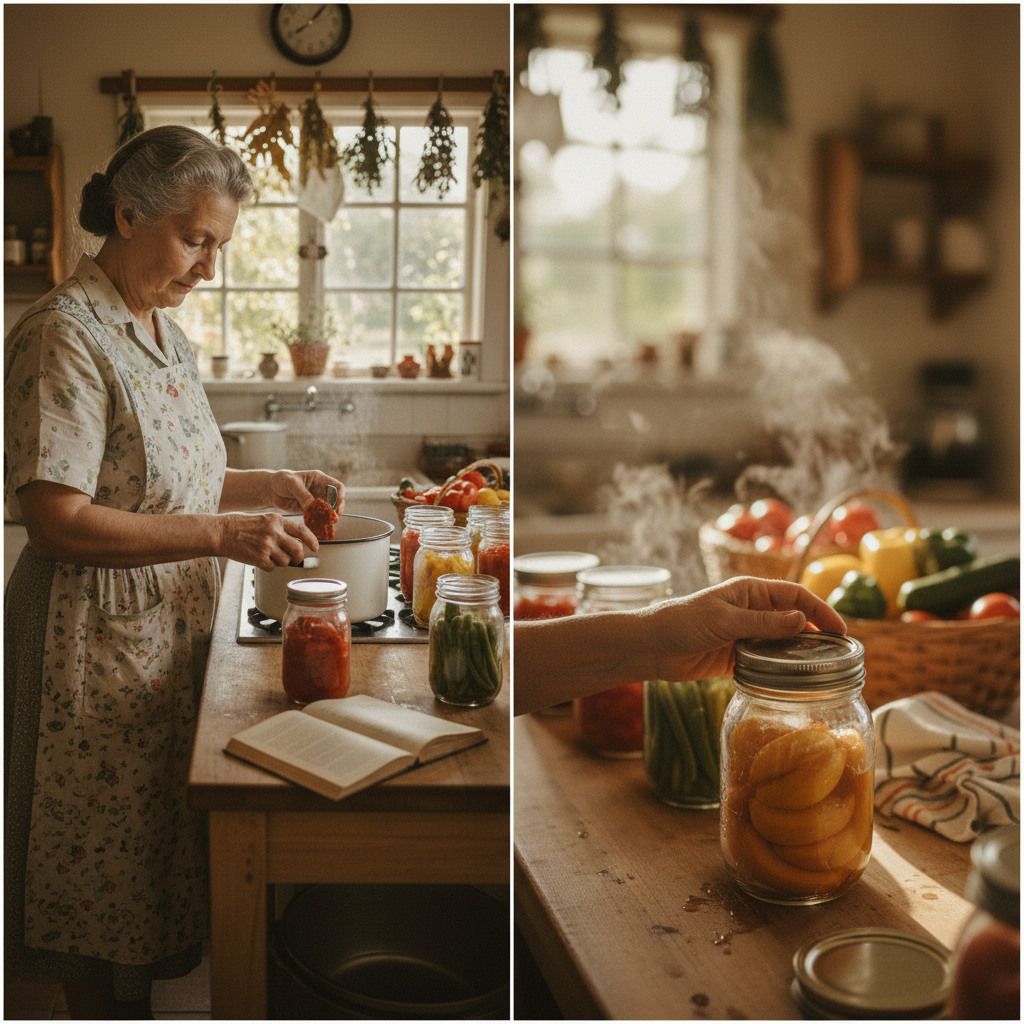 Illustration created for WistMem; not an archival photograph.
If you find old home-canned food, do not treat a seal, a clear liquid, or a pleasing smell as proof that it is safe to eat. The National Center's storage guidance warns that spoiled low-acid food can show little evidence of spoilage and that safe results depend on a current research-tested process. Keep the label or photograph the jar as a record; use a current tested recipe if you want to make the dish again.
Keep the recipe and the memory apart
Copy an old card exactly, then put today's tested procedure on a separate page. Mark uncertain words and record who explained them. That lets a family's version of summer survive without passing along an unverified processing time. The shelf showed the harvest, but the recipe card recorded who did the work.
For another way to preserve those notes, read The Handwritten Recipe Box.
What does it bring back for you?
Ask someone who remembers, or begin with your own version. A few words can be enough.
What everyday sound or smell brings back a home you remember?
Then ask: Who was there, and what were they doing?
Find more conversation starters Choose what feels comfortable. Ask before recording or sharing someone’s words.Relive the Memory
Find a little of the story.
Something here bring back a memory? Take a look at what you can find today.
Searching for: vintage kitchen canning season late
Vintage & collectible finds
Look for older objects and collectibles connected to this memory.
Search eBay (opens in a new tab)Related finds on Amazon
Explore items related to the same topic, from familiar styles to things made today.
Search Amazon (opens in a new tab)These links open search results. Items, prices, and availability vary.
Affiliate links. We may earn a commission at no extra cost to you.
As an Amazon Associate I earn from qualifying purchases. As an eBay Partner, WistMem may earn from qualifying purchases.
Does this bring back memories?
Share this story with someone who would remember.