Make this page easier to read
Your choices are saved on this device.
An egg beater's wheel, handle, and patent mark can identify a specific design. Smithsonian objects show why a late-nineteenth-century tool and a 1920s model should not be treated as one machine.
A metal egg beater tucked into a kitchen drawer may outlast the person who bought it. The hand grip is worn; the wheel still turns; no one remembers whether it belonged to a parent or grandparent. Before assigning it a family date, look at the tool itself. Its construction and markings may give a better starting point.
Which marks are useful?
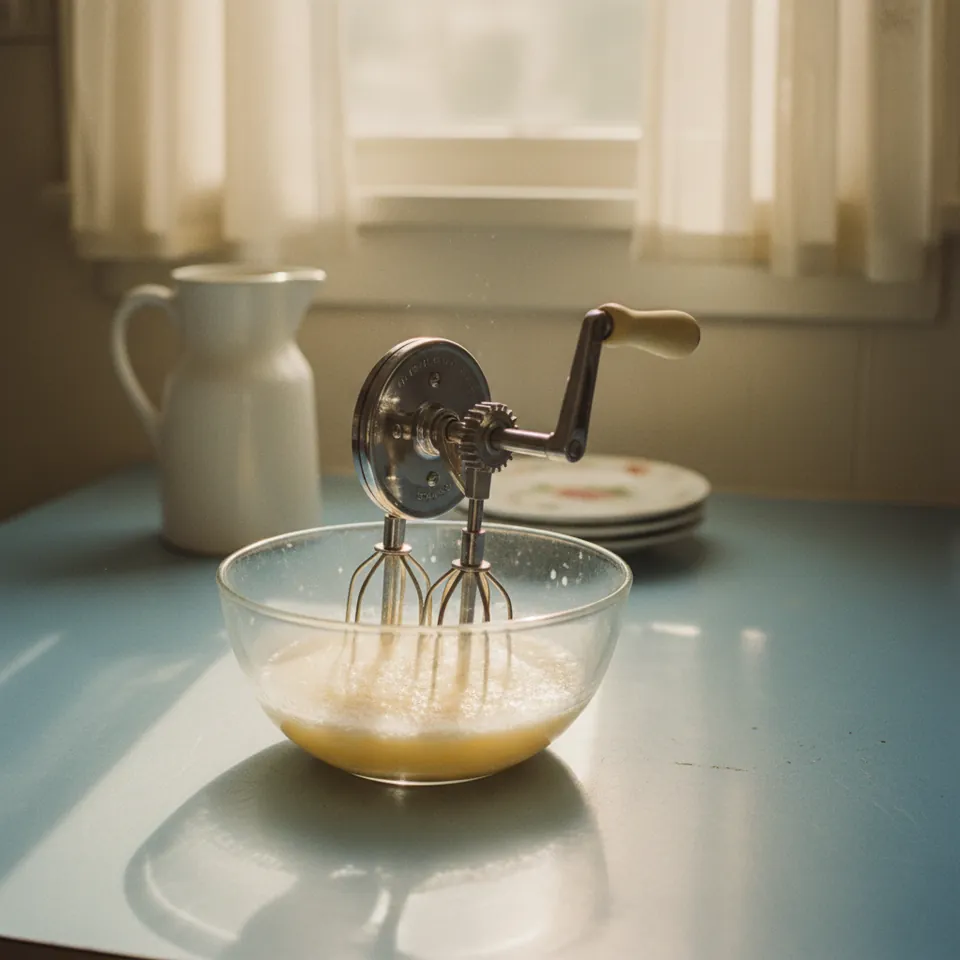
The National Museum of American History's A&J beater has a patent date of October 9, 1923, stamped on its crank wheel. Its record names a maker and a later company acquisition. The museum's Ladd beater carries different patent dates and a different wheel arrangement. A stamped patent date is evidence for a design, not necessarily the exact year that one family's tool was purchased.
 Illustration created for WistMem; not an archival photograph.
Look at the number and shape of beaters, the material of the top grip, and whether a side crank or squeeze handle drives the gears. The Smithsonian's one-hand squeeze mixer shows just how different a hand-powered design could be. Photograph both sides of an inherited tool; the maker's name is often easier to read in a close image than on a darkened wheel.
What story remains after identification?
An object record can identify a model, but a family can explain why it was kept. Was it the only mixer in the kitchen, a backup after an electric one arrived, or a tool someone preferred for small jobs? The National Museum of African American History and Culture preserves a late-nineteenth-century rotary eggbeater, a reminder that such tools also belong to the history of domestic labor, not only to patent lists.
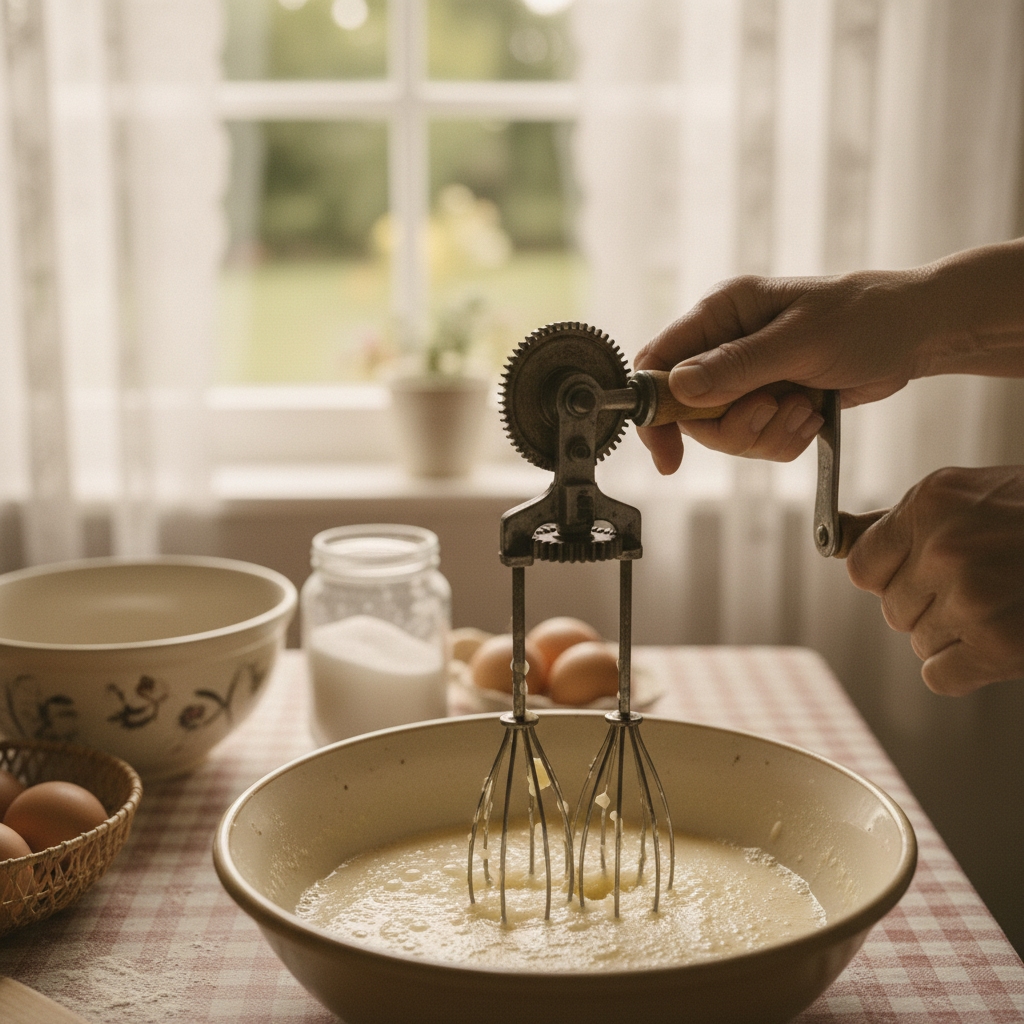 Illustration created for WistMem; not an archival photograph.
Ask who showed the next cook how to hold it steady and what dish it was used for. The little gear wheel can carry a date that a family album cannot; the family account gives the date a human setting. For the mechanism, see How a Rotary Egg Beater Worked.
What does it bring back for you?
Ask someone who remembers, or begin with your own version. A few words can be enough.
What everyday sound or smell brings back a home you remember?
Then ask: Who was there, and what were they doing?
Find more conversation starters Choose what feels comfortable. Ask before recording or sharing someone’s words.Relive the Memory
Find a little of the story.
Something here bring back a memory? Take a look at what you can find today.
Searching for: vintage antique rotary egg beater
Vintage & collectible finds
Look for older objects and collectibles connected to this memory.
Search eBay (opens in a new tab)Related finds on Amazon
Explore items related to the same topic, from familiar styles to things made today.
Search Amazon (opens in a new tab)These links open search results. Items, prices, and availability vary.
Affiliate links. We may earn a commission at no extra cost to you.
As an Amazon Associate I earn from qualifying purchases. As an eBay Partner, WistMem may earn from qualifying purchases.
Does this bring back memories?
Share this story with someone who would remember.