Make this page easier to read
Your choices are saved on this device.
A percolator repeatedly sends hot water through a basket of grounds. Its visible pulse made brewing a small morning performance, and museum examples show how stove and electric versions differed.
The sound of a percolator did not mean a cup was ready at once. It meant heated water had begun moving through the pot. A tube carried water upward to a basket of grounds; the liquid returned below and could pass through again. That repeated circulation is what made the clear knob on many lids so absorbing to watch.
What was happening inside the pot?
The National Museum of American History's account of a Sunbeam electric percolator explains the water's trip up the hollow stem and through the coffee basket. It also notes that the brew recirculated until it reached the desired strength. The pulse in a glass knob therefore showed movement and changing color, not a precise temperature or a universal “done” signal. The person making coffee still chose when to stop.
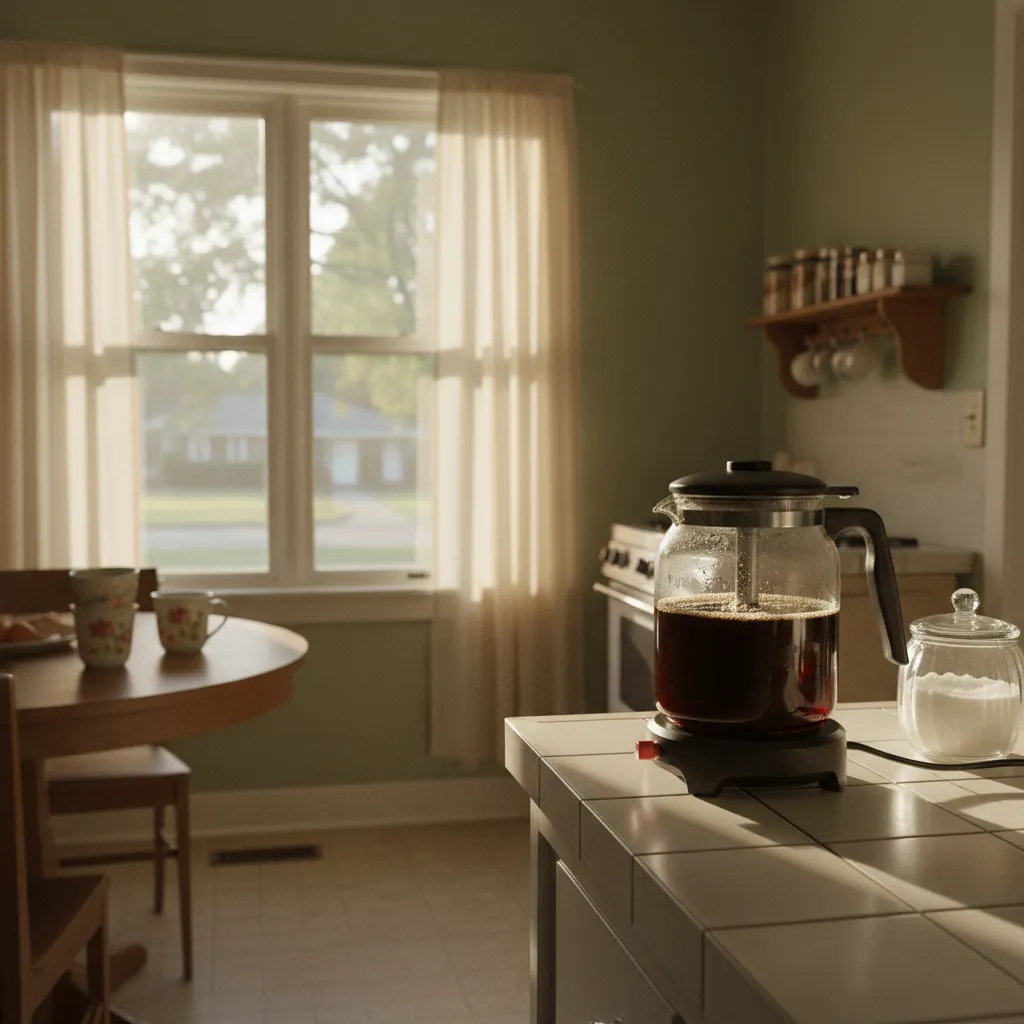 Illustration created for WistMem; not an archival photograph.
Stovetop or electric?
Percolators were not all the same silver pot. Some sat on a stove; others had electric heating elements, cords, and automatic controls. The Smithsonian catalogs a Universal electric model from about 1914 with a glass top, central tube, basket, and detachable cord. A 1967 electric model in the museum's collection carried a reminder to start with cold water. These objects show why one person's stovetop memory and another's plug-in kitchen memory can both be right.
The museum's Sunbeam example from the 1950s even has a dial for a milder or stronger brew. That small control changes the story of “watching the knob”: some people judged the coffee by sight, while others relied on a setting and an automatic pot. When identifying one in a family photograph, the cord, base, and lid can help narrow the type.
Why did people remember the sound?
A pot that announces itself draws attention to an ordinary task. The sound may have been a cue that someone was awake, that a visitor had arrived, or that breakfast was nearly underway. Ask whose job it was to make coffee, whether the pot stayed on the stove or plugged into a wall, and who judged the brew by color, time, or taste.
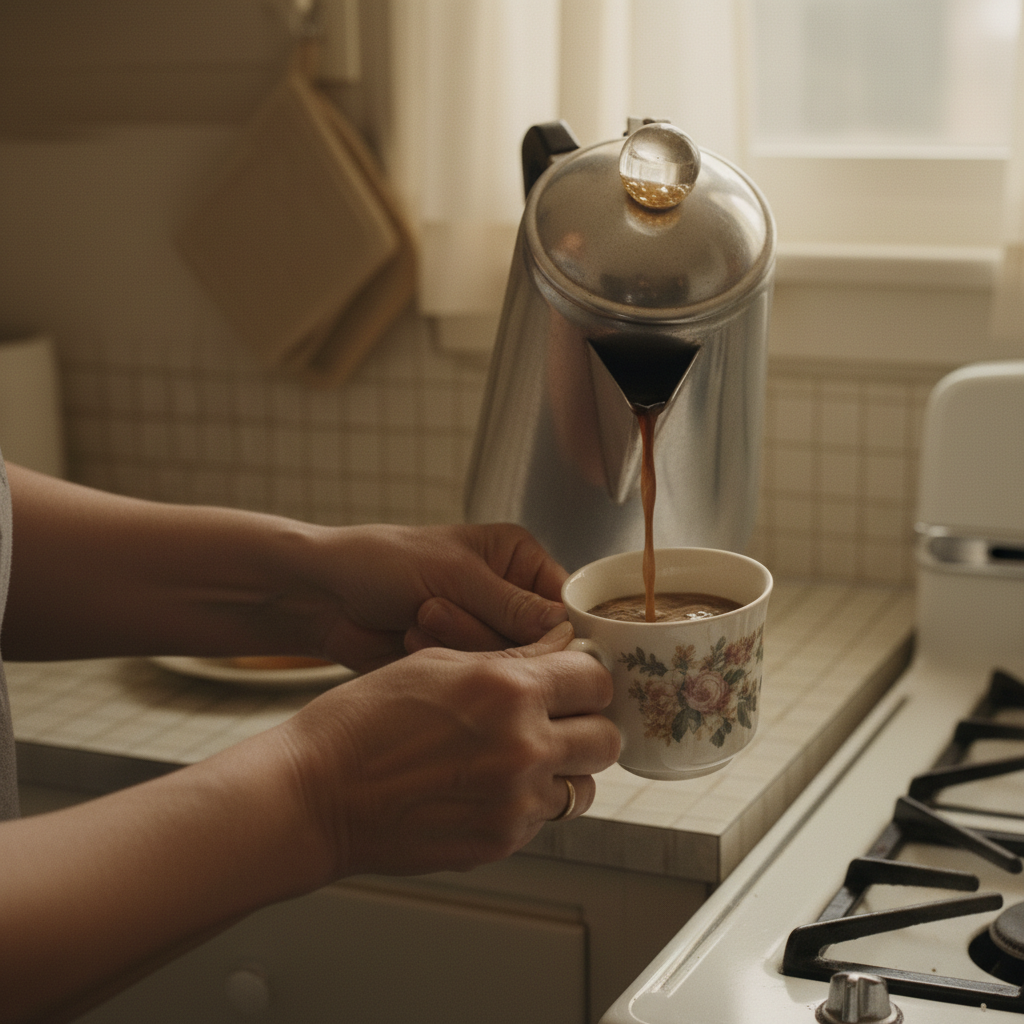 Illustration created for WistMem; not an archival photograph.
Some households replaced the percolator with a drip machine; others still use one. The older pot does not need to have vanished to be worth remembering. Its mechanism turned coffee-making into something a person could hear and see. The little window showed the brew moving, but someone still decided when it was ready.
For another sound that once marked a kitchen routine, read The Transistor Radio on the Kitchen Counter.
What does it bring back for you?
Ask someone who remembers, or begin with your own version. A few words can be enough.
What everyday sound or smell brings back a home you remember?
Then ask: Who was there, and what were they doing?
Find more conversation starters Choose what feels comfortable. Ask before recording or sharing someone’s words.Relive the Memory
Find a little of the story.
Something here bring back a memory? Take a look at what you can find today.
Searching for: vintage kitchen percolator coffee pot
Vintage & collectible finds
Look for older objects and collectibles connected to this memory.
Search eBay (opens in a new tab)Related finds on Amazon
Explore items related to the same topic, from familiar styles to things made today.
Search Amazon (opens in a new tab)These links open search results. Items, prices, and availability vary.
Affiliate links. We may earn a commission at no extra cost to you.
As an Amazon Associate I earn from qualifying purchases. As an eBay Partner, WistMem may earn from qualifying purchases.
Does this bring back memories?
Share this story with someone who would remember.