Make this page easier to read
Your choices are saved on this device.
Transistor radios made listening easier to move from room to room. Smithsonian objects trace the technology; the kitchen memory is about whose program filled the working day.
A radio on the kitchen counter could play through the ordinary noise of cups, water, and preparation for a meal. Someone turned the dial with damp hands, found a familiar voice, and went on working. Unlike a large set fixed in the living room, a small transistor receiver could be carried into the space where the day was happening.
What changed when radios became smaller?
The Smithsonian's Regency TR-1 record dates the first commercial model to 1954 and explains why transistor circuitry made a small, battery-powered set possible. Another Smithsonian object record for a 1956 RCA radio contrasts lighter transistor sets with earlier tube receivers that needed larger batteries. These records explain portability; neither can tell us what a particular family played at breakfast.
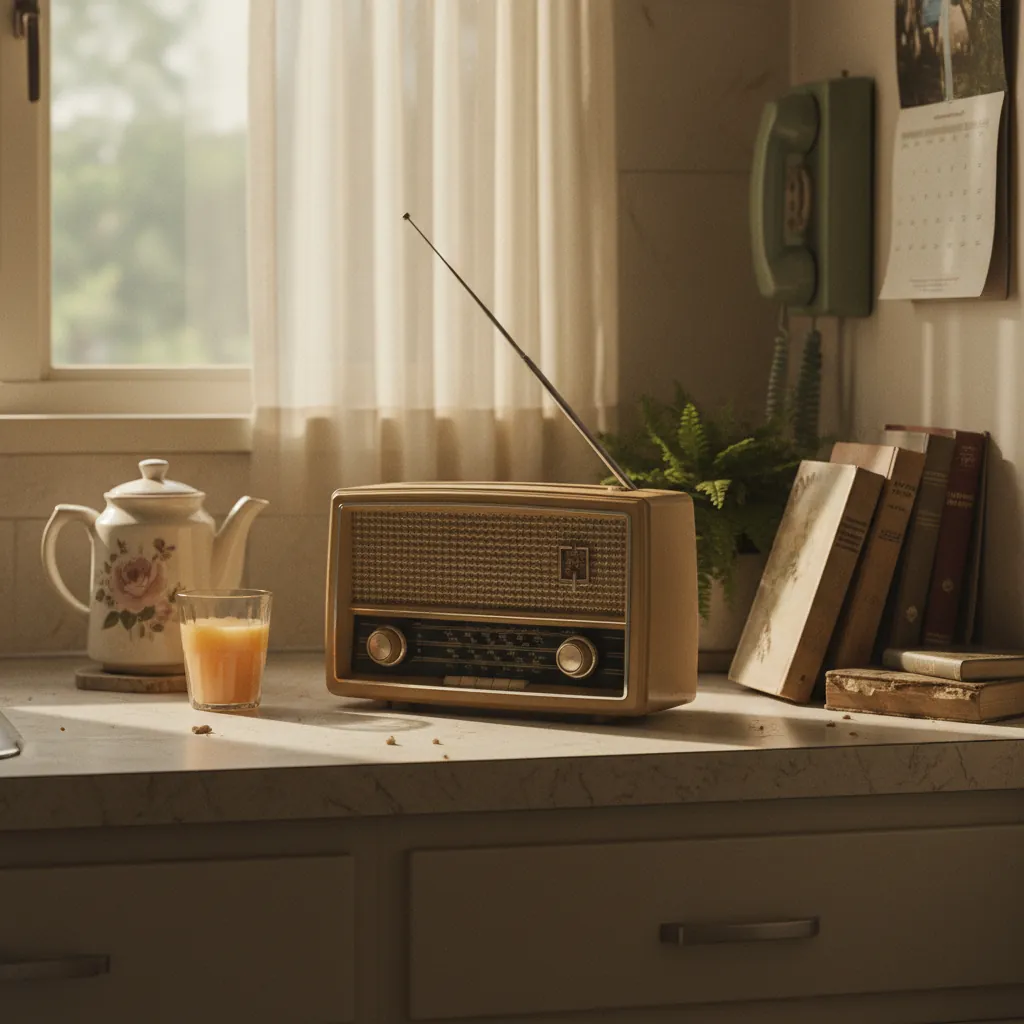 Illustration created for WistMem; not an archival photograph.
The counter location reveals a different story from the teenage pocket-radio advertisement. A household might tune to news, music, a serial, sport, or a local station while work continued around it. Ask who was allowed to change the station and whether the set followed someone into the garden or stayed in the kitchen despite being portable. A dial setting or station call letters may help place the memory in a town and decade.
What can a surviving radio tell you?
Photograph the front, back, brand, model number, and any handwritten mark before trying to date it. The Smithsonian's 1962 Zephyr radio shows how component date codes and manufacturing details can narrow an object's age. That is more reliable than assuming every little plastic radio came from the first transistor year. A family photograph may show it on the counter beside other everyday objects.
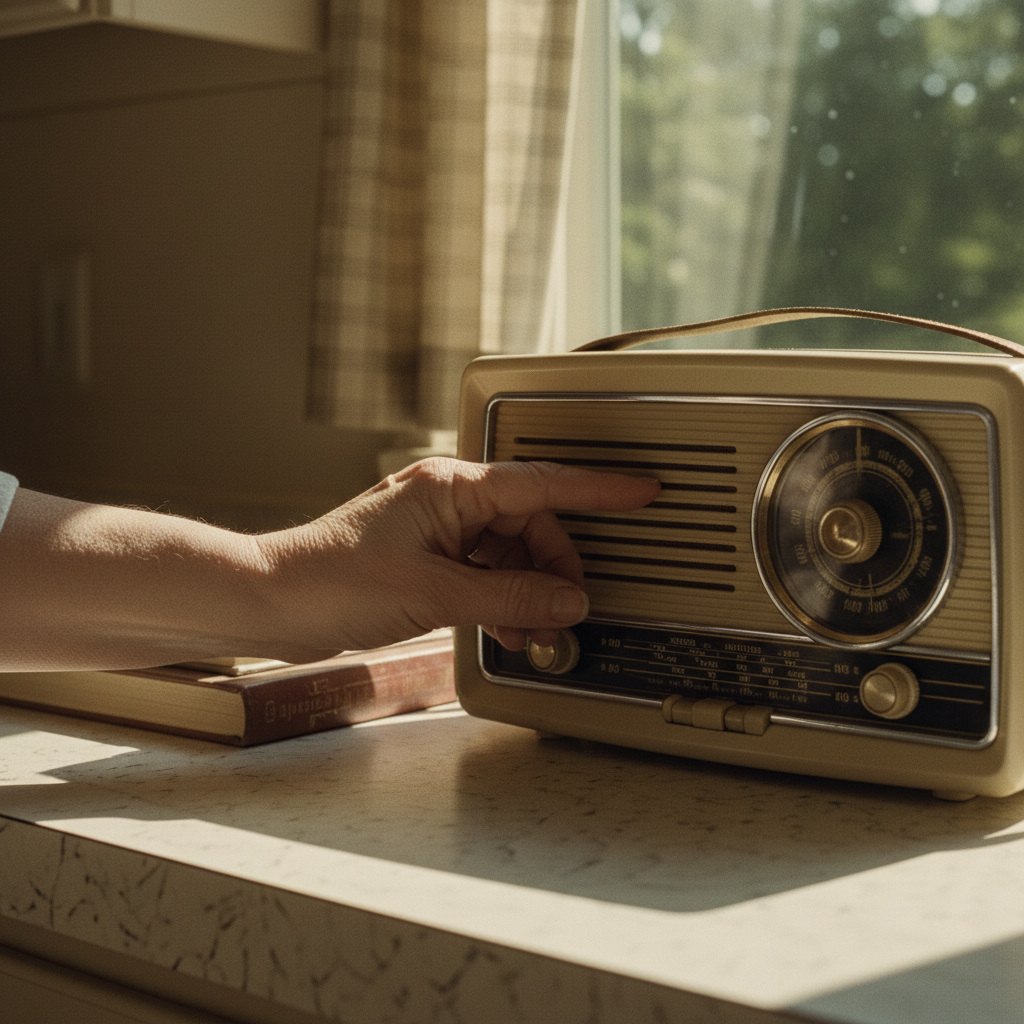 Illustration created for WistMem; not an archival photograph.
The most revealing question may be, What would make someone turn it off? The answer could mark supper, a phone call, or a program that everyone wanted to hear in silence. For a different sound technology used at home, see The Vinyl Record Player.
What does it bring back for you?
Ask someone who remembers, or begin with your own version. A few words can be enough.
What everyday sound or smell brings back a home you remember?
Then ask: Who was there, and what were they doing?
Find more conversation starters Choose what feels comfortable. Ask before recording or sharing someone’s words.Relive the Memory
Find a little of the story.
Something here bring back a memory? Take a look at what you can find today.
Searching for: vintage kitchen transistor radio kitchen
Vintage & collectible finds
Look for older objects and collectibles connected to this memory.
Search eBay (opens in a new tab)Related finds on Amazon
Explore items related to the same topic, from familiar styles to things made today.
Search Amazon (opens in a new tab)These links open search results. Items, prices, and availability vary.
Affiliate links. We may earn a commission at no extra cost to you.
As an Amazon Associate I earn from qualifying purchases. As an eBay Partner, WistMem may earn from qualifying purchases.
Does this bring back memories?
Share this story with someone who would remember.