Make this page easier to read
Your choices are saved on this device.
A bottle at the door was the visible end of a much longer dairy route. Its glass, printed name, and return journey can help identify the service a household remembers.
A glass milk bottle on a doorstep was both food and a small piece of a delivery system. It had to be filled, carried, brought indoors, emptied, and put out again. That cycle made the arrival noticeable even to someone who never met the driver. In some homes the sound was bottles touching in a crate; in others it was the small task of checking whether enough had come for the day.
Why did the bottle matter?
The bottle was a container a dairy could mark and a customer could recognize. The National Museum of American History's T. S. Powell dairy bottle, with its pasteurized-milk message, shows how a label could advertise a safety claim as well as a supplier. A Richmond Dairy bottle in the same collection shows the ordinary glass vessel itself. If a family kept an old bottle, its embossed name or printed design may be more useful for identifying the route than a vague recollection of “the milkman.”
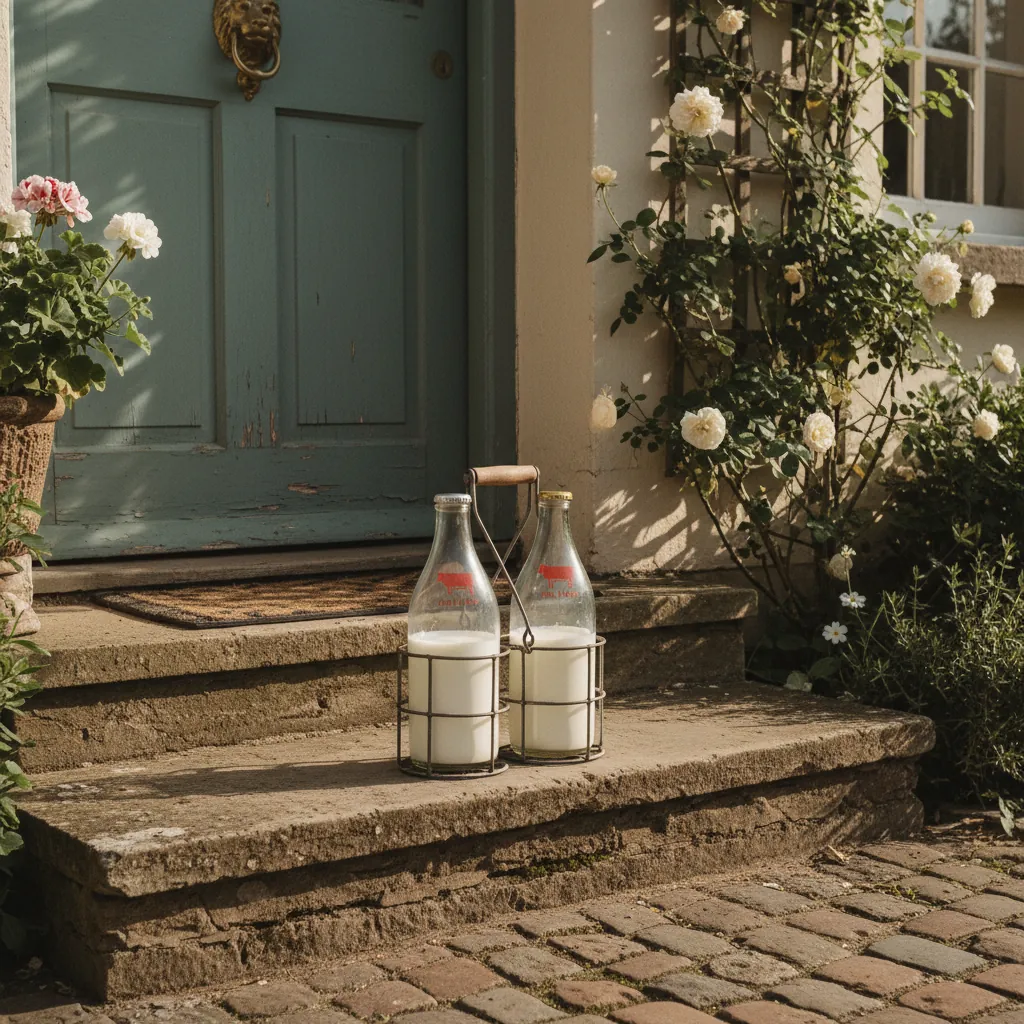 Illustration created for WistMem; not an archival photograph.
The delivery could feel personal, but the route depended on work beyond the doorstep. A 1941 Library of Congress photograph of bottling at the Duluth Milk Company shows one part of that chain. The Smithsonian's exhibit on milk bottles and refrigeration places 1930s bottles beside changes in milk testing, bottling, and home cooling. Together these records show why a familiar doorstep object belonged to a larger food system.
What did a household do with the empties?
Many doorstep services used returnable bottles. A household set empties out for collection and adjusted the next order with the dairy. The details varied: some customers used notes, some had standing quantities, and some bought milk elsewhere. An old account book, bottle cap, or photograph of the crate can often answer more than a general story about daily delivery. The question to ask is simple: Where did your household leave the empties, and who remembered to bring the full ones in?
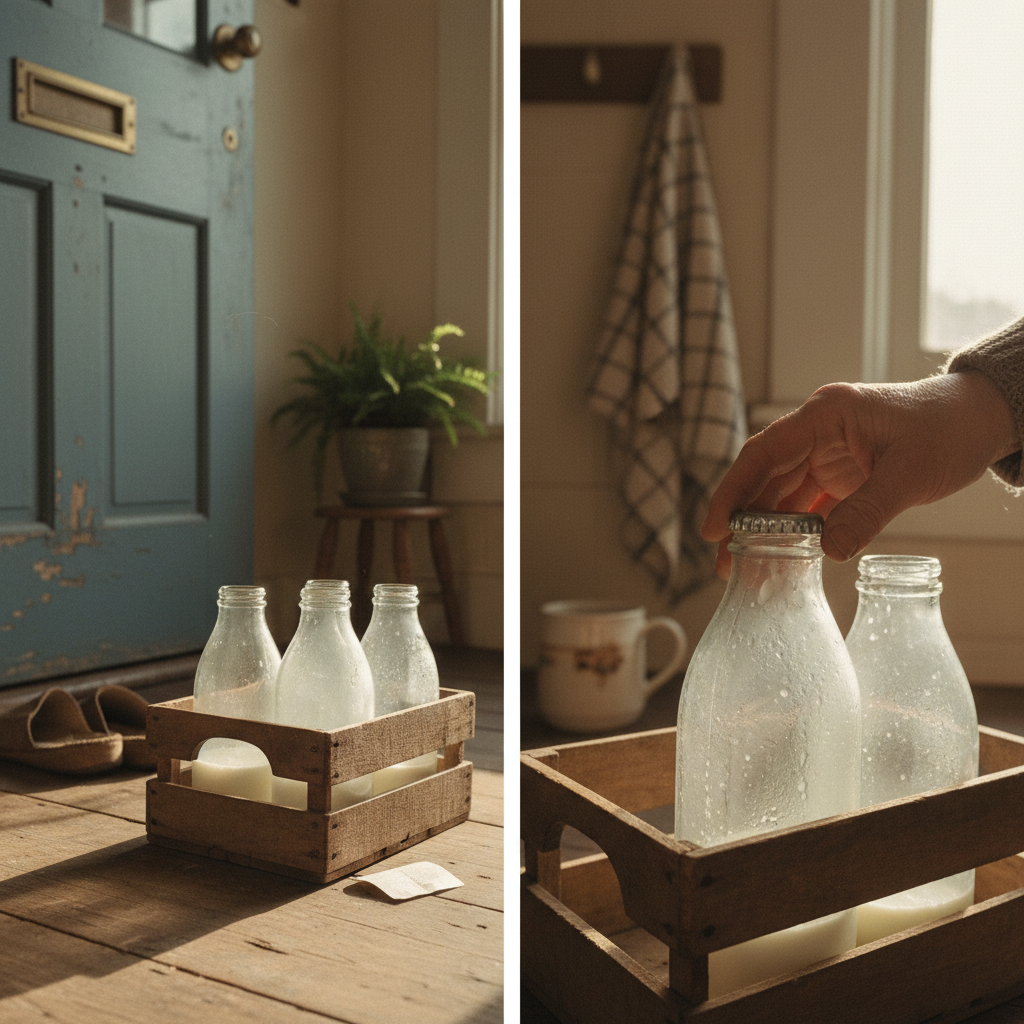 Illustration created for WistMem; not an archival photograph.
The glass did not keep milk safe by itself. The move toward tested and pasteurized milk, cleaner bottling, and reliable cooling changed what a bottle at the door could mean. For a related change inside the kitchen, see The Ice Box Before Refrigerators.
What does it bring back for you?
Ask someone who remembers, or begin with your own version. A few words can be enough.
What everyday sound or smell brings back a home you remember?
Then ask: Who was there, and what were they doing?
Find more conversation starters Choose what feels comfortable. Ask before recording or sharing someone’s words.Relive the Memory
Find a little of the story.
Something here bring back a memory? Take a look at what you can find today.
Searching for: vintage kitchen milkman glass bottles
Vintage & collectible finds
Look for older objects and collectibles connected to this memory.
Search eBay (opens in a new tab)Related finds on Amazon
Explore items related to the same topic, from familiar styles to things made today.
Search Amazon (opens in a new tab)These links open search results. Items, prices, and availability vary.
Affiliate links. We may earn a commission at no extra cost to you.
As an Amazon Associate I earn from qualifying purchases. As an eBay Partner, WistMem may earn from qualifying purchases.
Does this bring back memories?
Share this story with someone who would remember.