Make this page easier to read
Your choices are saved on this device.
A familiar order was a small form of recognition. Historic café records show the counters and rooms behind that routine; the names and conversations belong to the people who remember them.
The door opened, someone looked up from behind the counter, and an order might be started before it was spoken. That kind of recognition made a café feel different from a place visited once. A regular could come for a drink, a modest meal, or simply the chance to sit among people who knew when they usually appeared.
What made a café a local place?
The room helped set the pace. A counter put customers within speaking distance of the people serving them; a table gave a group room to linger. Historic England's record of E. Pellicci describes a London café opened in 1900 and refitted in 1946, with a counter at the front and a kitchen behind it. Its preserved interior is evidence of a particular place, not a template for every neighborhood café. The arrangement makes it easier to picture why a person could become familiar through repeated visits.
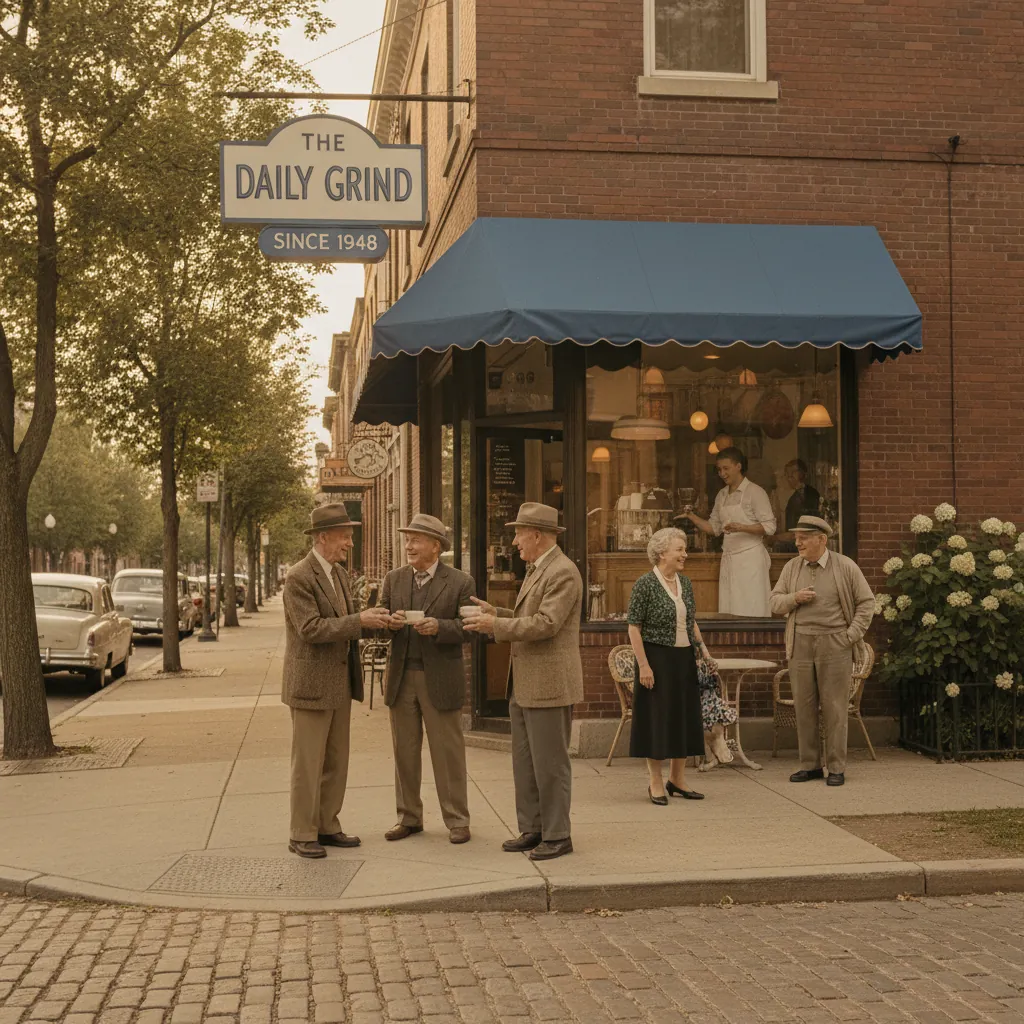 Illustration created for WistMem; not an archival photograph.
The order itself might become shorthand. A person who always wanted tea the same way, or came after a shift, offered others a small point of recognition. No menu or building record can recover the words exchanged across one family's table. If someone remembers the café, ask which seat they chose, who was usually working, and whether the order changed over the years.
How do you place that memory in time?
A shopfront, dated menu, receipt, or street photograph can help identify the business. Historic England's Pellicci entry, for example, distinguishes its original building from its 1946 interior. That distinction matters: the café someone recalls at twenty may have had a very different look by the time a grandchild visited. Write down the street and approximate years alongside a remembered name, then compare them with surviving records.
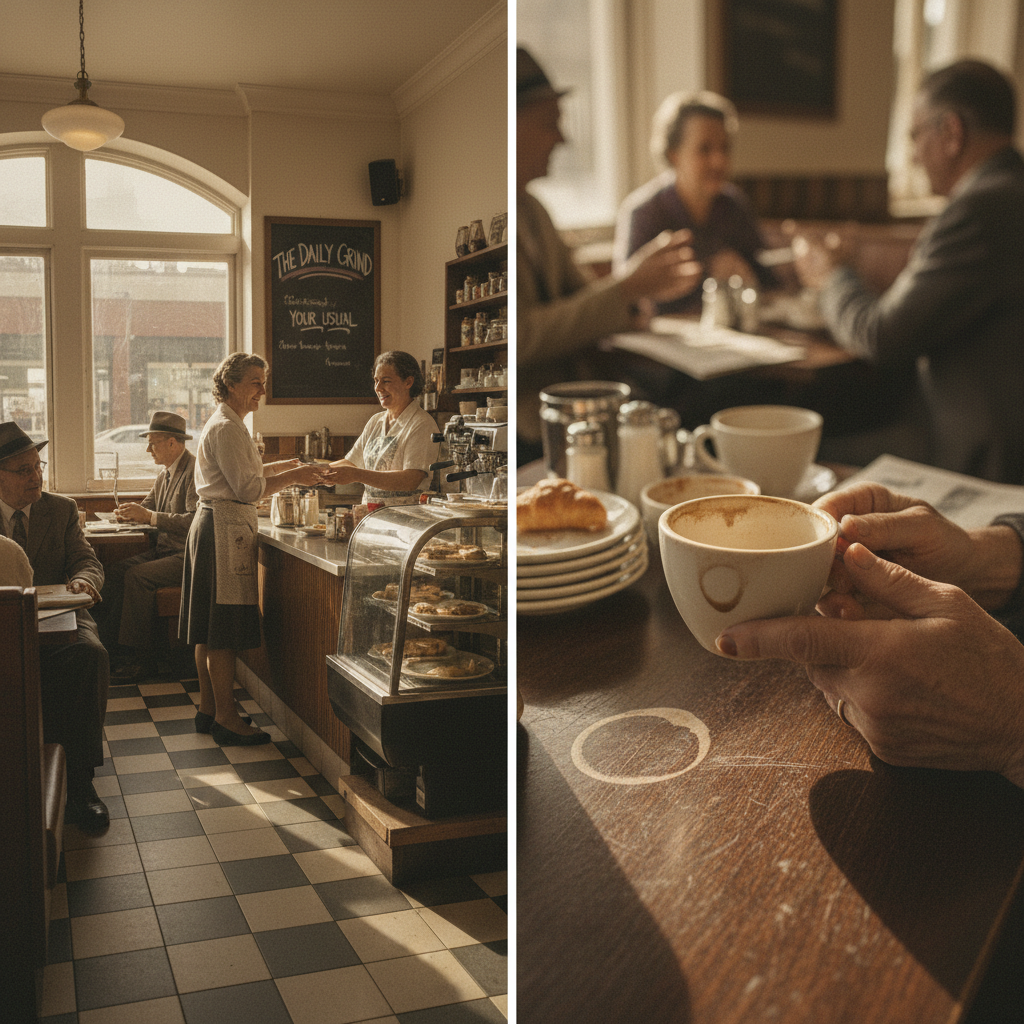 Illustration created for WistMem; not an archival photograph.
A regular order tells a story about repetition, but the best detail may be who noticed an absence. Ask a relative what happened when they missed their usual day. The answer may reveal a friendship built in ten-minute visits. For another kind of public eating place, read The Department Store Lunch Counter.
What does it bring back for you?
Ask someone who remembers, or begin with your own version. A few words can be enough.
Which local place do you remember visiting often?
Then ask: What made a visit there different from anywhere else?
Find more conversation starters Choose what feels comfortable. Ask before recording or sharing someone’s words.Relive the Memory
Find a little of the story.
Something here bring back a memory? Take a look at what you can find today.
Searching for: vintage antique caf where everyone
Vintage & collectible finds
Look for older objects and collectibles connected to this memory.
Search eBay (opens in a new tab)Related finds on Amazon
Explore items related to the same topic, from familiar styles to things made today.
Search Amazon (opens in a new tab)These links open search results. Items, prices, and availability vary.
Affiliate links. We may earn a commission at no extra cost to you.
As an Amazon Associate I earn from qualifying purchases. As an eBay Partner, WistMem may earn from qualifying purchases.
Does this bring back memories?
Share this story with someone who would remember.