Make this page easier to read
Your choices are saved on this device.
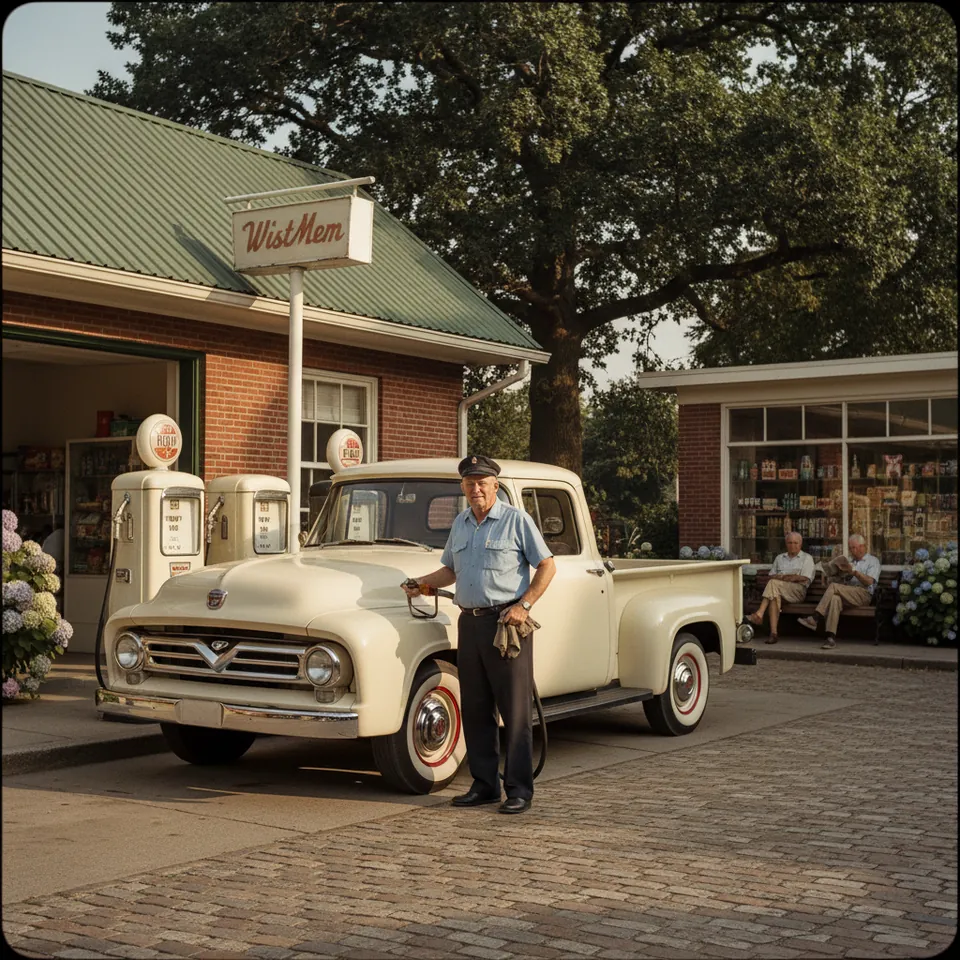
Full service involved more than pumping gasoline. Historic federal records describe attendants checking oil, radiator water, and windscreens, while wartime rationing added another duty.
A driver pulled up and someone came out to the pump. The attendant could ask how much fuel was needed, start the fill, and use those minutes to inspect a car or wipe the windscreen. A family might remember the greeting or the particular route on which they always stopped. Behind that brief exchange was a job with several tasks and changing rules.
What did “full service” include?
A federal Bureau of Labor Statistics description of filling-station work lists pumping gasoline, checking crankcase oil, adding radiator water, and often cleaning the windscreen, lights, and license plates. The list describes an occupation, not a guarantee that every station performed every task. The National Park Service's guide to historic gas stations explains how pump canopies sheltered attendants and customers and how service bays could support repairs.
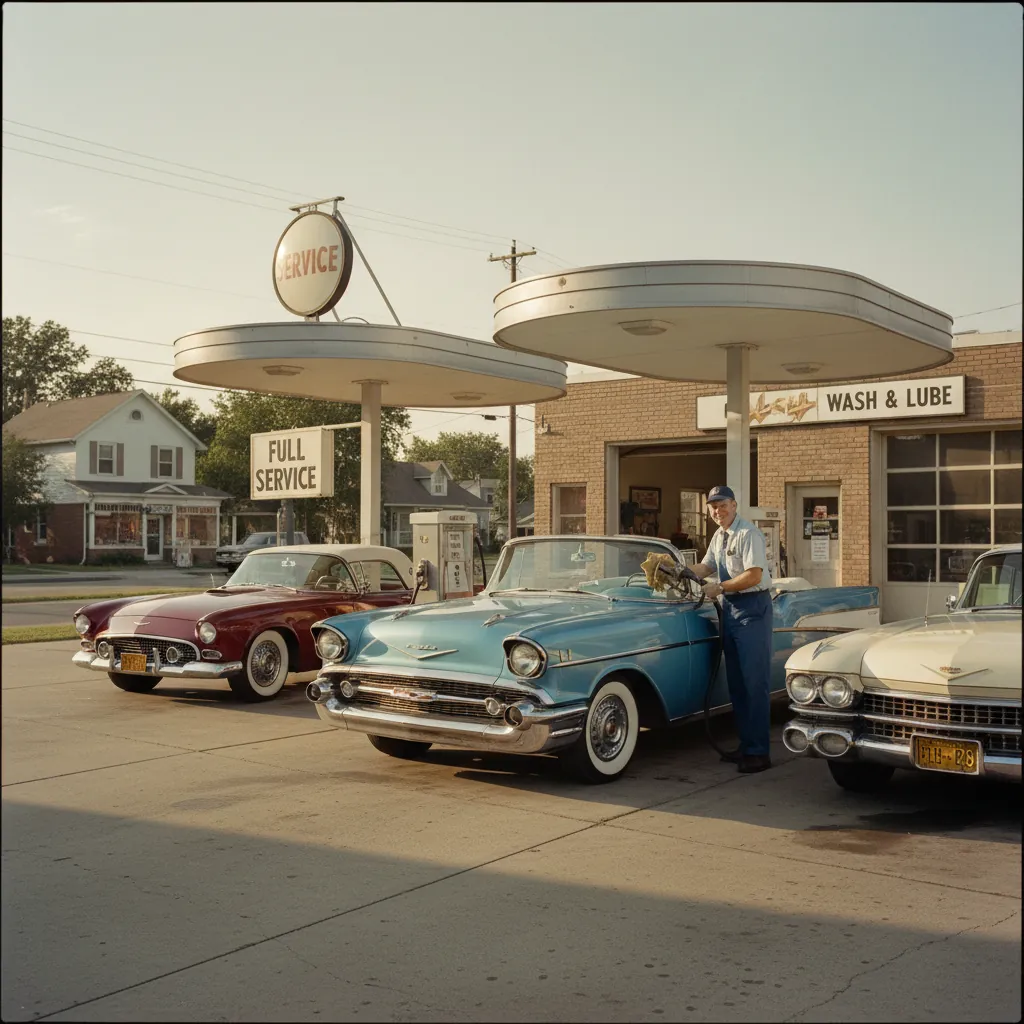 Illustration created for WistMem; not an archival photograph.
Even a familiar station changed with circumstances. The National Park Service's history of wartime gasoline rationing says attendants checked a car's windshield ration sticker against its plate and the buyer's stamps. A remembered station from wartime therefore involved a different conversation at the pump than one from a later family road trip.
What can a station memory reveal?
Ask whether the attendant checked oil or tires, whether there was a repair bay, and whether the family knew the worker by name. A logo, road map, receipt, or photograph of the canopy may identify the station and help date the memory. A stop could be reassuring because somebody looked over the car before a long drive; it could also be where a worker spent hours in all weathers.
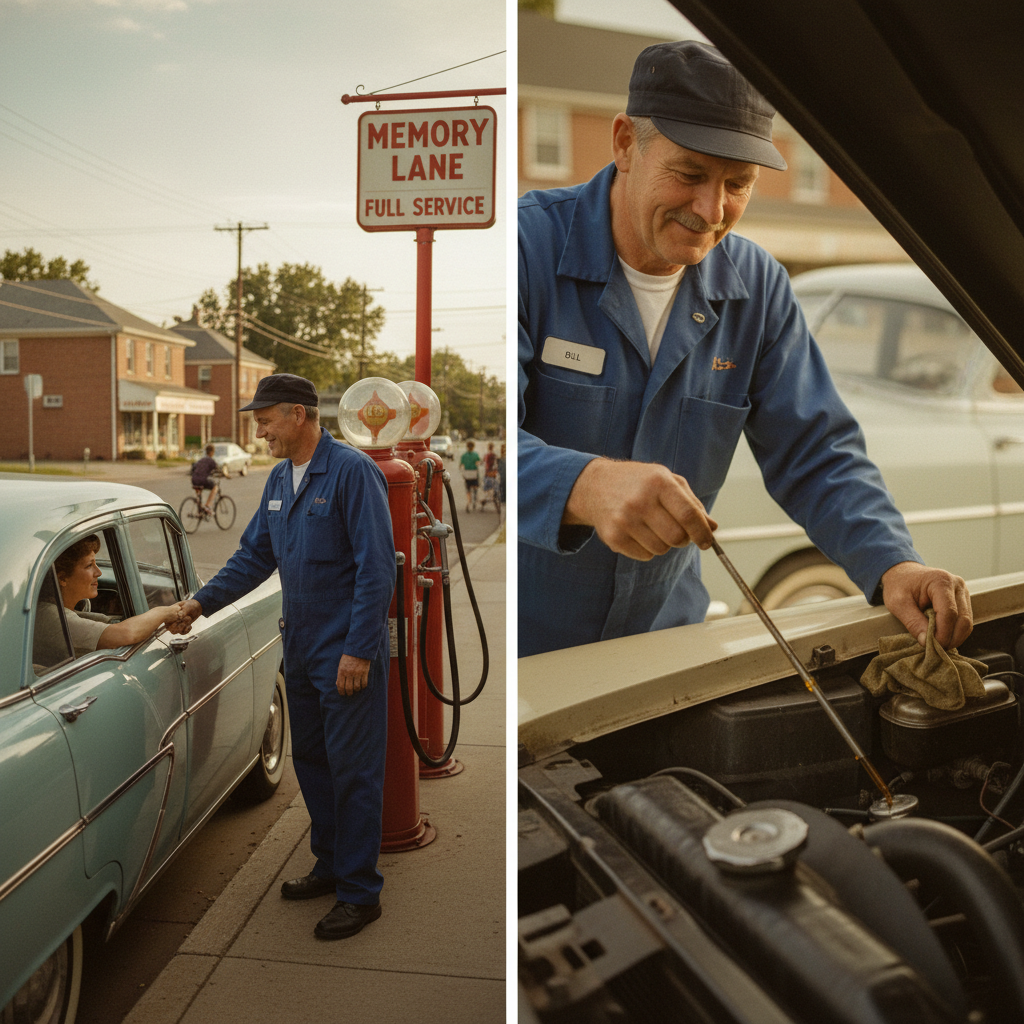 Illustration created for WistMem; not an archival photograph.
In a White Sands National Park history, a full-service station stood beside a motel and small shop built for travelers in the 1920s. It shows how a fuel stop could be part of a wider roadside place. For a UK forecourt experience, read The Full-Service Petrol Station Attendant.
What does it bring back for you?
Ask someone who remembers, or begin with your own version. A few words can be enough.
Which local place do you remember visiting often?
Then ask: What made a visit there different from anywhere else?
Find more conversation starters Choose what feels comfortable. Ask before recording or sharing someone’s words.Relive the Memory
Find a little of the story.
Something here bring back a memory? Take a look at what you can find today.
Searching for: vintage antique fullservice gas station
Vintage & collectible finds
Look for older objects and collectibles connected to this memory.
Search eBay (opens in a new tab)Related finds on Amazon
Explore items related to the same topic, from familiar styles to things made today.
Search Amazon (opens in a new tab)These links open search results. Items, prices, and availability vary.
Affiliate links. We may earn a commission at no extra cost to you.
As an Amazon Associate I earn from qualifying purchases. As an eBay Partner, WistMem may earn from qualifying purchases.
Does this bring back memories?
Share this story with someone who would remember.