Make this page easier to read
Your choices are saved on this device.
A store restaurant turned shopping into an outing. Historic photographs show the spaces; the history of segregated counters reminds us that access to a seat was never the same for everyone.
A long shopping trip needed a pause. In some large stores, the family could stop for lunch without leaving the building. The counter or cafeteria kept the outing moving: coats stayed on, purchases waited under a chair, and someone studied the menu while another still thought about the next department. That convenience was part of the store's appeal.
What did eating inside a store look like?
Two Historic England photographs of Gamage's new cafeteria in 1950 document both the serving counter and the customer dining area in a London department store. The records do not list every meal served, but they show that food service was designed into a retail visit. A local family's memory of a lunch counter may belong to a smaller variety store, a grand department store, or a particular city; the name on a receipt can tell which.
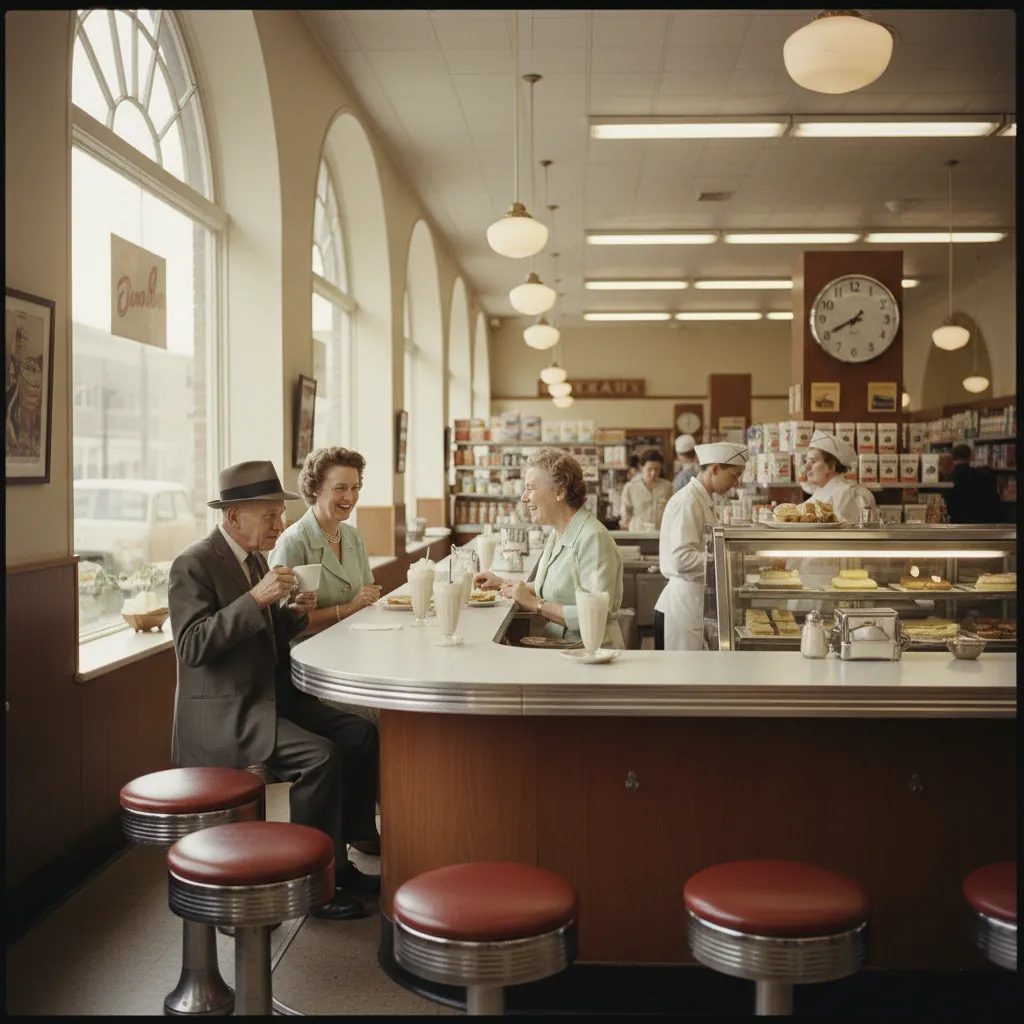 Illustration created for WistMem; not an archival photograph.
In the United States, a store counter also carries a difficult history. The Smithsonian preserves part of the Greensboro Woolworth lunch counter, where four Black college students began a sit-in on February 1, 1960, after being refused service. This was a variety-store counter, not the Gamage's cafeteria. Together these records prevent a single warm shopping memory from becoming a claim that every customer had the same welcome.
Which details make your family's visit specific?
Ask which store it was, where the food area sat relative to the lifts or departments, who paid, and what made it a treat rather than a daily meal. A dated store catalogue, floor plan, or photograph may place the room; a family member can supply the taste and conversation. If they remember a counter in the segregated American South, listen carefully to who could sit there and when.
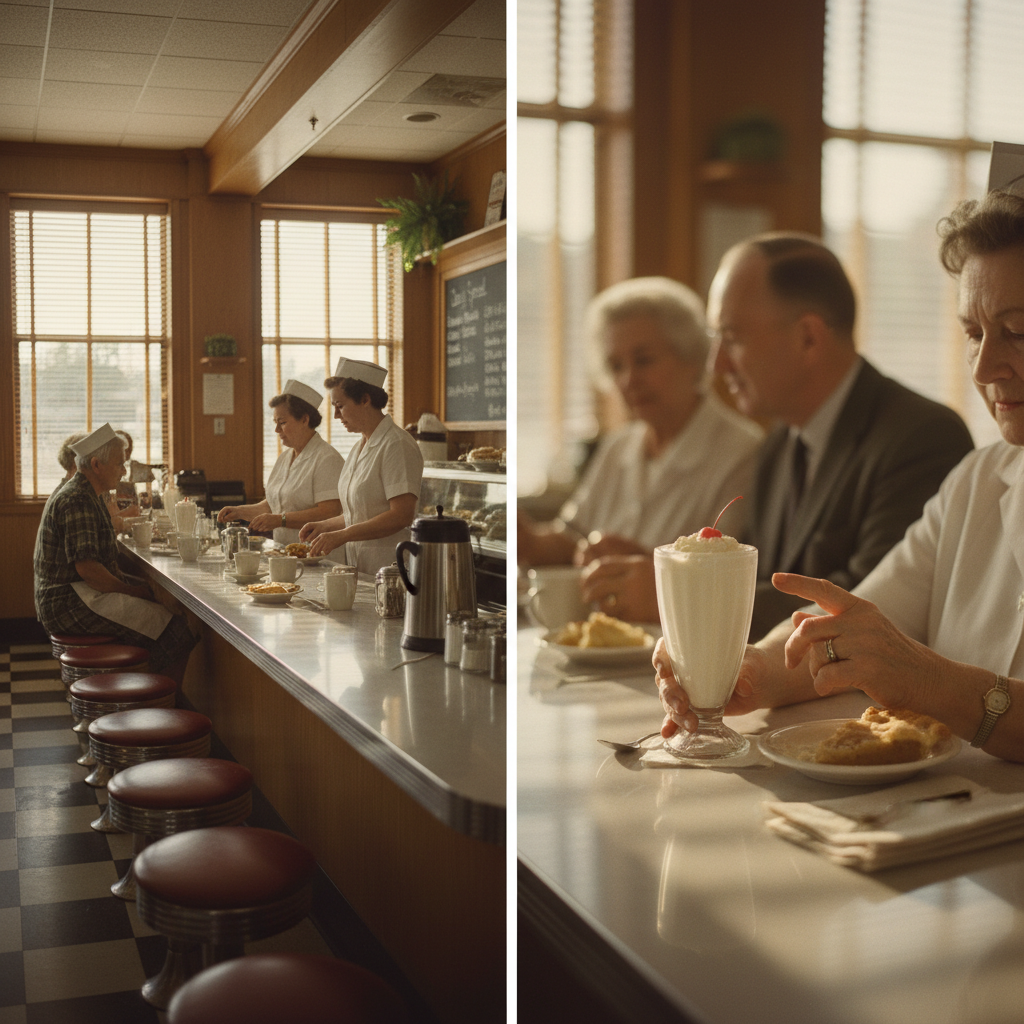 Illustration created for WistMem; not an archival photograph.
The pause for lunch may be the detail that keeps an entire shopping trip alive. For the smaller bargain-store aisles that sometimes included their own counters, read The Five-and-Dime Store.
What does it bring back for you?
Ask someone who remembers, or begin with your own version. A few words can be enough.
Which local place do you remember visiting often?
Then ask: What made a visit there different from anywhere else?
Find more conversation starters Choose what feels comfortable. Ask before recording or sharing someone’s words.Relive the Memory
Find a little of the story.
Something here bring back a memory? Take a look at what you can find today.
Searching for: vintage department store lunch counter
Vintage & collectible finds
Look for older objects and collectibles connected to this memory.
Search eBay (opens in a new tab)Related finds on Amazon
Explore items related to the same topic, from familiar styles to things made today.
Search Amazon (opens in a new tab)These links open search results. Items, prices, and availability vary.
Affiliate links. We may earn a commission at no extra cost to you.
As an Amazon Associate I earn from qualifying purchases. As an eBay Partner, WistMem may earn from qualifying purchases.
Does this bring back memories?
Share this story with someone who would remember.