Make this page easier to read
Your choices are saved on this device.
Early television variety drew on vaudeville skills and live production. A family watched singers, comedians, and sketches within one program.
The screen was small, the image monochrome, and the program kept changing shape. A singer gave way to a comic sketch; a host returned to introduce another act. The variety show made television feel like a stage that had come into the house, yet the camera could bring a performer's face much closer than the back row of a theatre ever could.
Stage experience meets live television
The Library of Congress Bob Hope and American Variety exhibition explains that many early television variety performers came from vaudeville and that much early TV was broadcast live. Their skills in timing, improvisation, and changing acts suited a medium still learning its own form. The mixed bill also solved a household problem: viewers with different tastes could wait through one segment for the next. A family did not have to agree on a single genre for the whole evening.
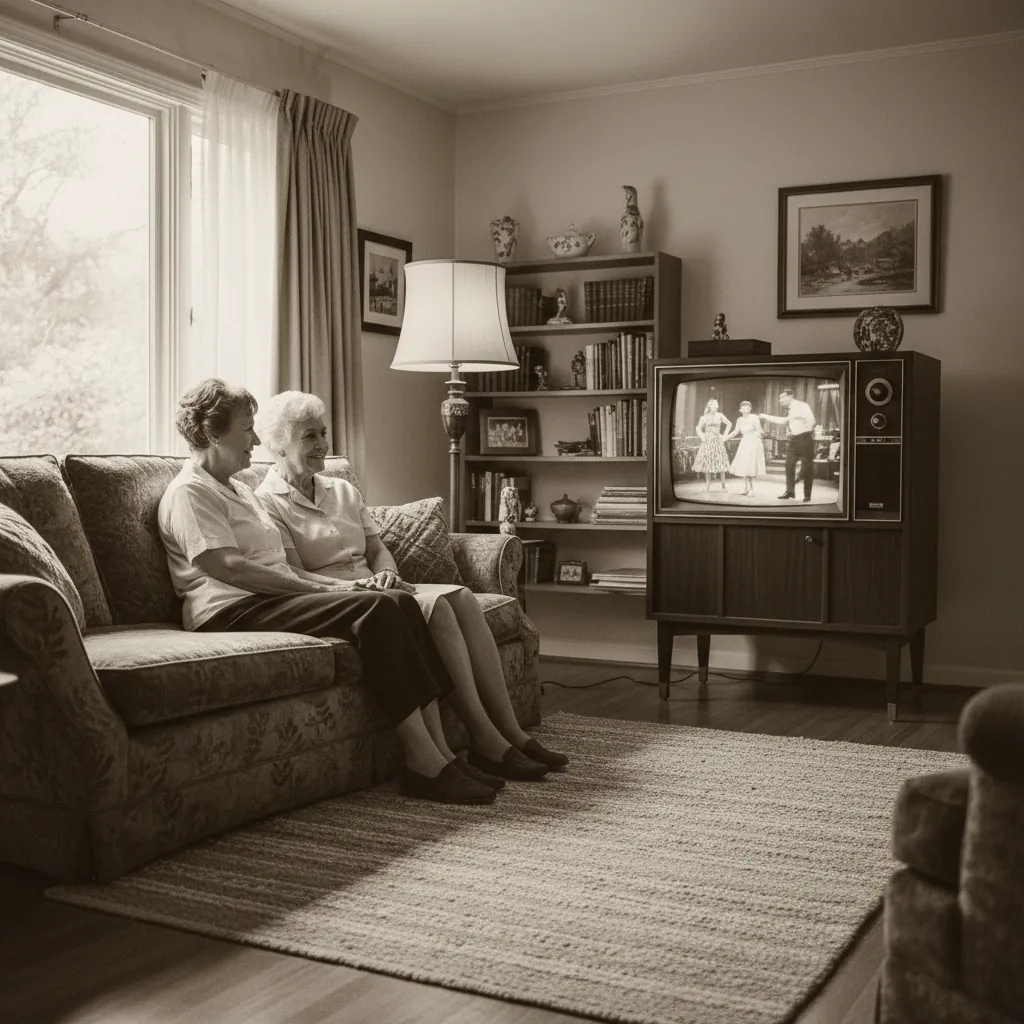 Illustration created for WistMem; not an archival photograph.
Black-and-white pictures did not make performances uniform. Strong outlines, expressive movement, and close-up faces carried information that color could not add on those sets. A costume or prop had to read clearly on the screen available to a home viewer. The host's return between acts kept the program coherent even as its tone shifted from music to jokes to dance.
The room becomes part of the show
Watching at home allowed a running commentary. Someone could laugh before the studio audience did, call a relative in for a favorite performer, or dismiss a sketch while waiting for the next song. The Library's exhibition on television satire notes that variety programs provided space for comedians as well as musicians, though broadcasters and performers navigated what a national audience would accept. The family in front of the set could have its own, less public argument about the same joke.
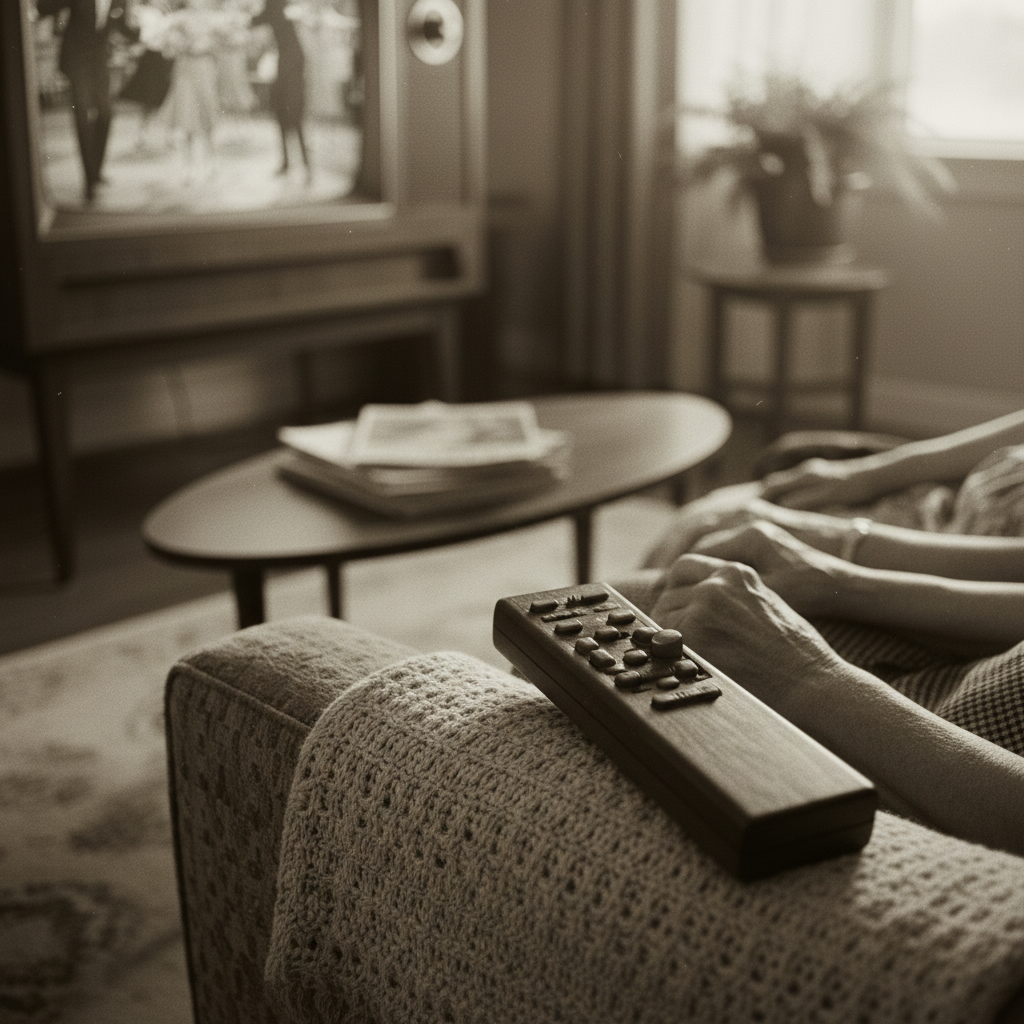 Illustration created for WistMem; not an archival photograph.
Which kind of act made people in the room look up from their other tasks? That question gives the format a human scale. For a specific weekly program where the mix brought new performers to a national audience, read Sunday Evening with The Ed Sullivan Show.
What does it bring back for you?
Ask someone who remembers, or begin with your own version. A few words can be enough.
What did you look forward to watching, hearing, or doing for fun?
Then ask: Who shared it with you, and what do you remember about that time?
Find more conversation starters Choose what feels comfortable. Ask before recording or sharing someone’s words.Relive the Memory
Find a little of the story.
Something here bring back a memory? Take a look at what you can find today.
Searching for: vintage variety show black white
Vintage & collectible finds
Look for older objects and collectibles connected to this memory.
Search eBay (opens in a new tab)Related finds on Amazon
Explore items related to the same topic, from familiar styles to things made today.
Search Amazon (opens in a new tab)These links open search results. Items, prices, and availability vary.
Affiliate links. We may earn a commission at no extra cost to you.
As an Amazon Associate I earn from qualifying purchases. As an eBay Partner, WistMem may earn from qualifying purchases.
Does this bring back memories?
Share this story with someone who would remember.