Make this page easier to read
Your choices are saved on this device.
A pub song belonged to whoever knew the chorus. The room, the singer, and the people joining in made a familiar tune new each time.
A singer began a line, and the room supplied the rest. In a Friday-night pub sing-along, the best voice did not necessarily lead; the person who knew the next verse might. Some patrons kept talking until a chorus caught them. Others had come specifically to sing. The evening worked because the boundary between performance and audience was loose.
The tradition behind the room
The Victoria and Albert Museum's history of music hall traces British public singing through taverns and coffee houses into nineteenth-century Saturday singsongs and informal “free-and-easies.” Those gatherings helped shape commercial music halls, where audiences ate, drank, and joined in. A later neighborhood pub was not the same institution, but the shared habit is recognizable: a song can belong to a room rather than to the person who starts it.
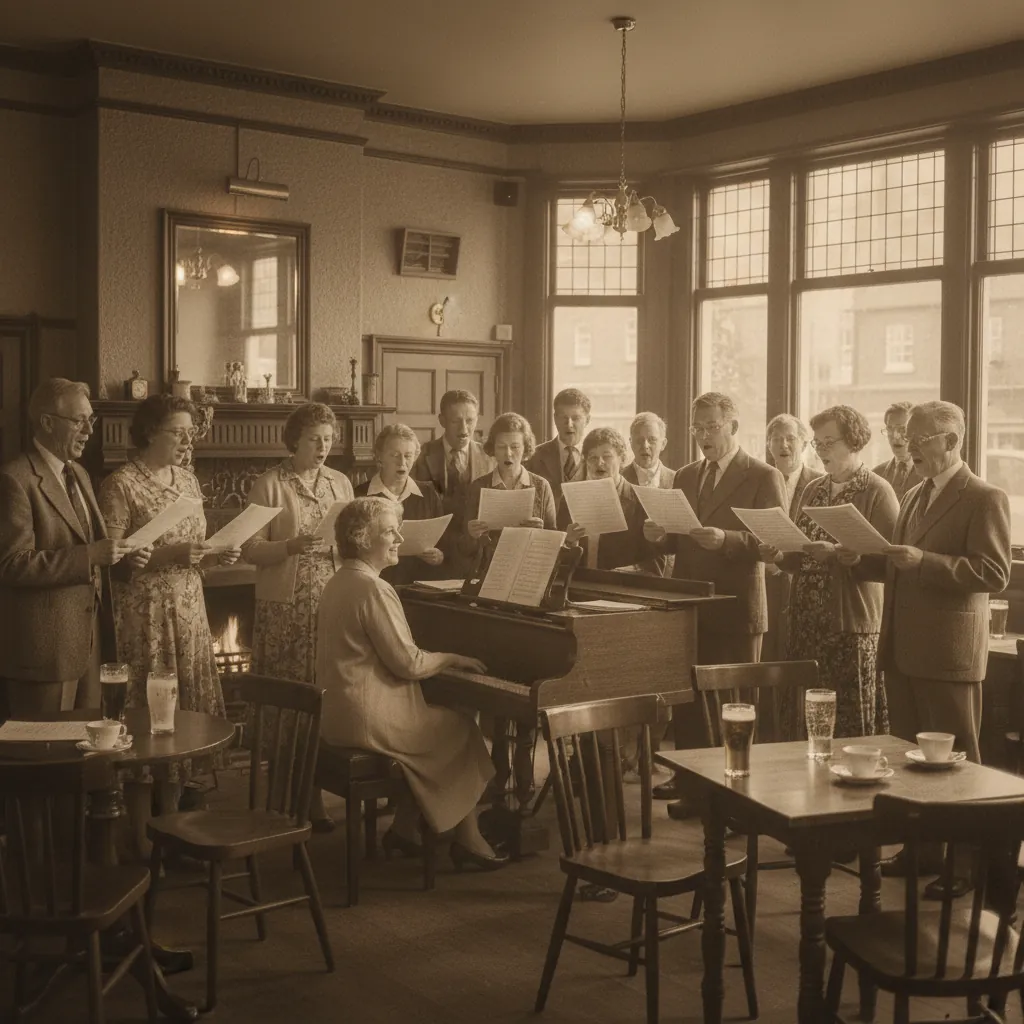 Illustration created for WistMem; not an archival photograph.
A chorus made participation easy. Someone unfamiliar with the verses could still catch a repeated line. A table could send one confident friend to begin a song, then join only when it reached the part everyone knew. The noise of glasses, chairs, and conversation never quite disappeared. That made the singing less polished and more social than a concert with a stage and silent seats.
Who carried the song?
The leader might have been a regular with a wide repertoire, a visitor bringing a tune from somewhere else, or a person persuaded to sing once. The order of songs could change with the crowd's mood. A comic number could release tension; a slower familiar one could bring people together near closing time. That range explains why two patrons might remember the same Friday differently—one recalls laughter, another a room suddenly quiet around a single voice.
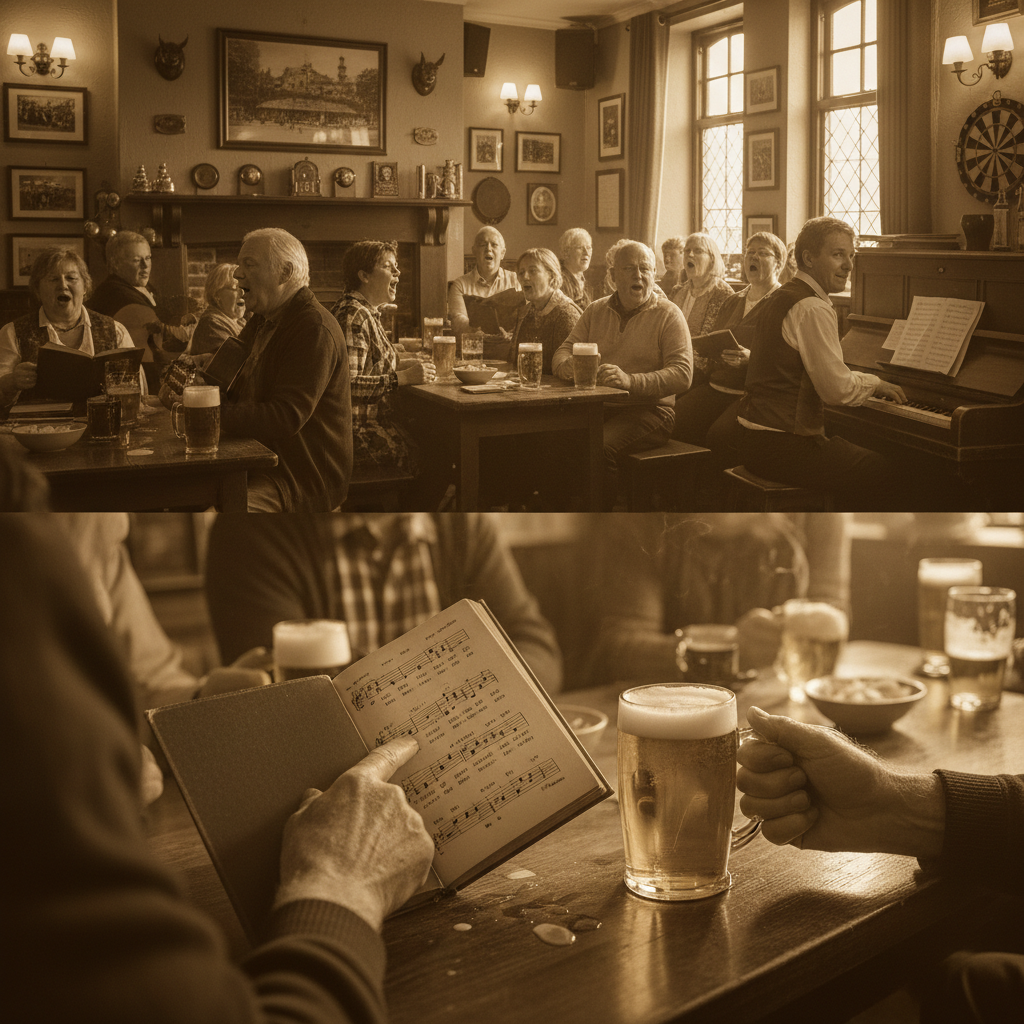 Illustration created for WistMem; not an archival photograph.
What song brought a particular person into the chorus? The title matters, but so does the moment they joined. It may have been the first time a newcomer felt known in the room, or the last song before everyone went home. For the formal stage tradition that grew from public singing, read The Seaside Variety Show on the Pier.
What does it bring back for you?
Ask someone who remembers, or begin with your own version. A few words can be enough.
What did you look forward to watching, hearing, or doing for fun?
Then ask: Who shared it with you, and what do you remember about that time?
Find more conversation starters Choose what feels comfortable. Ask before recording or sharing someone’s words.Relive the Memory
Find a little of the story.
Something here bring back a memory? Take a look at what you can find today.
Searching for: vintage retro pub singalong friday
Vintage & collectible finds
Look for older objects and collectibles connected to this memory.
Search eBay (opens in a new tab)Related finds on Amazon
Explore items related to the same topic, from familiar styles to things made today.
Search Amazon (opens in a new tab)These links open search results. Items, prices, and availability vary.
Affiliate links. We may earn a commission at no extra cost to you.
As an Amazon Associate I earn from qualifying purchases. As an eBay Partner, WistMem may earn from qualifying purchases.
Does this bring back memories?
Share this story with someone who would remember.