Make this page easier to read
Your choices are saved on this device.
League night made the bowling alley a recurring social commitment. The scores mattered, but so did seeing the same teams, partners, and staff each week.
League night at a bowling alley was more than a casual game with a spare hour to fill. Teams returned on a schedule, recognized the people on neighboring lanes, and carried the previous week's scores into the next. A regular could know where to collect shoes, which lane felt familiar, and who was likely to stay after the last frame. The repetition gave the place its own small community.
What made a league different from a visit
A visitor could bowl a single game and leave. League players committed to a run of meetings, with teammates depending on one another to turn up. The game still involved each person's turn at the foul line, but the record belonged to a wider group. For someone new, that could make the first evening daunting. For someone who had been coming for years, it could be the most dependable social appointment of the week.
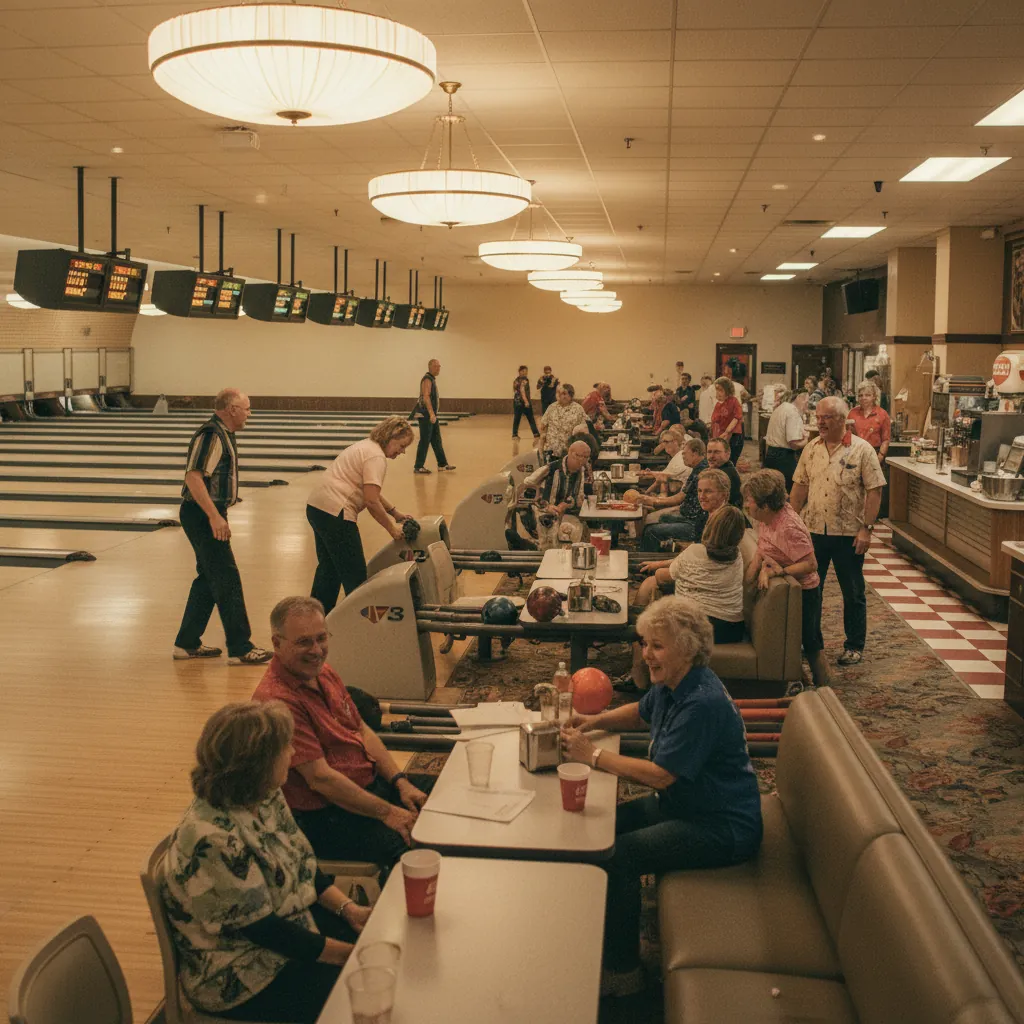 Illustration created for WistMem; not an archival photograph.
The structure has a documented history. The Bowling Museum's history of the game describes the American Bowling Congress's founding in 1895 as part of an effort to standardize play, and the women's organization that emerged in 1917. Those dates do not describe every local league, but they show why rules, scores, and recurring competitions became central to organized bowling. Ask a family member which league they joined rather than assuming every alley followed the same format.
The story behind the scorecard
An old score sheet is useful because it can anchor a memory to actual names and dates. Who formed the team? Was it connected to work, a neighborhood, or a group of friends? Did anyone have a ritual before the first frame? The answer may be about friendship more than technique. A person who says they were never much of a bowler may still remember the teammate who always encouraged them or the night the whole team finally improved.
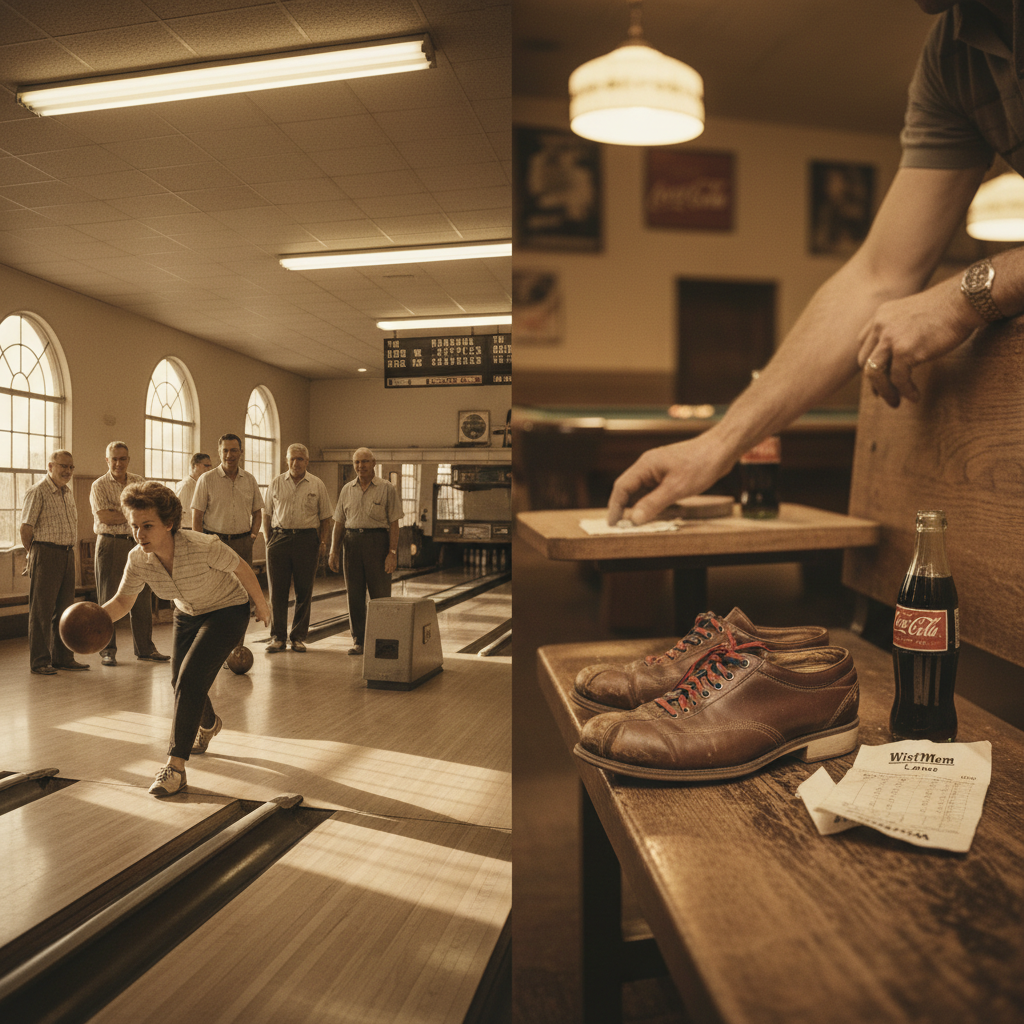 Illustration created for WistMem; not an archival photograph.
If there are photographs, write down which alley they show and who is pictured before those names are lost. The background may reveal the ball returns, signs, or seating that made that venue distinctive. Then ask what happened between turns: conversation, jokes, watching another team's game. That waiting time often explains why league night remained on the calendar long after the score itself was forgotten.
Another weekly gathering with its own floor and soundtrack appears in Roller Rinks on Friday Nights.
What does it bring back for you?
Ask someone who remembers, or begin with your own version. A few words can be enough.
What did you look forward to watching, hearing, or doing for fun?
Then ask: Who shared it with you, and what do you remember about that time?
Find more conversation starters Choose what feels comfortable. Ask before recording or sharing someone’s words.Relive the Memory
Find a little of the story.
Something here bring back a memory? Take a look at what you can find today.
Searching for: vintage retro bowling alley league
Vintage & collectible finds
Look for older objects and collectibles connected to this memory.
Search eBay (opens in a new tab)Related finds on Amazon
Explore items related to the same topic, from familiar styles to things made today.
Search Amazon (opens in a new tab)These links open search results. Items, prices, and availability vary.
Affiliate links. We may earn a commission at no extra cost to you.
As an Amazon Associate I earn from qualifying purchases. As an eBay Partner, WistMem may earn from qualifying purchases.
Does this bring back memories?
Share this story with someone who would remember.