Make this page easier to read
Your choices are saved on this device.
A coin and a numbered button made a diner booth part of the music system. Who chose the song, and how did the room respond?
The menu was open, but someone at the booth was studying a different list. A little wall-mounted selector offered songs by number, and the person with a coin got to make the room hear one of them. For a few minutes, a private preference became public sound. That is a different kind of choice from putting on a record at home: strangers at other tables heard it too.
The machine beside the seat
The Smithsonian's 1950 Wurlitzer diner-booth selector had twenty-four buttons and sent a selection to the main jukebox. Its surviving hardware helps explain the ritual: find the title, choose the number, put in the coin, then wait for the record to play. A booth selector could give a person a turn without requiring them to cross the room. Other diners had different machines, prices, and musical catalogs, so a remembered layout is worth describing rather than assuming.
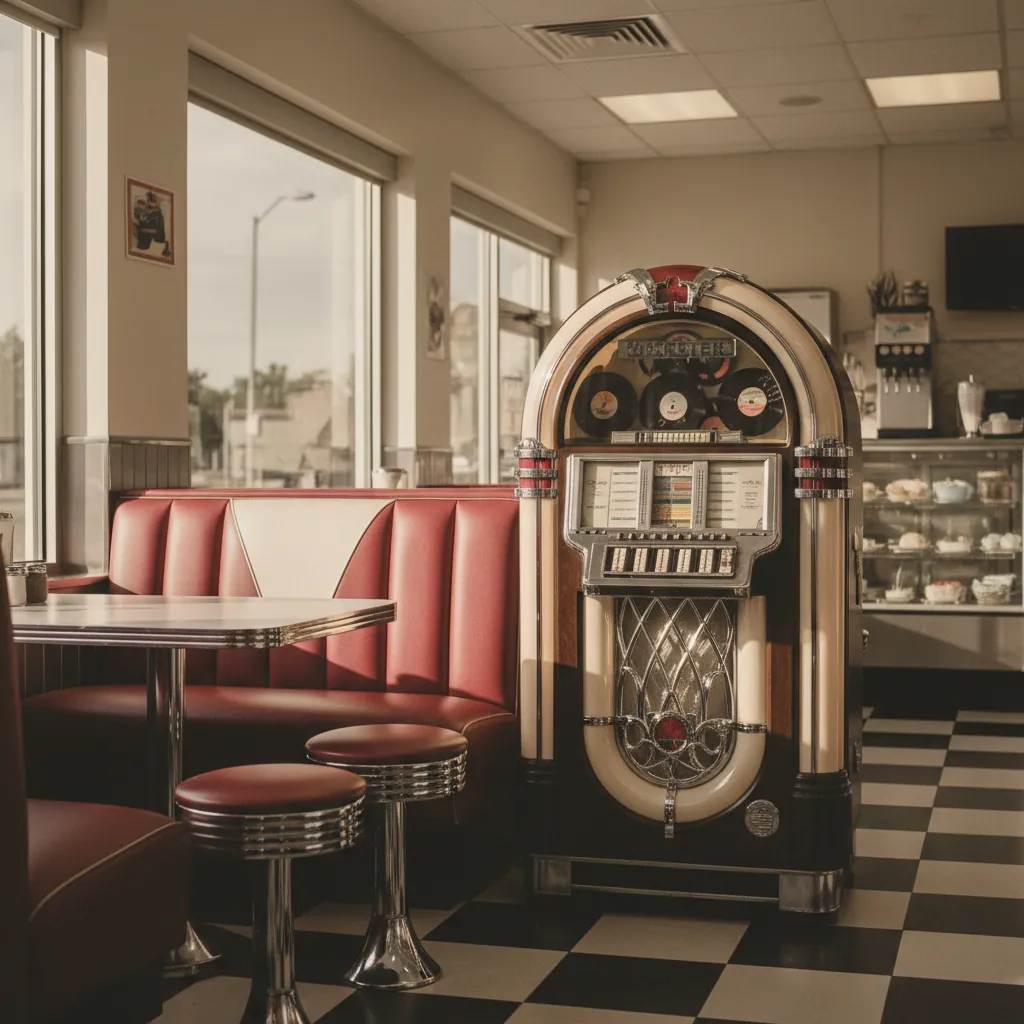 Illustration created for WistMem; not an archival photograph.
The wait could be part of the pleasure. A friend might insist on a favorite; another might beg for something nobody else had heard. When the song started, the picker could pretend not to care while listening for a reaction. Music made the diner a shared space, even when each table had its own conversation. The record ended; the argument about whether it was a good choice could continue over the last of a milkshake.
A song shared with strangers
The selector gave one table temporary control of the room's soundtrack. It could be playful, awkward, or defiant. The Smithsonian's Entertainment Nation display places a 1950 diner selector beside a discussion of teenage tastes and the adult reaction to new music. In a real diner, a choice could draw a smile from the next booth or a complaint from someone who wanted quiet. The social risk was small, but it made pressing a button feel different from playing a favorite record at home.
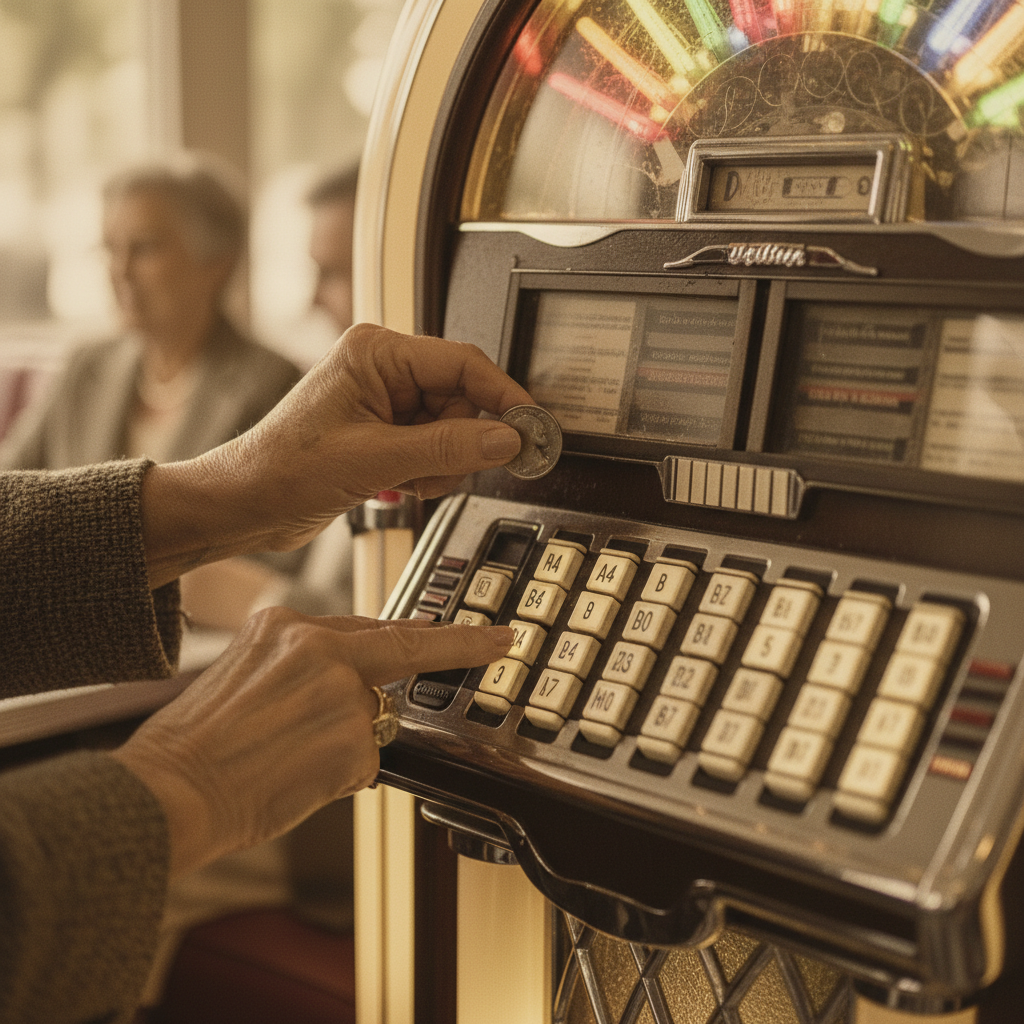 Illustration created for WistMem; not an archival photograph.
Which record made everyone at the table turn toward the machine? It may be the one a friend insisted on, the one nobody admitted liking, or the one that came on just as it was time to leave.
For the longer, slower business of choosing music to own, read The Record Store on the High Street.
What does it bring back for you?
Ask someone who remembers, or begin with your own version. A few words can be enough.
What did you look forward to watching, hearing, or doing for fun?
Then ask: Who shared it with you, and what do you remember about that time?
Find more conversation starters Choose what feels comfortable. Ask before recording or sharing someone’s words.Relive the Memory
Find a little of the story.
Something here bring back a memory? Take a look at what you can find today.
Searching for: vintage diner jukebox
Vintage & collectible finds
Look for older objects and collectibles connected to this memory.
Search eBay (opens in a new tab)Related finds on Amazon
Explore items related to the same topic, from familiar styles to things made today.
Search Amazon (opens in a new tab)These links open search results. Items, prices, and availability vary.
Affiliate links. We may earn a commission at no extra cost to you.
As an Amazon Associate I earn from qualifying purchases. As an eBay Partner, WistMem may earn from qualifying purchases.
Does this bring back memories?
Share this story with someone who would remember.