Make this page easier to read
Your choices are saved on this device.
An ice box was an insulated cabinet cooled by a block of ice, with meltwater to manage and another delivery to plan. Museum records show how much everyday kitchen work sat behind that simple appliance.
Before an electric refrigerator could maintain its own cold, many households used an ice box: an insulated cabinet with a compartment for a large block of ice. Food sat in the cooled space while the block melted. Keeping it useful meant arranging another supply of ice and dealing with the water left behind.
How did an ice box work?
The ice absorbed heat as it melted. That kept the cabinet cooler than the room, though its temperature depended on the ice supply, the cabinet, and how often the door opened. The National Museum of American History's ice-box exhibit explains the process and notes the practical consequence: drip pans had to be emptied and spills mopped up. A Library of Congress teaching feature describes a block placed in an upper chamber, cooling the food below.
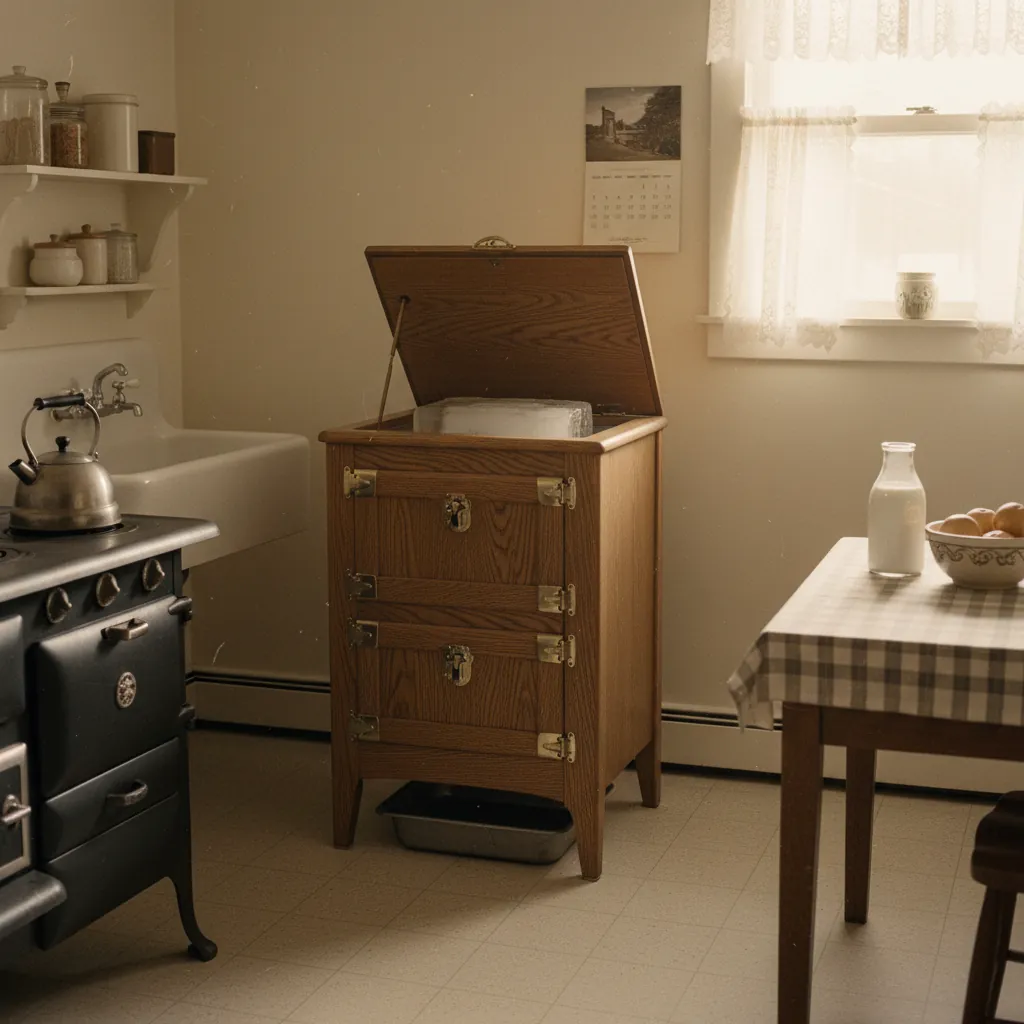 Illustration created for WistMem; not an archival photograph.
Ice could be delivered to the home or obtained from a local supplier. The Library of Congress account of historic ice delivery describes the iceman and the wooden, tin-lined household cabinet that people then called a refrigerator. The familiar word changed meaning as powered machines spread. It is easy to imagine the delivery as a picturesque street scene; for the people managing the kitchen, it was also a schedule and a recurring expense.
What did the daily chore involve?
There was no fixed “set it and forget it” temperature. The amount of ice left and the water collecting below gave the household visible signs to check. Food had to be used in time, and the cabinet offered limited space. Smithsonian's exhibit includes a period sales textbook warning that some foods kept with ice had short usable periods. That warning is historical evidence about contemporary concerns, not a modern food-safety rule. Today, follow current refrigeration advice rather than trying to reproduce an old ice-box storage timetable.
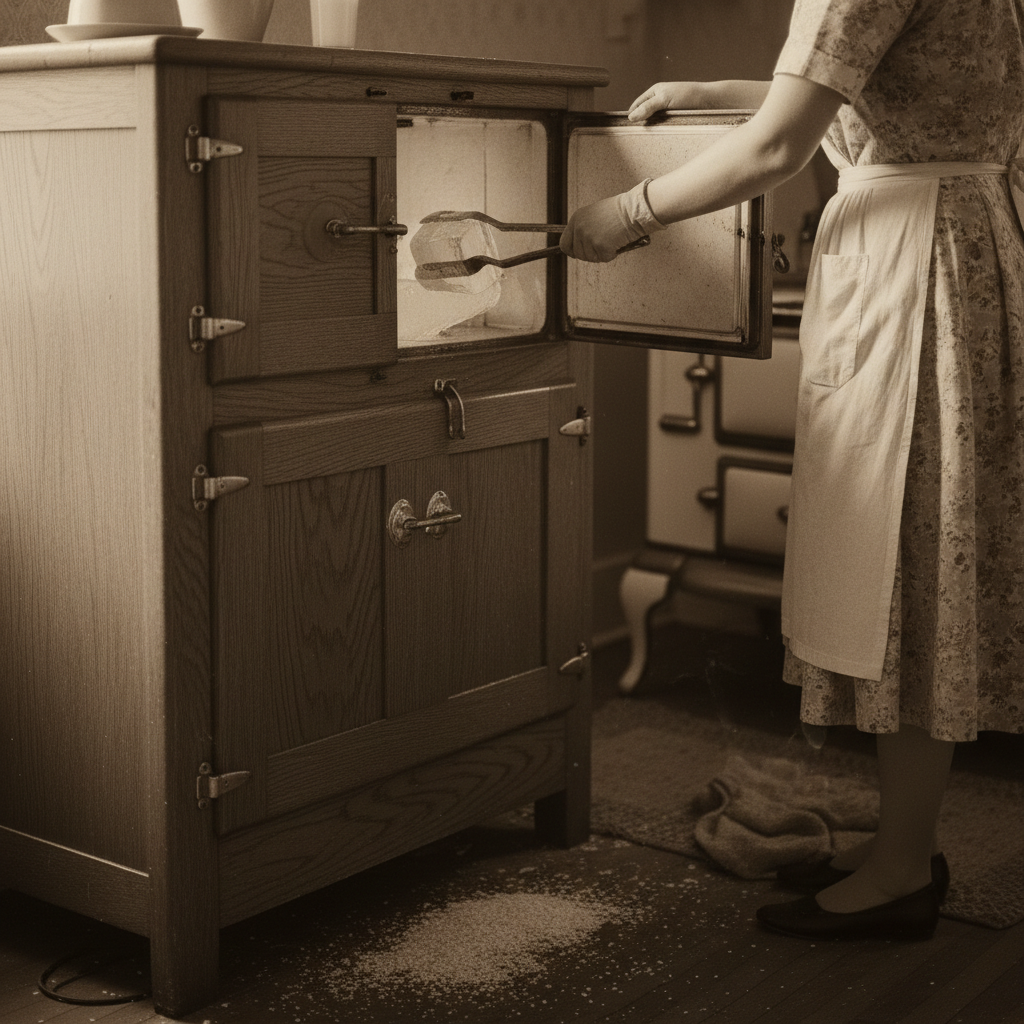 Illustration created for WistMem; not an archival photograph.
Ask about the delivery, not just the cabinet
If someone remembers an ice box, ask where the ice came from, who dealt with meltwater, and which foods got the coolest place. If they remember a window card or a particular delivery route, record those as their recollections; designs and local arrangements differed. The cold came in through the door, and the meltwater had to go out again.
The story continues in Milkman Glass Bottles on the Doorstep, another household routine built around deliveries.
What does it bring back for you?
Ask someone who remembers, or begin with your own version. A few words can be enough.
What everyday sound or smell brings back a home you remember?
Then ask: Who was there, and what were they doing?
Find more conversation starters Choose what feels comfortable. Ask before recording or sharing someone’s words.Relive the Memory
Find a little of the story.
Something here bring back a memory? Take a look at what you can find today.
Searching for: vintage antique ice box refrigerators
Vintage & collectible finds
Look for older objects and collectibles connected to this memory.
Search eBay (opens in a new tab)Related finds on Amazon
Explore items related to the same topic, from familiar styles to things made today.
Search Amazon (opens in a new tab)These links open search results. Items, prices, and availability vary.
Affiliate links. We may earn a commission at no extra cost to you.
As an Amazon Associate I earn from qualifying purchases. As an eBay Partner, WistMem may earn from qualifying purchases.
Does this bring back memories?
Share this story with someone who would remember.