Make this page easier to read
Your choices are saved on this device.
A butter churn turned cream into a household product through repeated movement. A surviving churn and an oral history show both the object and the work around it.
A churn standing by a porch can look like a quaint prop until you imagine the time it demanded. The cream had to be collected, the vessel prepared, and the dasher worked again and again. The reward was not only butter for the table: in some households it could be a product to sell or exchange.
What did the dasher do?
A traditional upright churn held cream in a vessel while a wooden dasher was moved through it. Repeated agitation brought the butter together and left buttermilk behind. The National Museum of American History's stoneware churn and wooden dasher shows the parts as separate objects, which helps make sense of an old photograph or a tool found in an outbuilding. A churn could be ceramic, wood, or another design; the parts, not the picturesque setting, identify how it worked.
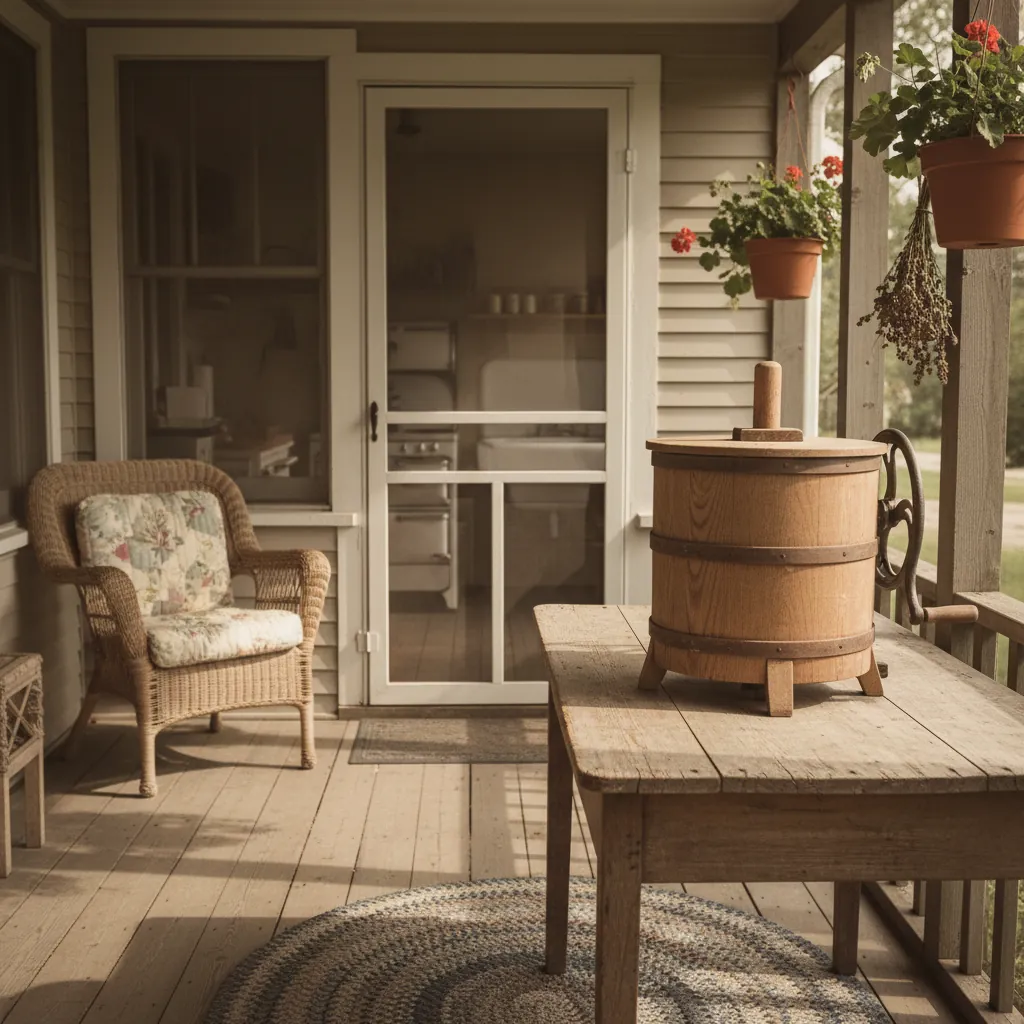 Illustration created for WistMem; not an archival photograph.
The National Park Service's classroom account of butter making uses cream and agitation to demonstrate the transformation. That simple principle does not reveal how often a family churned or who did the work. For that, household records or a person's own recollection are more valuable.
What happened to the butter?
In a National Park Service oral-history interview, Nellie Ballard recalled her mother churning butter from separated cream and her father selling it at a store. Her account belongs to one family and place; it shows that butter making could connect domestic labor to the local economy. For another household, the butter might have stayed on the kitchen table.
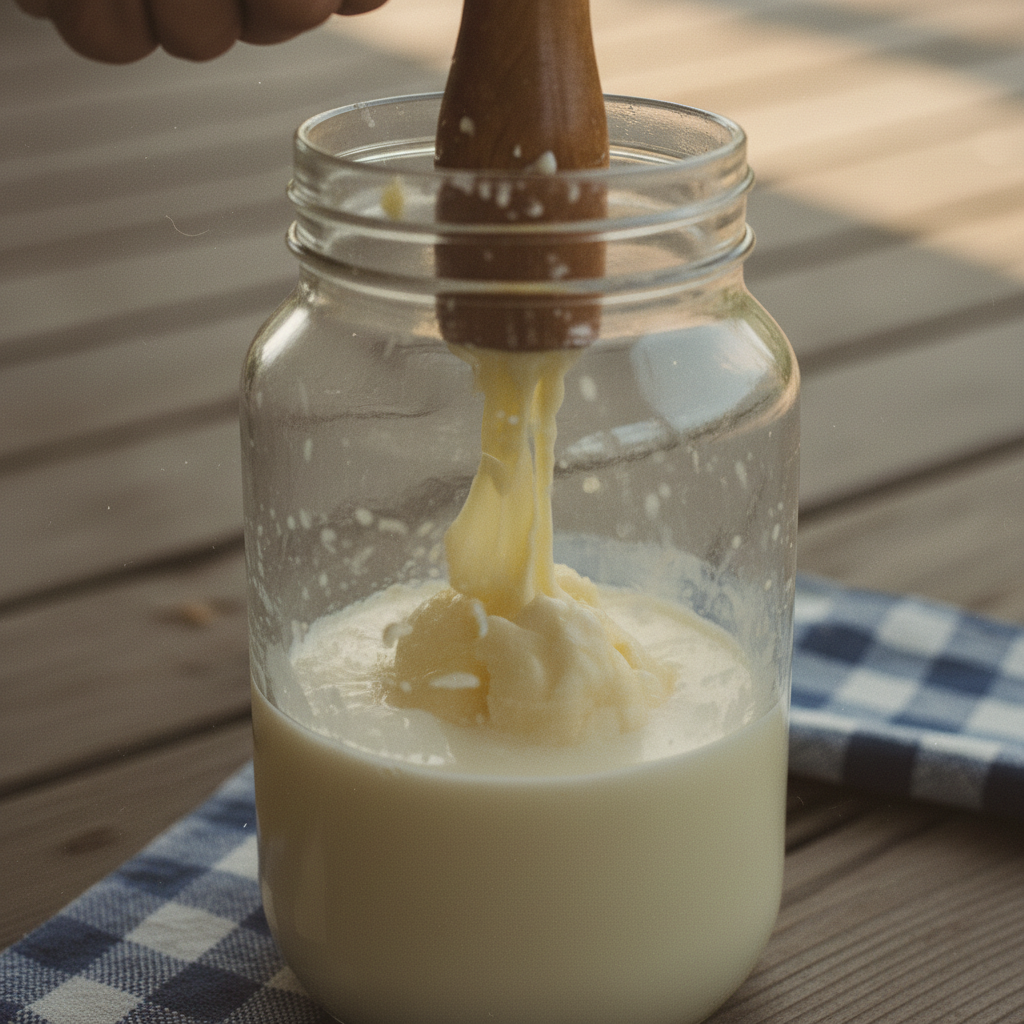 Illustration created for WistMem; not an archival photograph.
If you have an inherited churn, ask whether it was used for everyday food, for a farm business, or later kept as a reminder. Who skimmed the cream, cleaned the vessel, and decided when the butter was ready? Those jobs can disappear behind the simple image of a hand on the dasher. The butter on the table began with someone saving cream and taking time to churn it.
For another hand-powered treat with an ice bath rather than a cream churn, read Hand-Cranked Ice Cream Makers.
What does it bring back for you?
Ask someone who remembers, or begin with your own version. A few words can be enough.
What everyday sound or smell brings back a home you remember?
Then ask: Who was there, and what were they doing?
Find more conversation starters Choose what feels comfortable. Ask before recording or sharing someone’s words.Relive the Memory
Find a little of the story.
Something here bring back a memory? Take a look at what you can find today.
Searching for: vintage antique butter churn porch
Vintage & collectible finds
Look for older objects and collectibles connected to this memory.
Search eBay (opens in a new tab)Related finds on Amazon
Explore items related to the same topic, from familiar styles to things made today.
Search Amazon (opens in a new tab)These links open search results. Items, prices, and availability vary.
Affiliate links. We may earn a commission at no extra cost to you.
As an Amazon Associate I earn from qualifying purchases. As an eBay Partner, WistMem may earn from qualifying purchases.
Does this bring back memories?
Share this story with someone who would remember.