Make this page easier to read
Your choices are saved on this device.
The SX-70 made an instant photograph a social object: one person took it, others watched it appear, and someone decided who kept the single print.
At a family gathering, an instant camera made the photograph part of the event. A person posed, the camera released a pale print, and people gathered to see whether everyone had stayed in the frame. Unlike a roll that went to a lab, this picture could be passed around before coats were collected. The question of who kept the only copy could become a small negotiation.
What made the print immediate?
Polaroid's SX-70 film description explains that the integral print develops after it leaves the camera. The company identifies the SX-70 format as introduced in 1972 and notes that the film pack includes a battery for the camera. Those design details made the camera and film a self-contained experience, without a trip to a photo lab. Other Polaroid models and earlier peel-apart films worked differently, so a family memory of separating layers may refer to a different device.
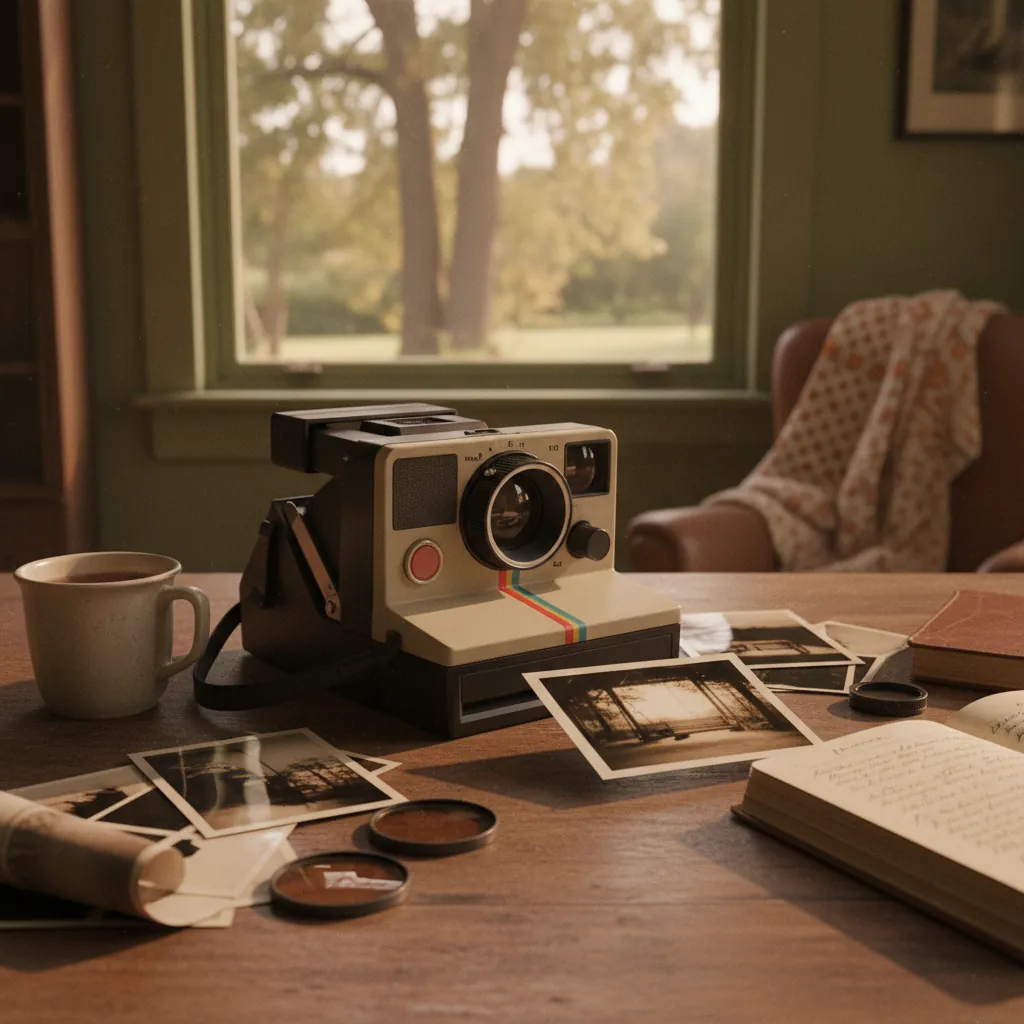 Illustration created for WistMem; not an archival photograph.
The print was also scarce in a social sense. A pack produced a limited number of pictures, and each exposure gave one physical photograph. A family might use it for a birthday cake, a visitor, or a new baby, then write a name or date on the border. Ask who operated the camera, who got the picture, and whether another shot was taken because somebody blinked.
What can the photograph tell you now?
Read any inscription as a clue, then ask who wrote it and when. Photograph both sides before placing the original in a safe enclosure. The Library of Congress advice on photograph care recommends storing pictures away from direct light, heat, and damp, and avoiding sticky album pages. Keep a separate note for identifications a relative supplies today so the old writing remains distinguishable.
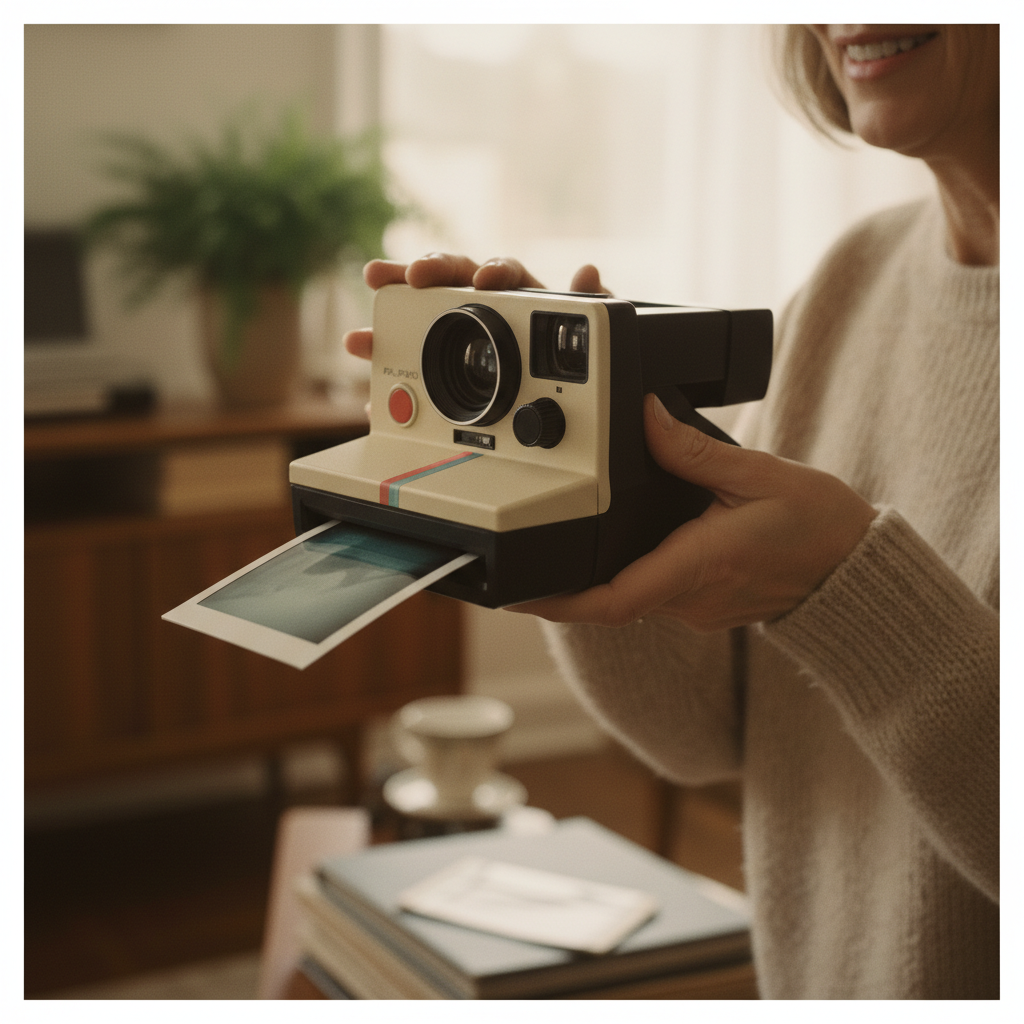 Illustration created for WistMem; not an archival photograph.
The family gathering gives this second Polaroid story a different center from the development myth. If someone remembers waving the print, Did Shaking a Polaroid Help? explains the chemistry and the camera-era distinction. Here the lasting question is who took the photograph home.
What does it bring back for you?
Ask someone who remembers, or begin with your own version. A few words can be enough.
What object changed how you spent an ordinary day?
Then ask: How did you learn to use it, and what could it not do?
Find more conversation starters Choose what feels comfortable. Ask before recording or sharing someone’s words.Relive the Memory
Find a little of the story.
Something here bring back a memory? Take a look at what you can find today.
Searching for: vintage polaroid camera shake
Vintage & collectible finds
Look for older objects and collectibles connected to this memory.
Search eBay (opens in a new tab)Related finds on Amazon
Explore items related to the same topic, from familiar styles to things made today.
Search Amazon (opens in a new tab)These links open search results. Items, prices, and availability vary.
Affiliate links. We may earn a commission at no extra cost to you.
As an Amazon Associate I earn from qualifying purchases. As an eBay Partner, WistMem may earn from qualifying purchases.
Does this bring back memories?
Share this story with someone who would remember.