Make this page easier to read
Your choices are saved on this device.
A percolator's basket, stem, and visible top show how coffee circulated. Surviving models explain why a cook had to judge strength, while the morning-sound memory tells a different story.
Opening an old percolator can feel like unpacking a little machine. There is the basket for grounds, a long central stem, the lid, and often a clear top. Each part has a job. Their arrangement explains the bubbling seen from above and why someone had to decide when the coffee tasted right.
What did the basket and stem do?
Heated water rose through the hollow stem and passed through grounds in the basket before returning to the pot. The Smithsonian's account of a Sunbeam electric percolator describes the repeated circulation and a dial that allowed a milder or stronger brew. The clear top, when present, let a cook see liquid moving and darkening; it was not a universal measure of strength. A person might still rely on time, color, or taste.
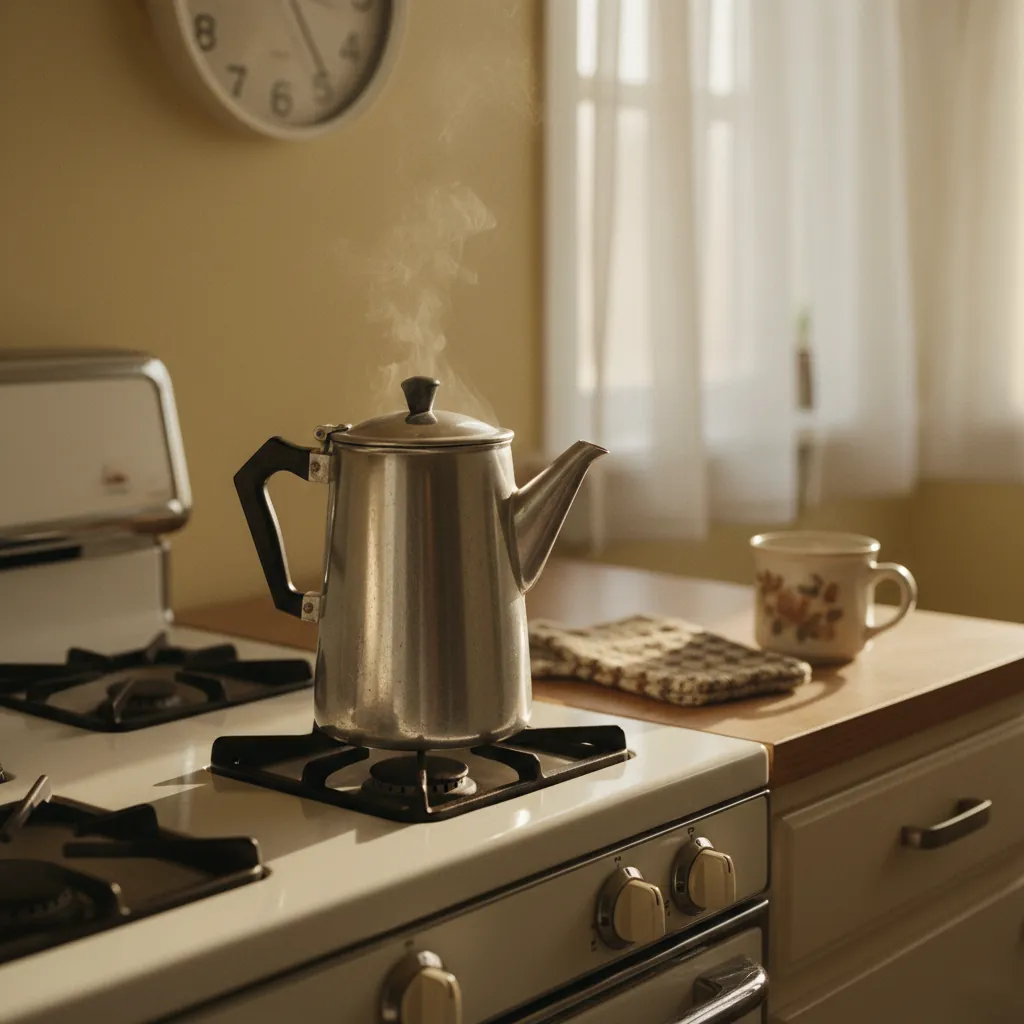 Illustration created for WistMem; not an archival photograph.
Parts differed by model. The museum's 1967 Oster electric percolator has a perforated aluminum bowl, cover, central shaft, and plastic lid knob. Instructions printed on its base say to start with cold water and avoid immersing the base. That warning belongs to this electrical design; a stovetop pot has a different care routine.
How can you identify one in a photograph?
Look for a cord or plug, the shape of the handle, the material of the body, and any control at the base. A circa-1966 Farberware model in the Smithsonian collection carries a front light and “fully automatic” marking. Such details separate a mid-century electric pot from a plain stovetop one. They can also prompt a family question: did someone watch the glass top, or trust an automatic switch?
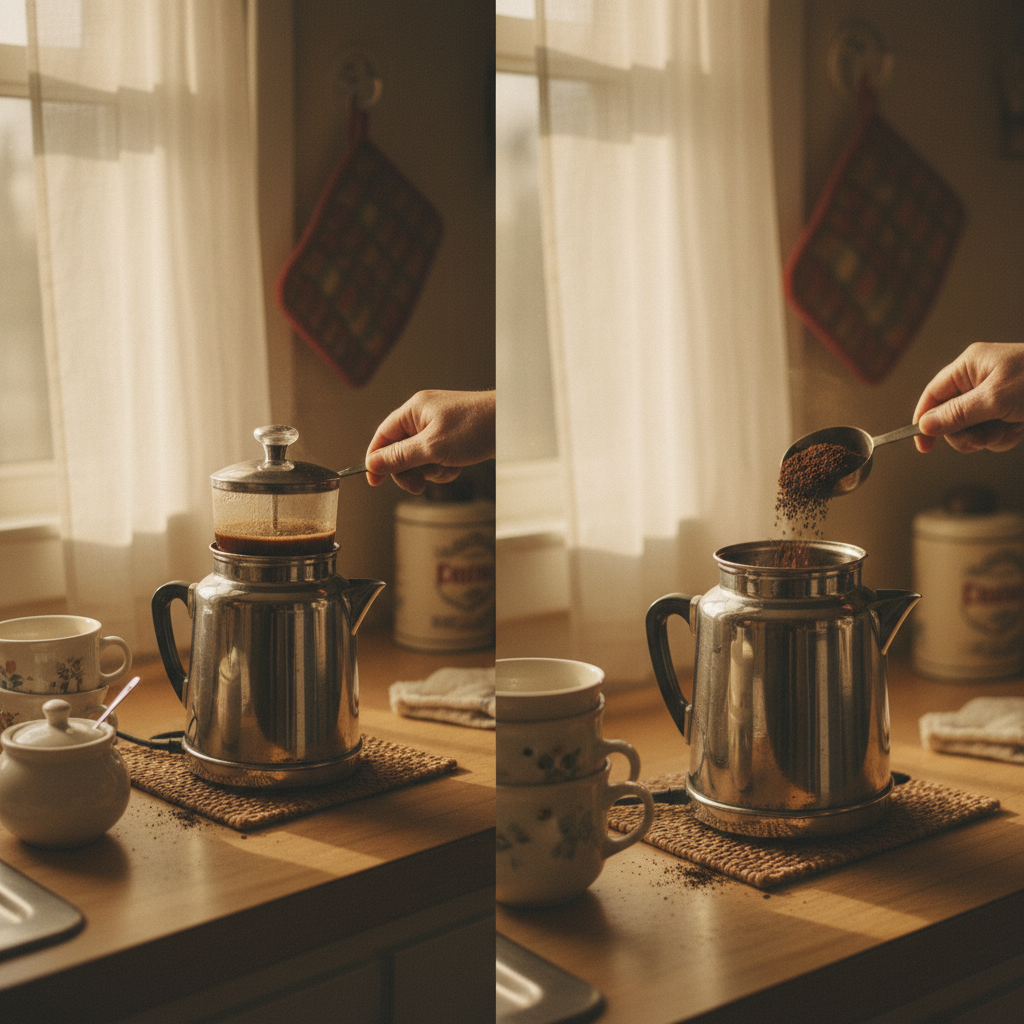 Illustration created for WistMem; not an archival photograph.
If a family still has the pot, photograph its parts together before putting it away. That record will help another person understand what the loose basket and stem belonged to. For the social cue made by its sound, read The Percolator as a Morning Signal.
What does it bring back for you?
Ask someone who remembers, or begin with your own version. A few words can be enough.
What everyday sound or smell brings back a home you remember?
Then ask: Who was there, and what were they doing?
Find more conversation starters Choose what feels comfortable. Ask before recording or sharing someone’s words.Relive the Memory
Find a little of the story.
Something here bring back a memory? Take a look at what you can find today.
Searching for: vintage antique percolator coffee pot
Vintage & collectible finds
Look for older objects and collectibles connected to this memory.
Search eBay (opens in a new tab)Related finds on Amazon
Explore items related to the same topic, from familiar styles to things made today.
Search Amazon (opens in a new tab)These links open search results. Items, prices, and availability vary.
Affiliate links. We may earn a commission at no extra cost to you.
As an Amazon Associate I earn from qualifying purchases. As an eBay Partner, WistMem may earn from qualifying purchases.
Does this bring back memories?
Share this story with someone who would remember.