Make this page easier to read
Your choices are saved on this device.
Party-line customers shared access and could sometimes hear another conversation. A Southern Bell guide asked callers to keep calls short, leave time between them, and replace the receiver properly.
A party line brought more than a dial tone into a home. It brought a small set of social obligations. A call might have to wait because a neighbor was speaking. A long conversation could hold up someone else. The receiver had to be put back correctly or the line could remain unavailable. These were practical rules for a shared service, not just old-fashioned manners.
What did the telephone company ask people to do?
A Southern Bell booklet in the Library of Congress telephone-directory collection advised party-line users to make a few calls, pause so others could call, avoid long calls at busy times, and place the receiver firmly on its hook afterward. It explained that an off-hook receiver interrupted service for others on the line. The booklet reveals the behavior the company wanted to encourage; it does not prove that every caller followed it.
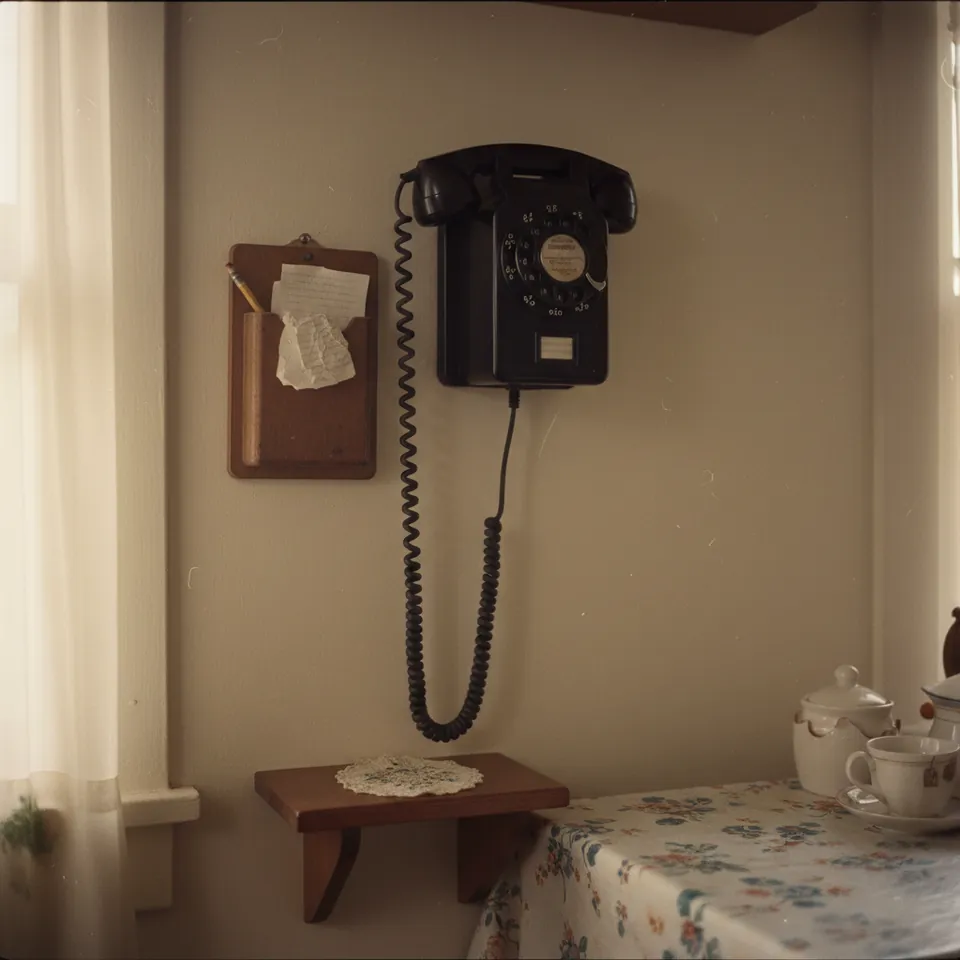
 Illustration created for WistMem; not an archival photograph.
Another telephone directory preserved by the Library told subscribers who heard someone speaking when they lifted the receiver to hang up and try later. That instruction acknowledges the awkward fact behind many stories of party lines: another household's conversation could be audible. The possibility of overhearing made discretion part of using the phone.
How did people remember the arrangement?
Some remember frustration when the line was busy; others remember learning who lived nearby through the shared service. Ask who in the household decided a call was urgent, whether the phone rang with a distinctive pattern, and what happened if someone forgot to hang up. Those details belong to the household rather than the company's etiquette sheet.
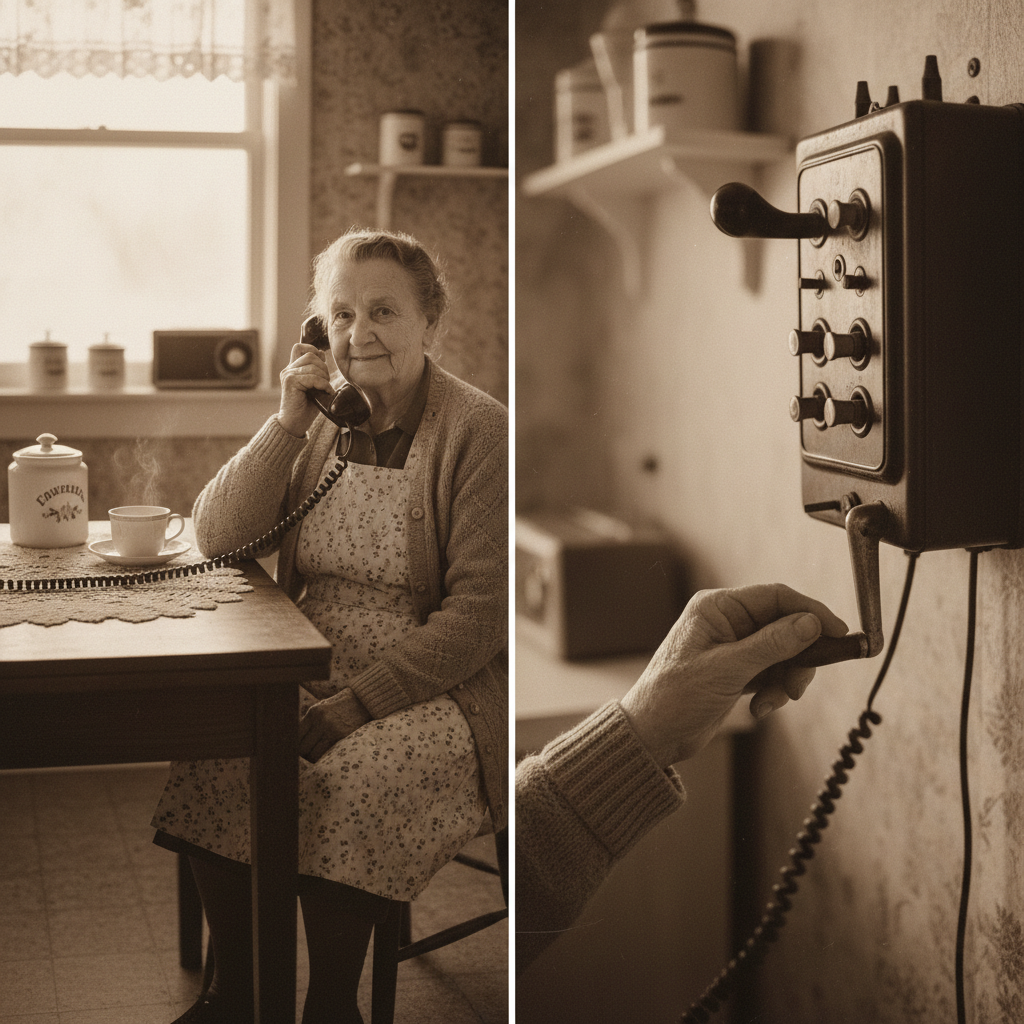 Illustration created for WistMem; not an archival photograph.
The system did not disappear everywhere at once. A 1997 FCC order still discussed party-line customers as carriers phased out the service. A shared line worked better when neighbors treated time on it as shared space. For the circuit and ringing procedures, see How a Party-Line Telephone Worked.
What does it bring back for you?
Ask someone who remembers, or begin with your own version. A few words can be enough.
What everyday sound or smell brings back a home you remember?
Then ask: Who was there, and what were they doing?
Find more conversation starters Choose what feels comfortable. Ask before recording or sharing someone’s words.Relive the Memory
Find a little of the story.
Something here bring back a memory? Take a look at what you can find today.
Searching for: vintage antique party line telephone
Vintage & collectible finds
Look for older objects and collectibles connected to this memory.
Search eBay (opens in a new tab)Related finds on Amazon
Explore items related to the same topic, from familiar styles to things made today.
Search Amazon (opens in a new tab)These links open search results. Items, prices, and availability vary.
Affiliate links. We may earn a commission at no extra cost to you.
As an Amazon Associate I earn from qualifying purchases. As an eBay Partner, WistMem may earn from qualifying purchases.
Does this bring back memories?
Share this story with someone who would remember.