Make this page easier to read
Your choices are saved on this device.
Long before modern refrigerators hummed in every kitchen, the wooden ice box kept food cool through a steady ritual of block ice and vigilant maintenance.
"Someone always had to remember to empty the drip pan before the melting ice spilled across the kitchen linoleum."
A sturdy wooden cabinet stood quietly in the corner of the kitchen, its heavy latch sealing a small world of cold air against the summer heat. Inside its insulated walls, perishable goods waited on metal shelves while the household went about its daily routines. This was the ice box, a masterwork of simple physics that predated the widespread hum of electric refrigeration in ordinary homes.
The rhythm of the week depended heavily on the arrival of the iceman. Whether riding in a truck or a horse-drawn wagon, he navigated neighborhood streets with a leather protective apron over his shoulder and heavy metal tongs in his grip. Hearing that familiar vehicle pull up to the curb meant it was time to place the colored cardboard card in the front window, indicating how many pounds of ice the household needed that day.
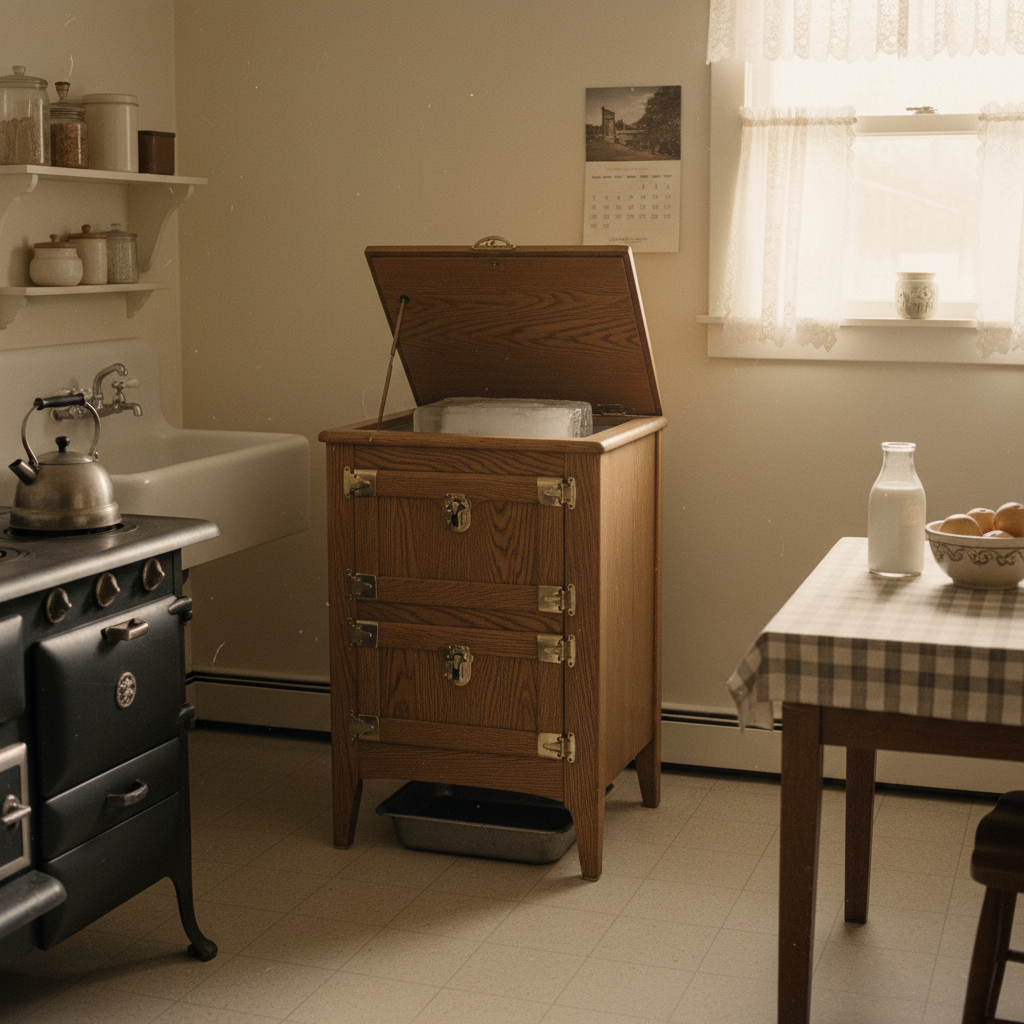
Watching the delivery was an afternoon spectacle for children peering into the room. The iceman would hoist a glistening, dripping block of crystal-clear ice, balance it expertly against his leather pad, and carry it up the back steps. He slid the heavy block directly into the top compartment of the cabinet, immediately sharpening the indoor air with a clean, mineral chill that signaled relief from the humidity.
Beneath the ice chamber sat a galvanized drip pan designed to catch the continuous meltwater. Emptying that pan was a non-negotiable household chore assigned to whichever child was closest at hand. A missed afternoon meant a spreading puddle on the linoleum floor, offering an immediate consequence for forgetfulness and teaching a practical lesson in domestic upkeep.
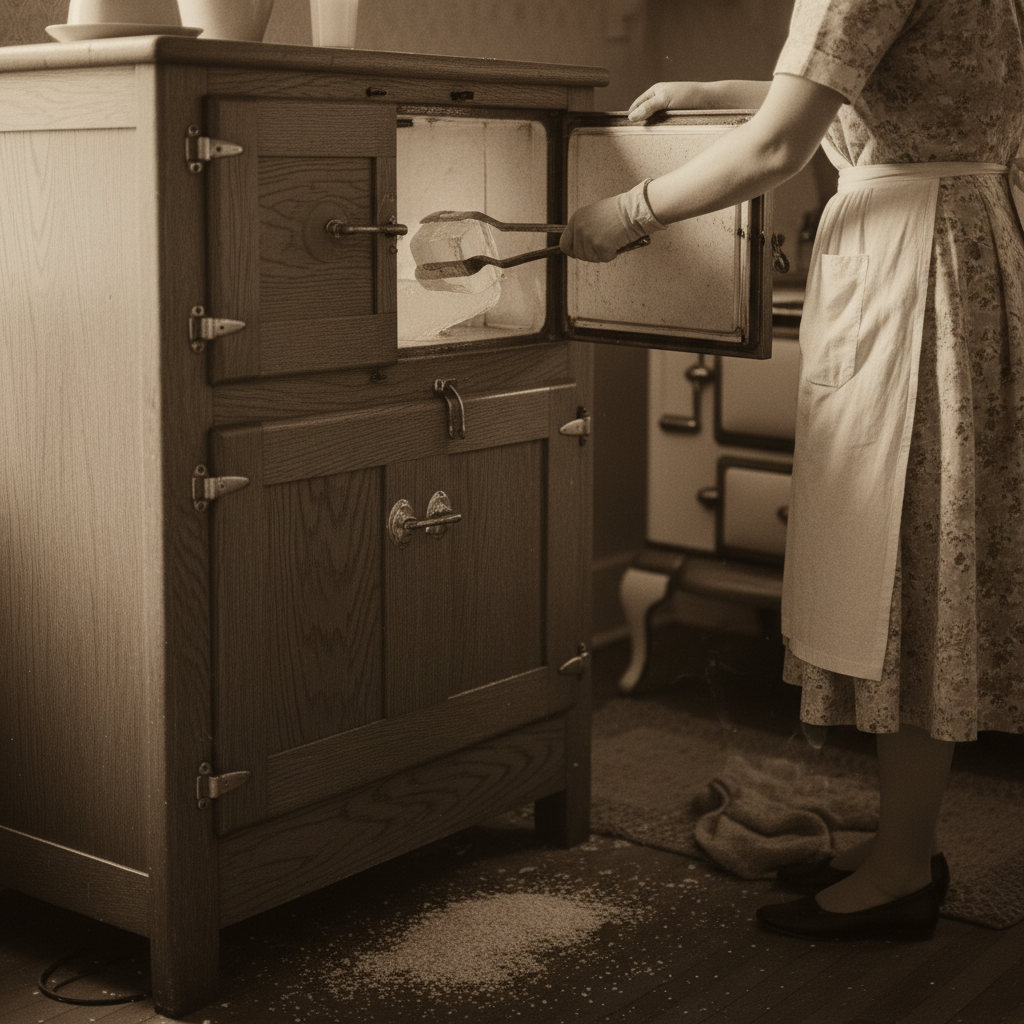
Provisions inside were managed with careful thrift because space and cooling power were strictly limited. Fresh milk in glass bottles, blocks of butter, and covered bowls of Sunday leftovers were arranged strategically to catch the descending draft. Nothing was wasted, and menu planning revolved entirely around what the ice box could safely preserve from one day to the next.
As the decades progressed, quiet electric compressors gradually replaced the blocks of ice delivered to the door. The transition happened steadily through the 1940s and 1950s as utility lines spread and new appliances entered the market. The old wooden cabinets were relegated to back porches or basements, leaving behind a vanished domestic rhythm built entirely around melting water and the weight of solid ice.
Does this bring back memories?
Share this story with someone who would remember.
Relive the Memory
Find Vintage Treasures on eBay
Searching for: vintage antique ice box refrigerators
Shop the Memory on eBayAs an eBay Partner, WistMem may earn from qualifying purchases.