Make this page easier to read
Your choices are saved on this device.
A handwritten recipe box holds more than instructions: changes in handwriting, ingredients, and family routines can tell a story. Here is how to read and preserve those clues without losing the original cards.
A recipe card often answers a question a printed cookbook cannot: who made this dish in this household? The handwriting may be familiar, while the instructions are oddly brief. “Bake until done” made sense to someone who had watched it happen. To a grandchild finding the card years later, those four words invite a conversation.
What a recipe card can tell you
Read the card as a household record as well as a set of directions. Notice whose writing appears on the front and back, whether an ingredient was crossed out, and if a second hand added a note. A stain may suggest frequent use, but it cannot prove which occasion or person caused it. Date or identify a card only when a relative, inscription, or other record supports that detail.
The Smithsonian's Archives Center Cookbook Collection includes recipe cards, clippings, and handwritten recipes alongside commercial cookbooks. These modest formats are worth keeping precisely because they document food customs that formal publications can miss. One family's box may mix a newspaper clipping, a neighbor's index card, and a carefully copied holiday dish. Each has a different origin.
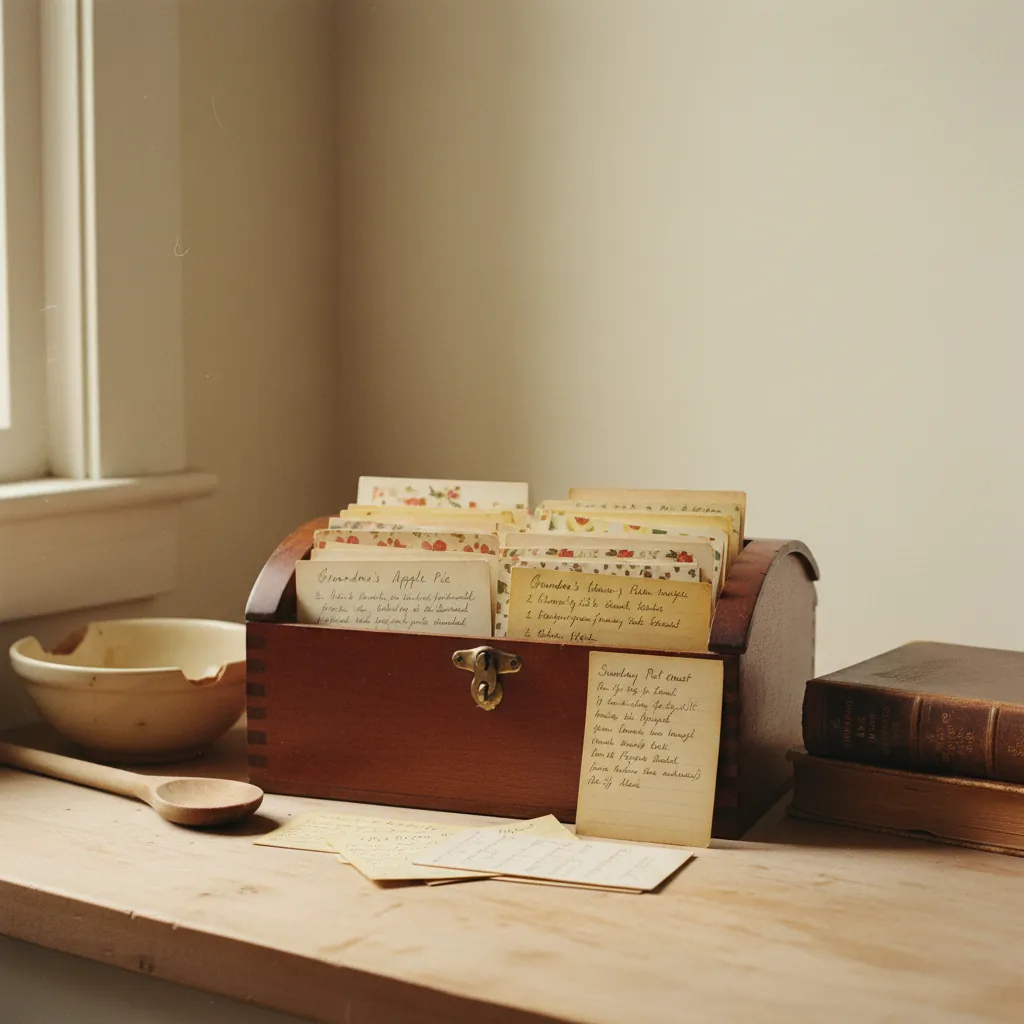 Illustration created for WistMem; not an archival photograph.
How to preserve the cards
First, make a simple inventory. Photograph or scan both sides of each card, including the dividers and any notes tucked between cards. Keep the file names tied to the order in the box, then write down what you know about the cook, the occasion, and the person who gave you that information. If a relative is available, ask what “the heavy skillet” or a family nickname meant before standardizing the wording. Keep their explanation alongside the transcription rather than silently changing the original.
For the paper itself, the Library of Congress recommends clean hands and surfaces, keeping food and drink away, limiting light, and using a cool, relatively dry, stable storage space. Acid-free folders or a suitable document box offer better protection than an attic, basement, or sunny kitchen shelf. Avoid adhesive tape on a torn card; the Library's paper preservation FAQ specifically advises against self-stick tape, including products marketed as archival.
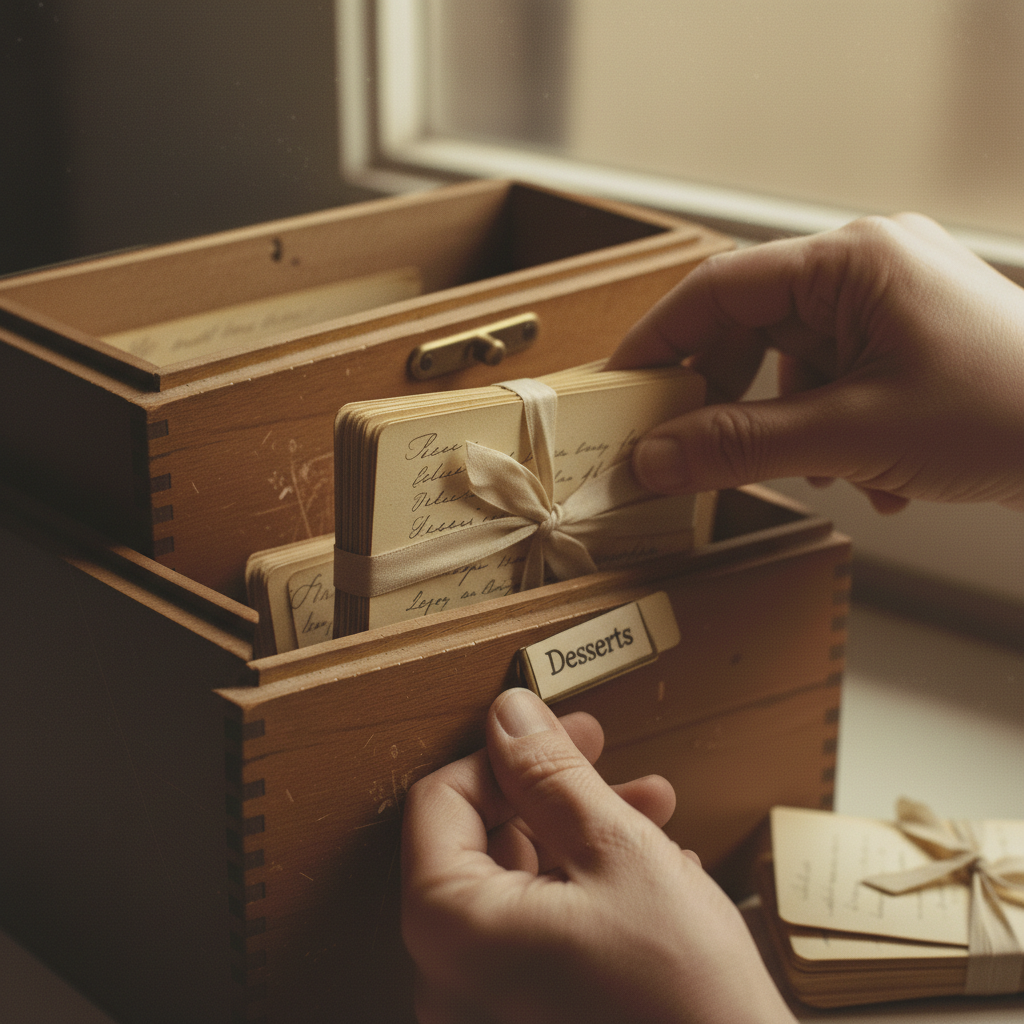 Illustration created for WistMem; not an archival photograph.
Keep the story with the recipe
A faithful copy can preserve the instructions and make them easier to use. It does not replace the card. Record uncertainties plainly: “possibly Aunt May's handwriting” is more useful than a confident attribution that might be wrong. Note any substitutions you make when cooking the dish today, separately from the original wording.
The Smithsonian's oral-history guide suggests collecting memories about the cooks, ingredients, celebrations, and traditions as part of a family recipe book. A useful starting question is: Who made this, and when did people ask for it? The answer may turn a short instruction into a fuller account of a family gathering.
If this brought a kitchen back to mind, browse more home memories or start a family conversation.
What does it bring back for you?
Ask someone who remembers, or begin with your own version. A few words can be enough.
What everyday sound or smell brings back a home you remember?
Then ask: Who was there, and what were they doing?
Find more conversation starters Choose what feels comfortable. Ask before recording or sharing someone’s words.Relive the Memory
Find a little of the story.
Something here bring back a memory? Take a look at what you can find today.
Searching for: vintage kitchen handwritten recipe box
Vintage & collectible finds
Look for older objects and collectibles connected to this memory.
Search eBay (opens in a new tab)Related finds on Amazon
Explore items related to the same topic, from familiar styles to things made today.
Search Amazon (opens in a new tab)These links open search results. Items, prices, and availability vary.
Affiliate links. We may earn a commission at no extra cost to you.
As an Amazon Associate I earn from qualifying purchases. As an eBay Partner, WistMem may earn from qualifying purchases.
Does this bring back memories?
Share this story with someone who would remember.