Make this page easier to read
Your choices are saved on this device.
A bread box gave loaves a familiar place on the counter. A Smithsonian example shows how makers built ventilation into the design; family details explain what actually lived inside.
A bread box did not have to be grand to anchor a kitchen. Its lid opened during breakfast, after school, and while someone packed lunch. When it was empty, the household knew another loaf was needed. The shape and position of the box can bring back a room more quickly than a list of appliances.
What was a bread box built to do?
It made a dedicated place for bread on the counter, away from the scattered utensils and crumbs of other work. A bread or cake box in the National Museum of American History has a tinned interior and small openings at the ends of its lid for ventilation. It was made by Kreamer Tinware of Brooklyn after 1873, with hinges, a handle, and a hasp. The details show that even an ordinary storage box involved choices about airflow, access, and appearance.
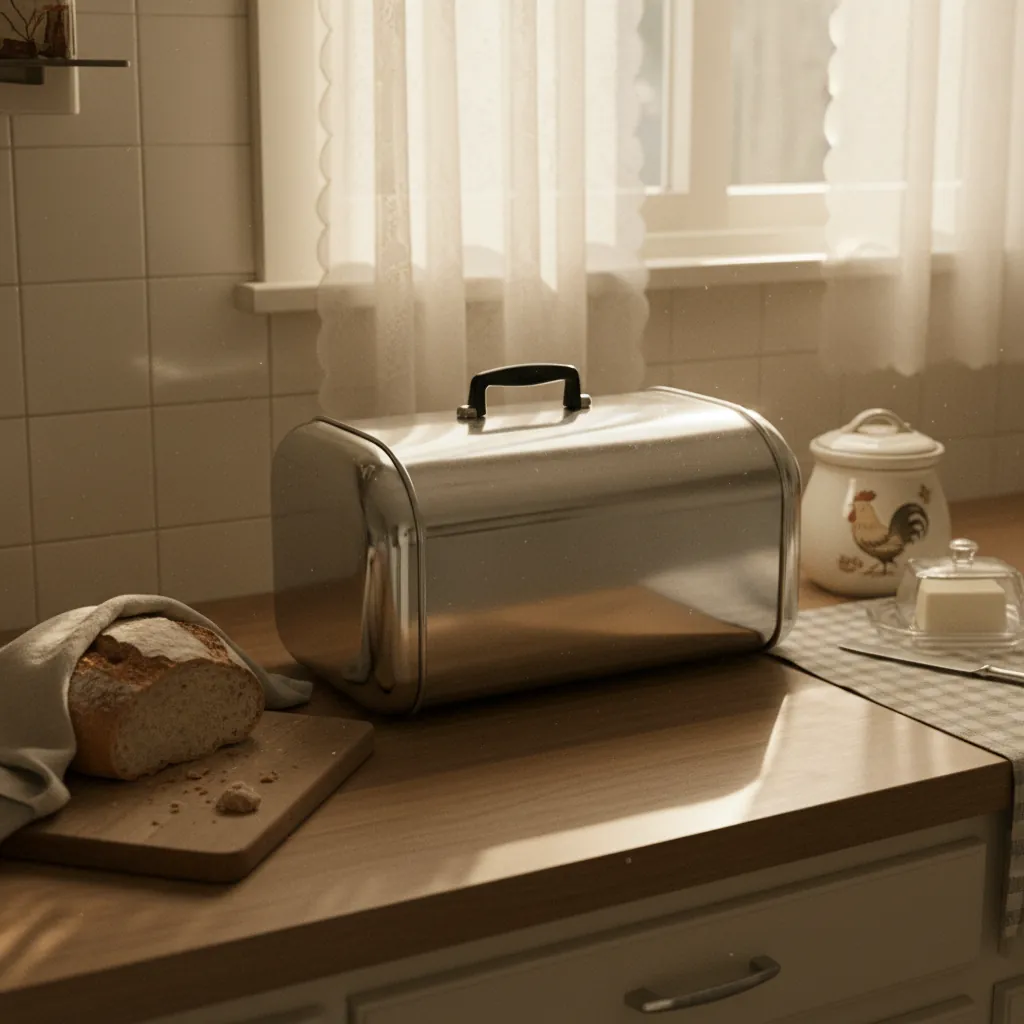 Illustration created for WistMem; not an archival photograph.
That museum example is older and more ornate than many twentieth-century roll-top or painted-metal boxes. Bread boxes were not all built to the same plan, and their ability to keep bread pleasant depended on the loaf, weather, and how quickly it was eaten. If an inherited box has a maker's stamp or an unusual vent pattern, record those details before deciding its age from a family photograph alone.
A container in the middle of family traffic
The useful question is what went into that particular box. Was it bakery bread, homemade rolls, or an assortment of packets that had no other shelf? Who checked it before shopping, and who found the end piece when they wanted a sandwich? A bread box can hold an account of daily habits precisely because it was opened so often.
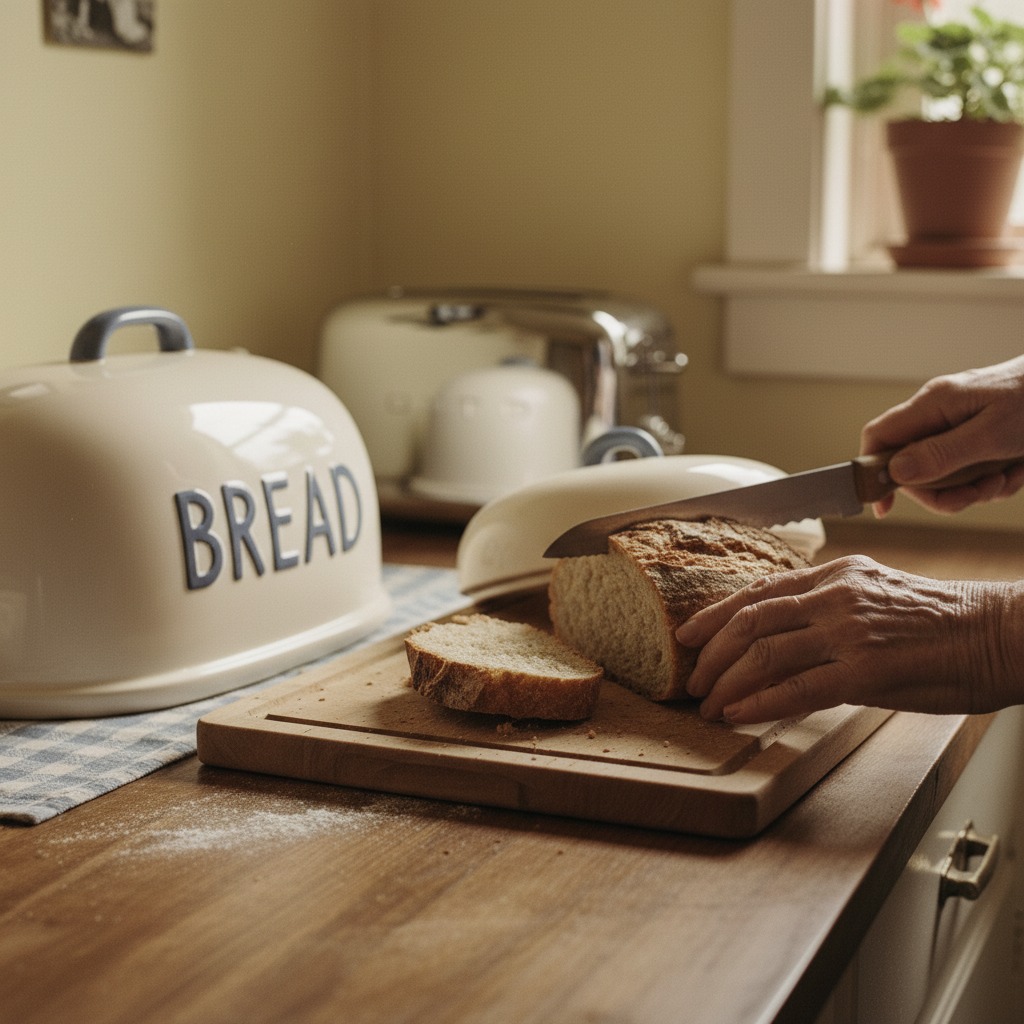 Illustration created for WistMem; not an archival photograph.
The box also sits in a longer story of kitchen storage. The Smithsonian's icebox exhibit shows how chilled storage depended on delivered ice before electric refrigeration. A bread box solved a different, smaller problem at room temperature. Remembering which foods went where can help reconstruct the layout of a kitchen without pretending every home used the same arrangement.
For the story of a container with a more surprising second life, read The Biscuit Tin That Held Everything but Biscuits.
What does it bring back for you?
Ask someone who remembers, or begin with your own version. A few words can be enough.
What everyday sound or smell brings back a home you remember?
Then ask: Who was there, and what were they doing?
Find more conversation starters Choose what feels comfortable. Ask before recording or sharing someone’s words.Relive the Memory
Find a little of the story.
Something here bring back a memory? Take a look at what you can find today.
Searching for: vintage kitchen bread box counter
Vintage & collectible finds
Look for older objects and collectibles connected to this memory.
Search eBay (opens in a new tab)Related finds on Amazon
Explore items related to the same topic, from familiar styles to things made today.
Search Amazon (opens in a new tab)These links open search results. Items, prices, and availability vary.
Affiliate links. We may earn a commission at no extra cost to you.
As an Amazon Associate I earn from qualifying purchases. As an eBay Partner, WistMem may earn from qualifying purchases.
Does this bring back memories?
Share this story with someone who would remember.