Make this page easier to read
Your choices are saved on this device.
A membership card, a due date, and a return counter turned movie night into a small shared responsibility. The paper trail can help place a family memory.
The moment at the rental counter was brief, but it linked a film to a household. Someone presented an account or membership card, a clerk completed the loan, and the film went home with a date attached. The person who chose it was not always the person responsible for bringing it back. In many families that difference became its own little argument, reminder, or after-school errand.
Why the counter mattered
Blockbuster's 2004 annual report filed with the SEC describes the standard domestic rental policy as part of a membership agreement. It also describes the mix of movie and game rentals, sales, and subscription programs offered at the time. The counter therefore did more than collect payment: it marked which household account had borrowed an item under which terms. Those terms shifted over the years, so a surviving receipt or membership document is more reliable for an exact price or return date than an assumed national rule.
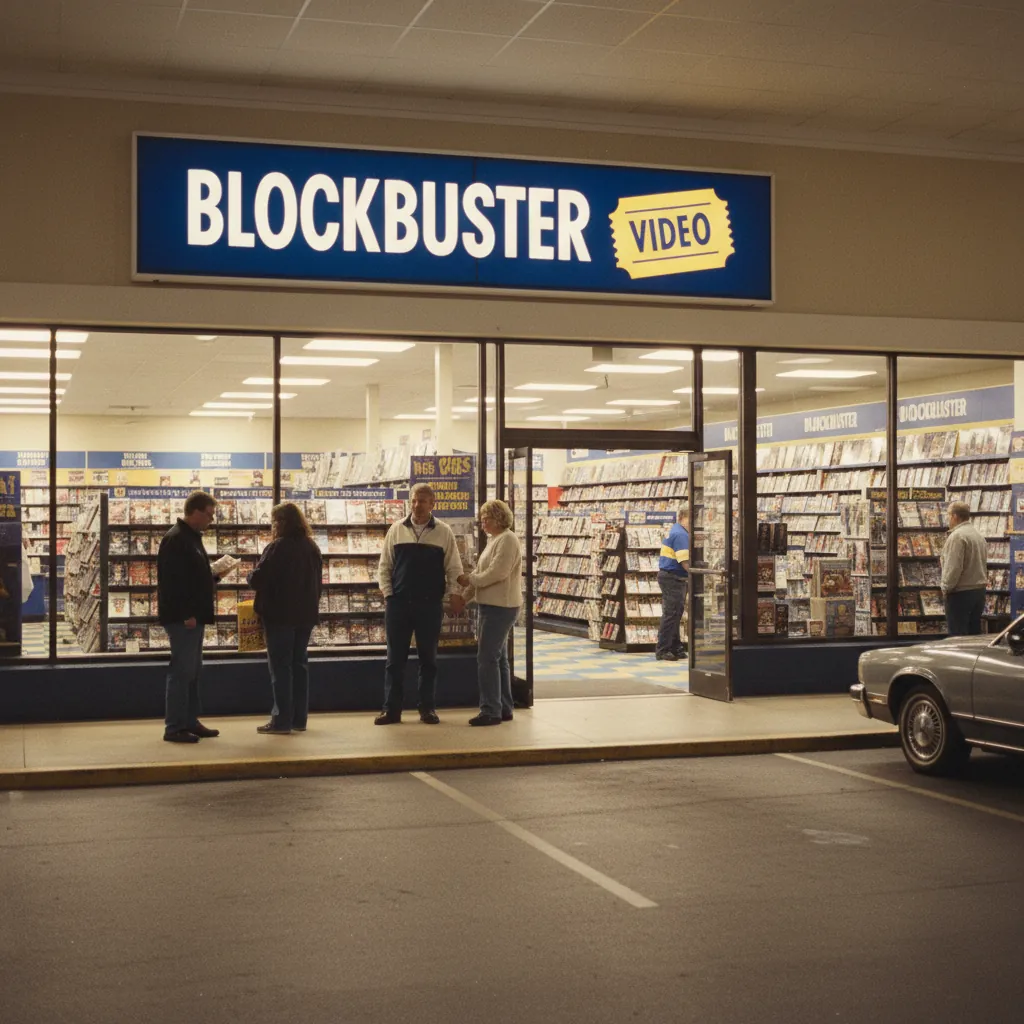 Illustration created for WistMem; not an archival photograph.
The return trip added another layer to the ritual. Before leaving, someone might check that the right case and disc or tape had made it into the bag. A drop box after hours could change who completed the errand; a counter visit could lead directly to browsing again. The film's journey—from shelf, to player, to case, to store—often involved several people even when only one name was on the account.
Ask who kept track
To recover a particular memory, ask who held the card and who remembered the due date. Did the family have a usual route home from the store? Were films returned on the school run, during a grocery trip, or as an outing of their own? These questions may reveal the household routine more clearly than asking for the title of every rented film.
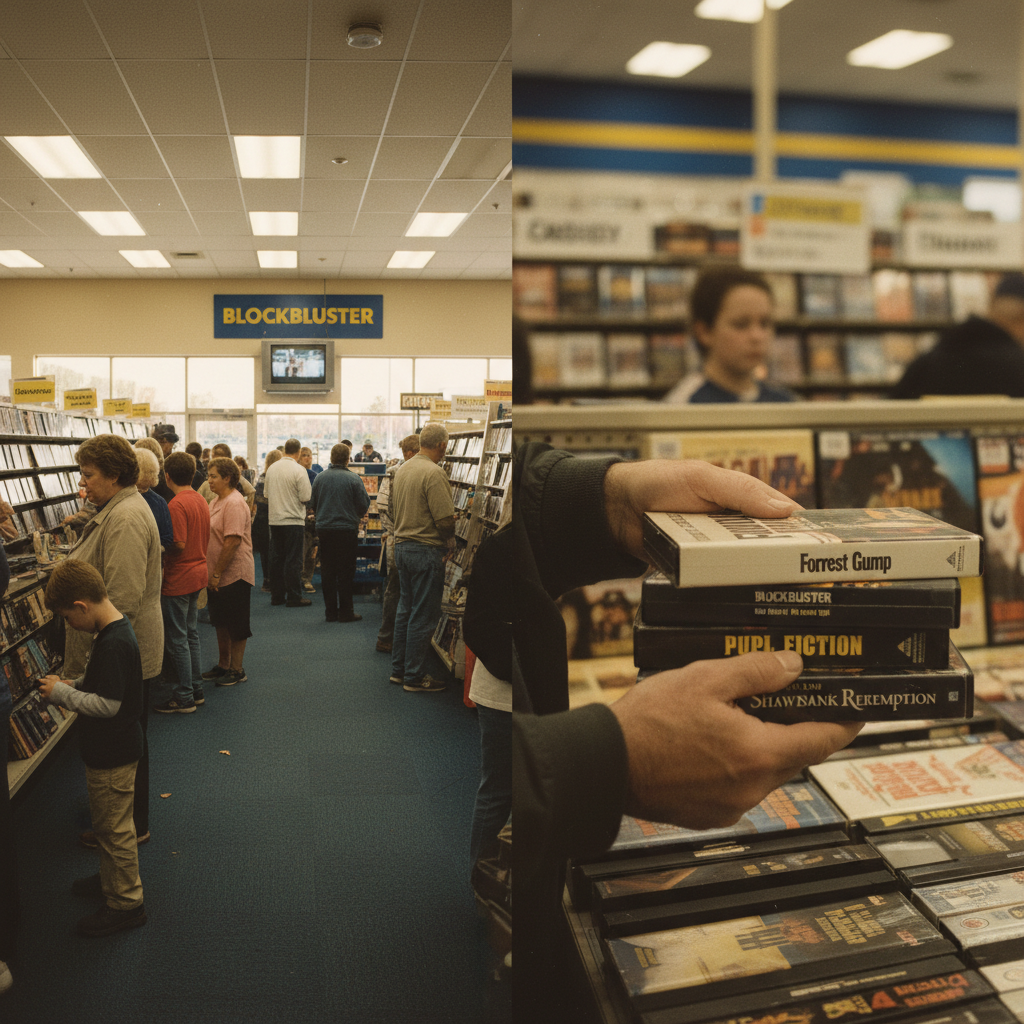 Illustration created for WistMem; not an archival photograph.
If you find an old receipt, record its store location and date before the ink fades. It can anchor the memory of a specific place without proving exactly who watched the film or what they thought of it. Let the person tell that part in their own words. The most useful record joins the paper evidence to the ordinary decisions around it.
For how the deadline itself changed, continue with How Blockbuster's Late-Fee Rules Changed.
What does it bring back for you?
Ask someone who remembers, or begin with your own version. A few words can be enough.
What did you look forward to watching, hearing, or doing for fun?
Then ask: Who shared it with you, and what do you remember about that time?
Find more conversation starters Choose what feels comfortable. Ask before recording or sharing someone’s words.Relive the Memory
Find a little of the story.
Something here bring back a memory? Take a look at what you can find today.
Searching for: vintage blockbuster video friday night
Vintage & collectible finds
Look for older objects and collectibles connected to this memory.
Search eBay (opens in a new tab)Related finds on Amazon
Explore items related to the same topic, from familiar styles to things made today.
Search Amazon (opens in a new tab)These links open search results. Items, prices, and availability vary.
Affiliate links. We may earn a commission at no extra cost to you.
As an Amazon Associate I earn from qualifying purchases. As an eBay Partner, WistMem may earn from qualifying purchases.
Does this bring back memories?
Share this story with someone who would remember.