Make this page easier to read
Your choices are saved on this device.
Rental deadlines shaped video-store habits. Blockbuster’s 2005 “No Late Fees” change altered the rule, but its replacement terms still mattered when a film stayed out too long.
The due date on a rented film could influence the whole weekend. A household might plan to watch it immediately, leave it beside the television as a reminder, and make one more stop at the store before closing. Returning the video was not an afterthought; under many rental agreements, keeping it beyond the initial period cost more. The deadline made a borrowed film feel different from one you owned.
What the older rental rule meant
Blockbuster's 2004 annual report describes the company's standard U.S. policy before 2005: customers paid for an initial rental period and agreed under the membership terms to pay for continued use after that period. A remembered fee should be tied to its own place and date, because prices, promotions, and rental lengths changed. What many people recall reliably is the practical consequence: someone in the household had to notice when the video was due.
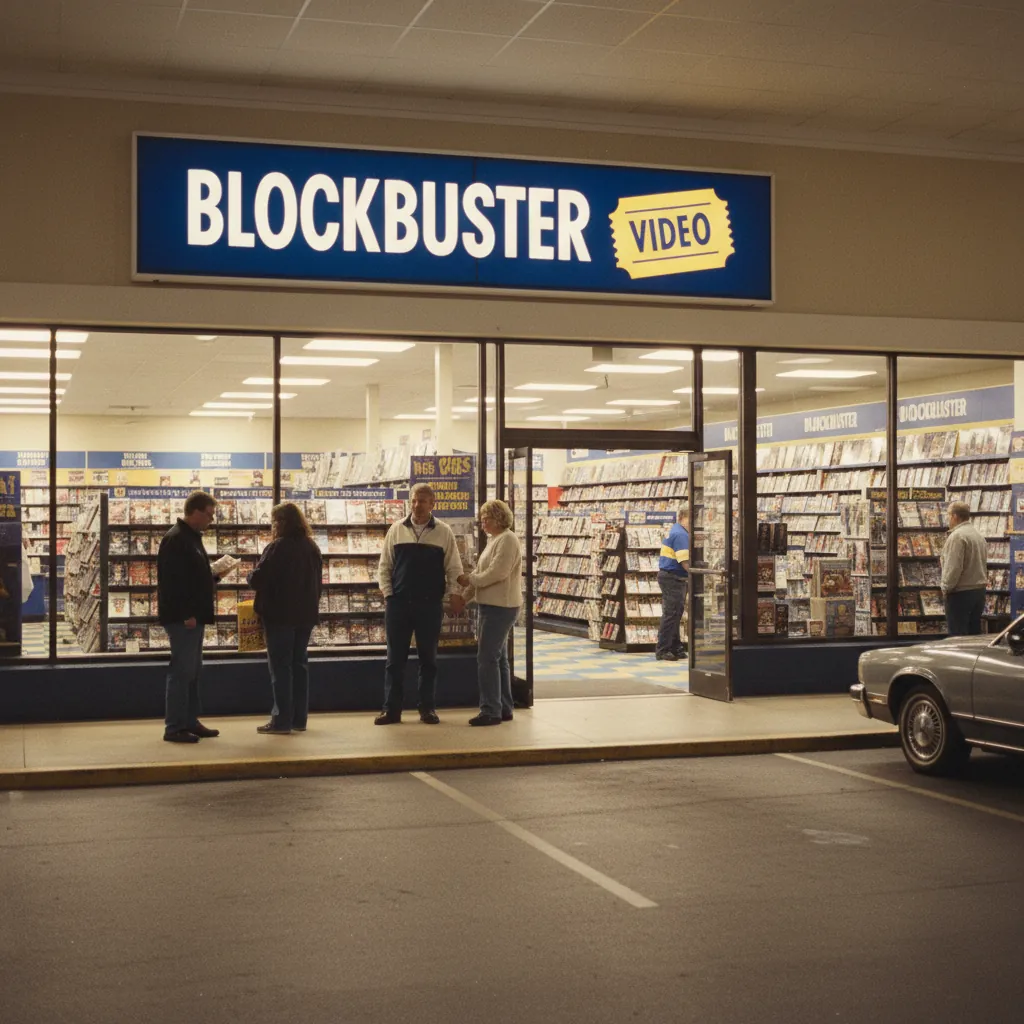 Illustration created for WistMem; not an archival photograph.
In December 2004, Blockbuster announced that participating U.S. stores would stop charging conventional late fees from January 1, 2005. That headline did not mean a customer could simply keep a rental indefinitely without another charge. The new terms could treat a long-unreturned film as a purchase, with a return and restocking arrangement afterward. California's attorney general described the disclosure dispute when states challenged the advertising in 2005. The distinction matters more than the slogan when explaining what actually changed for customers.
The family errand behind the policy
Ask who normally made the return trip. Was the video dropped off on the way to school or work? Did someone check the case to make sure the tape or disc was inside? These questions move beyond a broad memory of “late fees” to the way a household divided small responsibilities. A person may remember rushing to the store, or they may remember that a new policy made the rush less frequent.
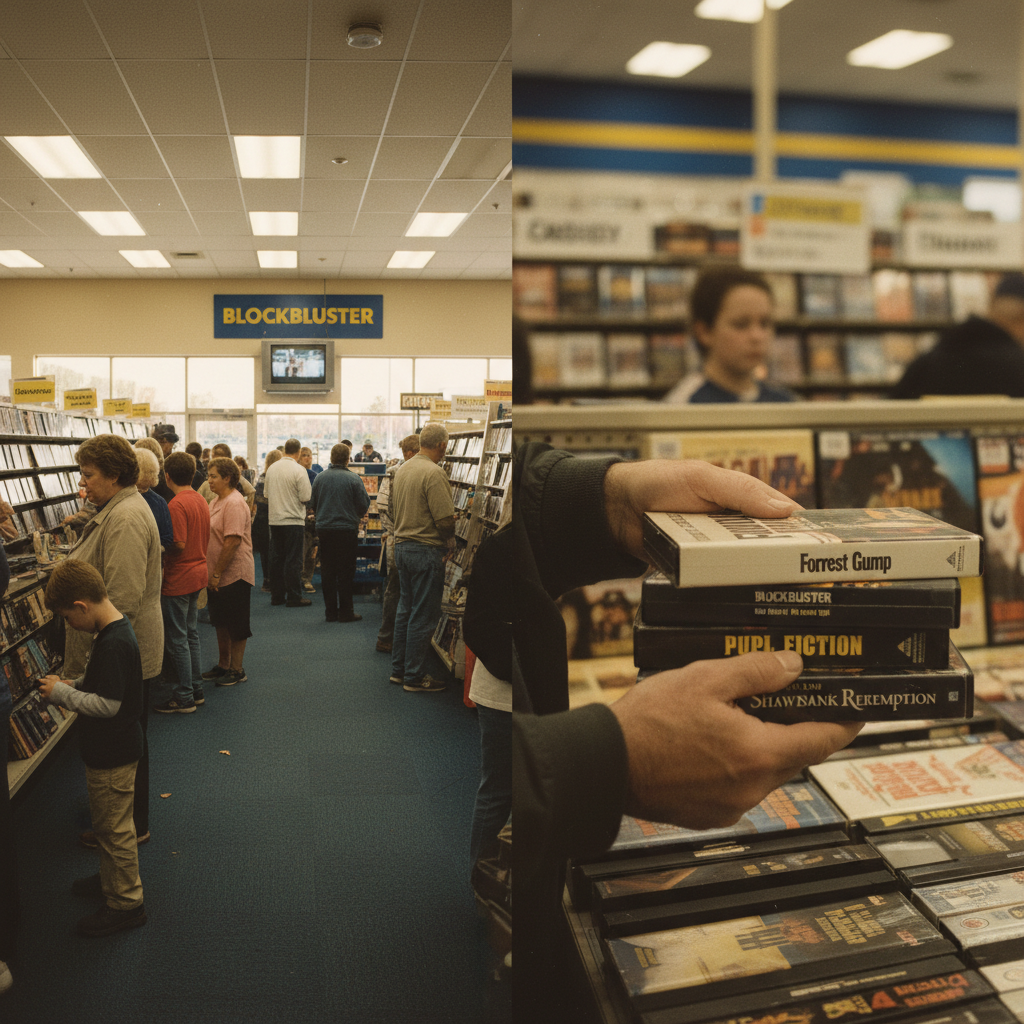 Illustration created for WistMem; not an archival photograph.
Old receipts, membership paperwork, and dated advertisements can help place a particular memory before or after the 2005 change. Keep the evidence separate from recollection: a receipt shows a transaction, while the story explains who chose the film and how the deadline felt at home. Together they give a fuller account of movie night than either can alone.
For the decision at the shelves before the rental began, see Choosing a Movie at Blockbuster on Friday Night.
What does it bring back for you?
Ask someone who remembers, or begin with your own version. A few words can be enough.
What did you look forward to watching, hearing, or doing for fun?
Then ask: Who shared it with you, and what do you remember about that time?
Find more conversation starters Choose what feels comfortable. Ask before recording or sharing someone’s words.Relive the Memory
Find a little of the story.
Something here bring back a memory? Take a look at what you can find today.
Searching for: vintage retro blockbuster video friday
Vintage & collectible finds
Look for older objects and collectibles connected to this memory.
Search eBay (opens in a new tab)Related finds on Amazon
Explore items related to the same topic, from familiar styles to things made today.
Search Amazon (opens in a new tab)These links open search results. Items, prices, and availability vary.
Affiliate links. We may earn a commission at no extra cost to you.
As an Amazon Associate I earn from qualifying purchases. As an eBay Partner, WistMem may earn from qualifying purchases.
Does this bring back memories?
Share this story with someone who would remember.