The Printed Road Map in the Glove Box
1950s–2000s · technology

The Printed Road Map in the Glove Box

Navigating by paper, by memory, and by the shared journey

4 min read2 readers

Before glowing screens, there was the map. A crinkled, folded friend tucked away in the glove box, ready for adventure. It held the promise of new places and the comfort of familiar routes, a silent guide in a world less hurried.

"It wasn't just about finding your way; it was about the journey itself, the conversations, the shared glances over a crumpled sheet of paper."

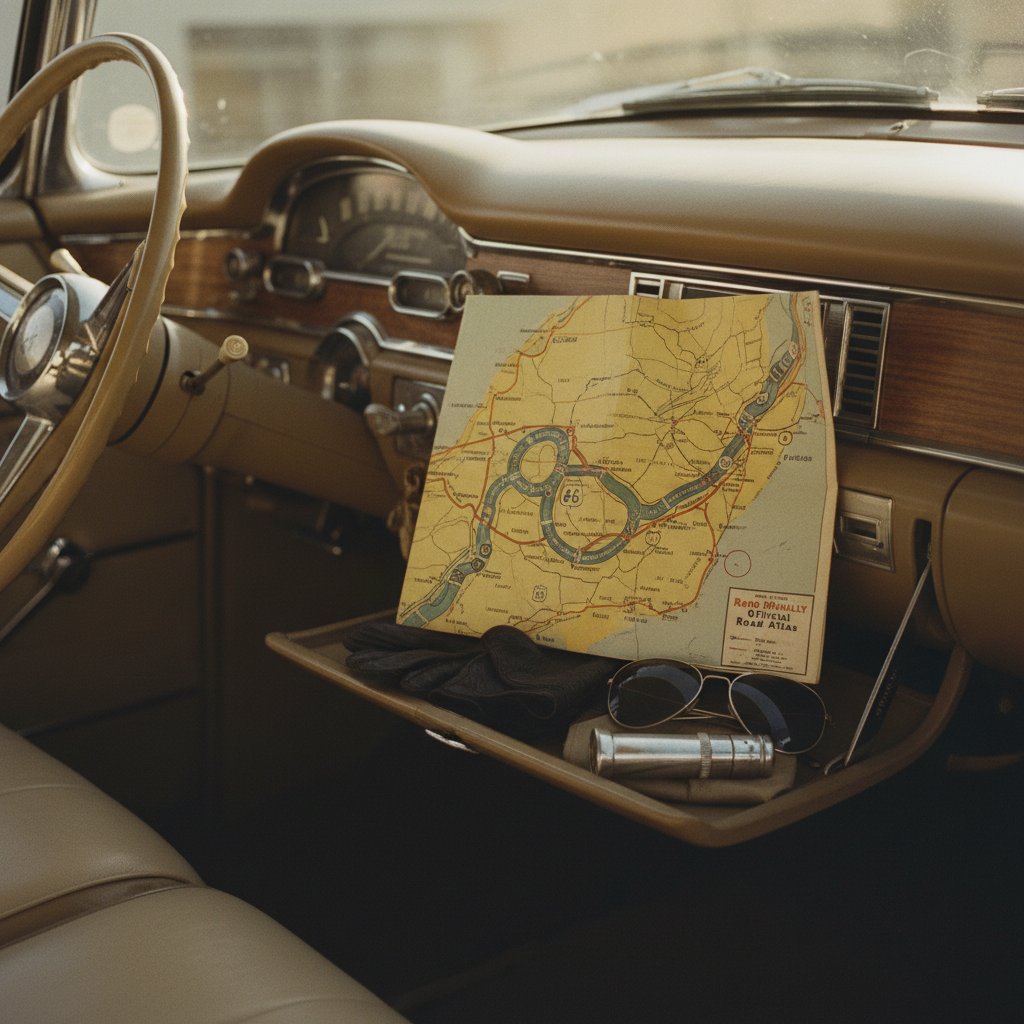
The scent of old paper and gasoline, that’s what I remember first. You’d open the glove box, and there it was, usually under a few old parking stubs and a spare set of sunglasses. Not just one map, often a stack of them, each one a relic of a past trip or a dream of a future one. The state map, the city map, sometimes a special tourist map from a roadside attraction. They felt substantial in your hands, a real thing.

A vintage map spread open on a car dashboard

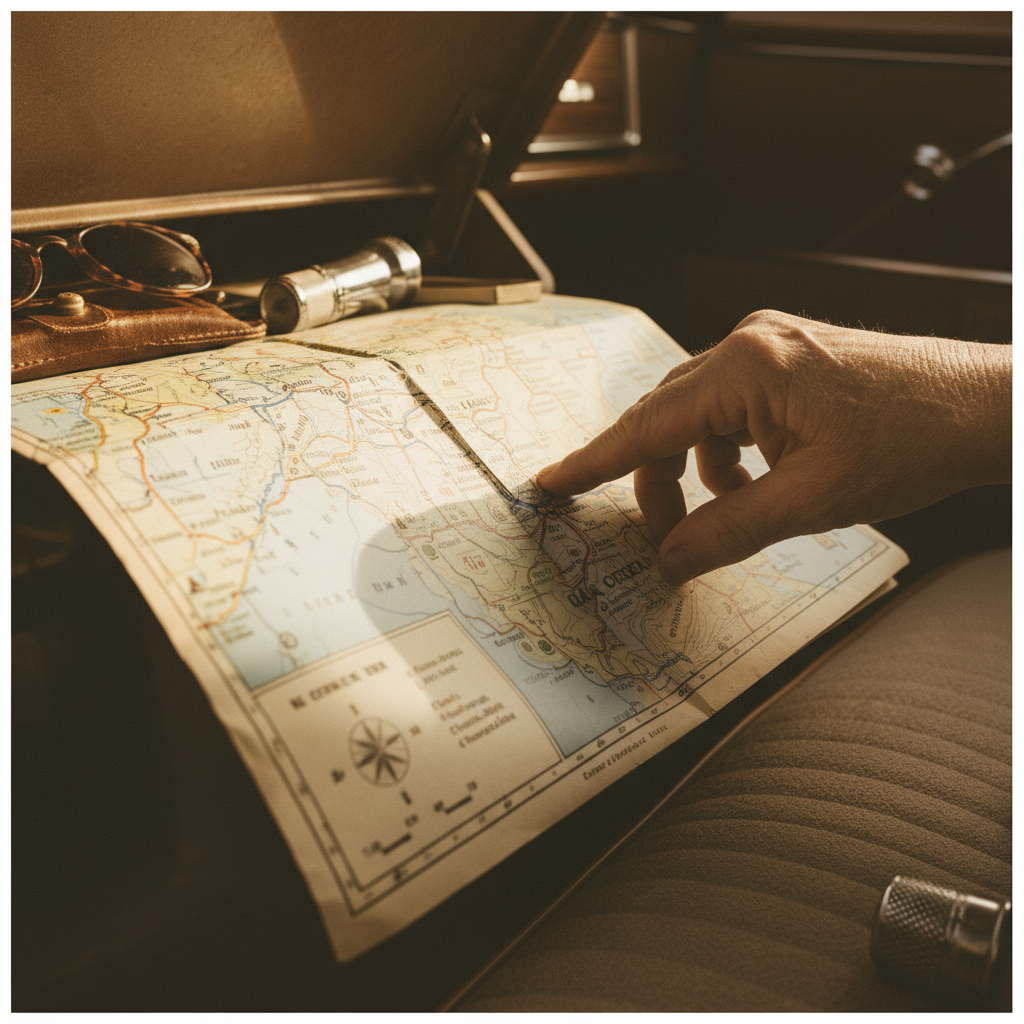
Remember the ritual? "Hand me the map, dear." Or, "Which way is it to Aunt Carol's?" A large sheet of paper, sometimes as big as a tablecloth, would unfold itself across laps, obscuring the view for a moment. You’d hear the rustle, the gentle crackle of the creases. Fingers would trace lines, searching for the small town, the highway exit, the little blue dot marking a lake. The navigator, usually the passenger, would turn the map this way and that, trying to orient it with the direction of travel. "Okay, we need to take Route 66 for about ten miles, then look for the turn-off to Elm Street." The driver would nod, eyes on the road, trusting the voice and the paper.

There was a certain satisfaction in seeing your journey laid out, a tangible connection between where you were and where you were going. The worn folds, the occasional coffee stain, the penciled-in notes – "Good diner here!" or "Watch for speed trap." Each mark told a story, not just of the road, but of the people who traveled it. It was a shared experience, a conversation starter, often leading to lively discussions about the best route or a missed turn. You learned to read the symbols: the little airplane for an airport, the crossed forks for a restaurant, the tiny tree for a park. In the 1970s, those maps were essential, a lifeline to the unknown.

A person's hands holding a vintage map, pointing to a location

Then, slowly, quietly, they began to disappear. The little screens arrived, first as bulky devices, then embedded in dashboards, then in our pockets. They spoke to us, told us exactly where to turn, recalculated instantly when we made a mistake. The rustle of paper was replaced by a calm, synthesized voice. The shared task of navigation became a solo act, often with a device suction-cupped to the windshield. The maps, once so vital, became quaint, then obsolete. They moved from the glove box to a dusty shelf, then perhaps to a recycling bin.

But the memory of them lingers, doesn't it? That feeling of holding the whole world, or at least a whole state, in your hands. The anticipation of discovery, the quiet teamwork, the feeling of being truly present on the road. It wasn't just about finding your way; it was about the journey itself, the conversations, the shared glances over a crumpled sheet of paper. We still carry that spirit of exploration, even if now it's just a voice telling us to turn right in 200 feet.

Road TripsNostalgiaTravel1970sMaps

Does this bring back memories?

Share this story with someone who would remember.

Relive the Memory

Find Vintage Treasures on eBay

Searching for: vintage printed road map glove

Shop the Memory on eBay

As an eBay Partner, WistMem may earn from qualifying purchases.

WistMem

A living archive of memories from around the world — the sights, sounds, and simple pleasures that shaped generations everywhere, from London to Lagos, Tokyo to Toronto, Sydney to São Paulo.

About This Site

WistMem was created to honour the memories of people who lived through the great transformations of the 20th century — wherever they called home. Your stories deserve to be told.

Every memory shared here becomes part of a living archive that future generations can look back on and understand who we were — and what we cherished.

© 2026 WistMem (wistmem.com). New stories from around the world, every day.

Made withfor those who remember