Make this page easier to read
Your choices are saved on this device.
Before microwaves dictated our speed, the rhythmic hiss of the pressure cooker commanded the Sunday roast preparation across households.
"That steady, insistent sound, like a gentle dragon breathing, meant vegetables were transforming."
The heavy aluminum pot sat squarely on the front burner, its locking lid sealed tight with a thick rubber gasket. In kitchens across the decades, this heavy-duty workhorse was hauled out for the Sunday ritual, promising a tender joint of beef or a whole chicken in a fraction of the usual time. It was an intimidating piece of kitchen equipment to the uninitiated, featuring heavy side handles and a polished surface that reflected the fluorescent strip lighting overhead.
Once the heat climbed, the real show began. A small metal cylinder known as the jiggler or weight would rest atop the vent pipe, at first sitting silently. Then came the first tentative metallic clink, followed by a steady rock and roll as steam escaped in rhythmic bursts. That distinctive chugging noise became the soundtrack of the midday meal preparation, audible from the hallway and reassuringly constant against the chatter of the wireless radio.
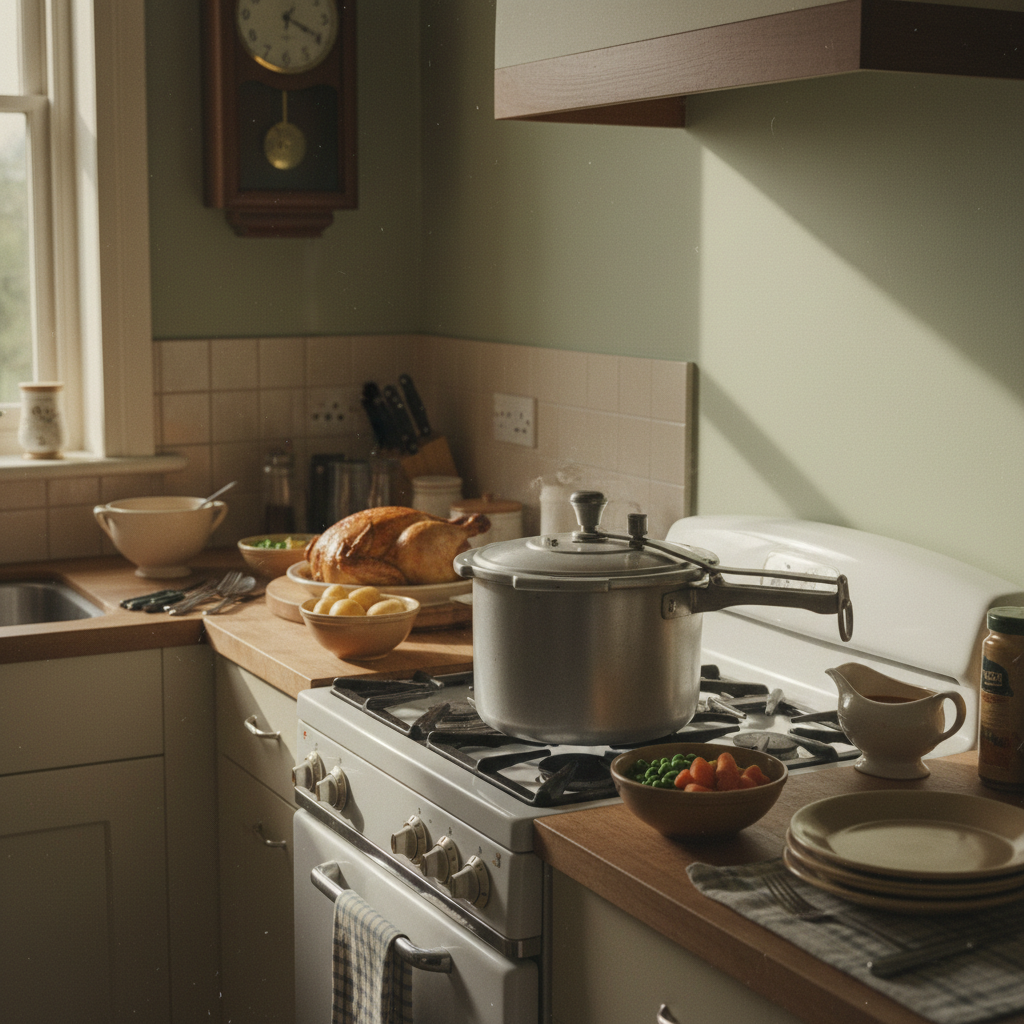
Operating the device required constant vigilance and a healthy respect for physics. Cooks adjusted the gas flame downward the moment the rocking started, finding the delicate balance that kept the pressure steady without triggering a violent blow-off. Mothers and grandmothers handled the hot metal with practiced confidence, draping a folded damp dishcloth over the lid to test the heat or nudge the apparatus away from the direct flame.
The mechanics inside that sealed chamber achieved what conventional pots could not through sheer brute force of trapped steam. Tough root vegetables, thick cuts of stewing steak, and dense cabbages broke down into tender submission within minutes, locking in juices and flavors that long simmering often diluted. It was domestic engineering at its most practical, turning budget cuts of meat into a feast fit for a family gathering after church.
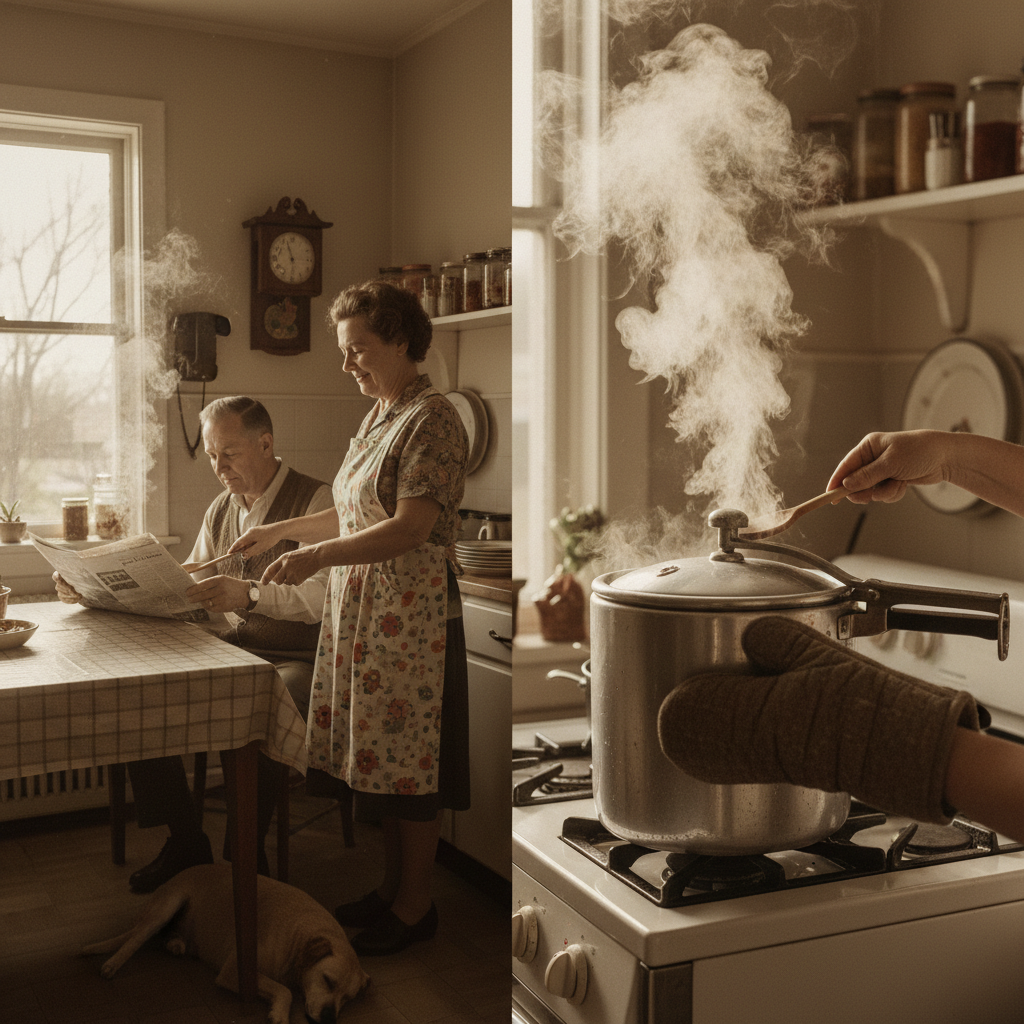
Then came the grand finale of the cooking cycle, handled with two distinct methods depending on urgency and ingredients. Some cooks preferred the natural release, letting the temperature drop slowly as the metal cooled on the back burner. Others carried the steaming behemoth straight to the kitchen sink, coaxing a cold tap stream over the lid to force the pressure down with a fierce, dramatic rush of white vapor that fogged the windows.
When the lid finally unscrewed and lifted away, a dense cloud of savory aroma rushed out to fill the room, revealing steaming potatoes and vibrant carrots ready for mashing and serving. It was fast cooking by the standards of the era, yet it demanded patience, timing, and physical presence in a way modern convenience appliances rarely ask of us today.
Does this bring back memories?
Share this story with someone who would remember.
Relive the Memory
Find Vintage Treasures on eBay
Searching for: vintage antique pressure cooker sunday lunch
Shop the Memory on eBayAs an eBay Partner, WistMem may earn from qualifying purchases.