Make this page easier to read
Your choices are saved on this device.
Before automated drip machines took over kitchen counters, the morning started with the steady plink-plink-gurgle of a metal percolator brewing a bold, aromatic cup.
"That distinctive bubbling song was the true signal that the day had finally begun."
The kitchen counter held a heavy aluminum or gleaming chrome cylinder that commanded the morning space before the rest of the house stirred. A metal stem stood upright in the center of the base, crowned by a small perforated basket meant to hold coarse coffee grounds. Water went straight into the belly of the pot, measured out by cups marked along the interior wall or through a side glass tube. Once assembled, the whole apparatus moved onto the gas burner or plugged directly into the wall outlet.
Heat drove the water upward through the hollow interior tube in a continuous, pressurized cycle. As the boiling water reached the top, it spilled out over the aluminum basket, saturating the grounds below and filtering back down into the reservoir. This looping process repeated constantly, extracting deep oils and a powerful, robust flavor that filled every adjacent room. The longer the cycle ran, the stronger and darker the brew became, shifting from a mild amber to an intense, near-opaque black.
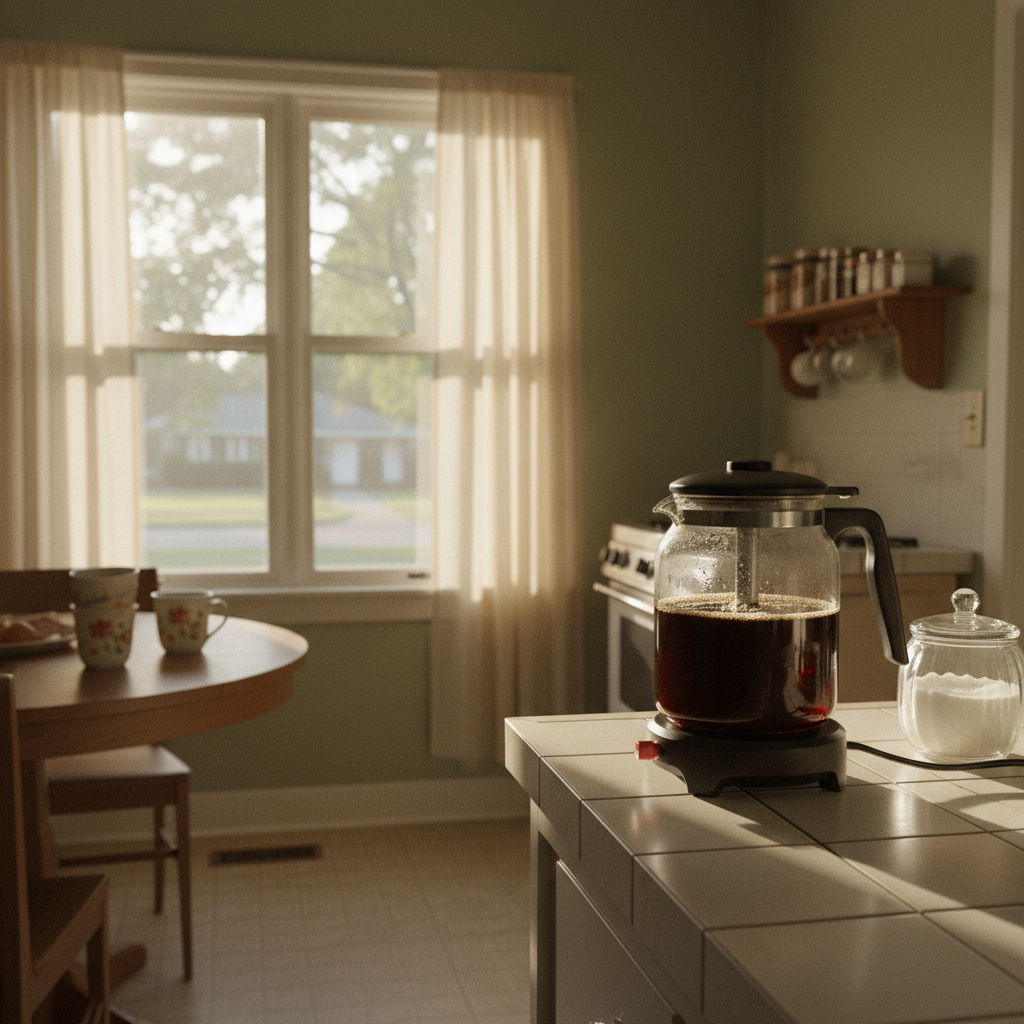
Atop the lid sat a small, transparent glass or plastic dome known as the perking knob. Staring into that tiny window offered a mesmerizing view of the dark liquid pulsing upward like a miniature geyser before splashing against the glass. Watching the color darken provided the only reliable indicator of brewing progress long before digital timers or automatic shutoffs existed. Listeners learned to tune their ears to the shifting soundscape, recognizing the exact pitch when the water reached a rolling cycle.
That acoustic rhythm followed a predictable path from an initial hesitant drip to a rapid, sputtering crescendo. Experienced cooks knew the precise moment to pull the pot from the heat or flip the switch to prevent the coffee from scorching into bitterness. If left unattended too long on a hot burner, the grounds would over-extract, yielding a harsh, scorched taste that required a generous splash of heavy cream or sugar to balance.
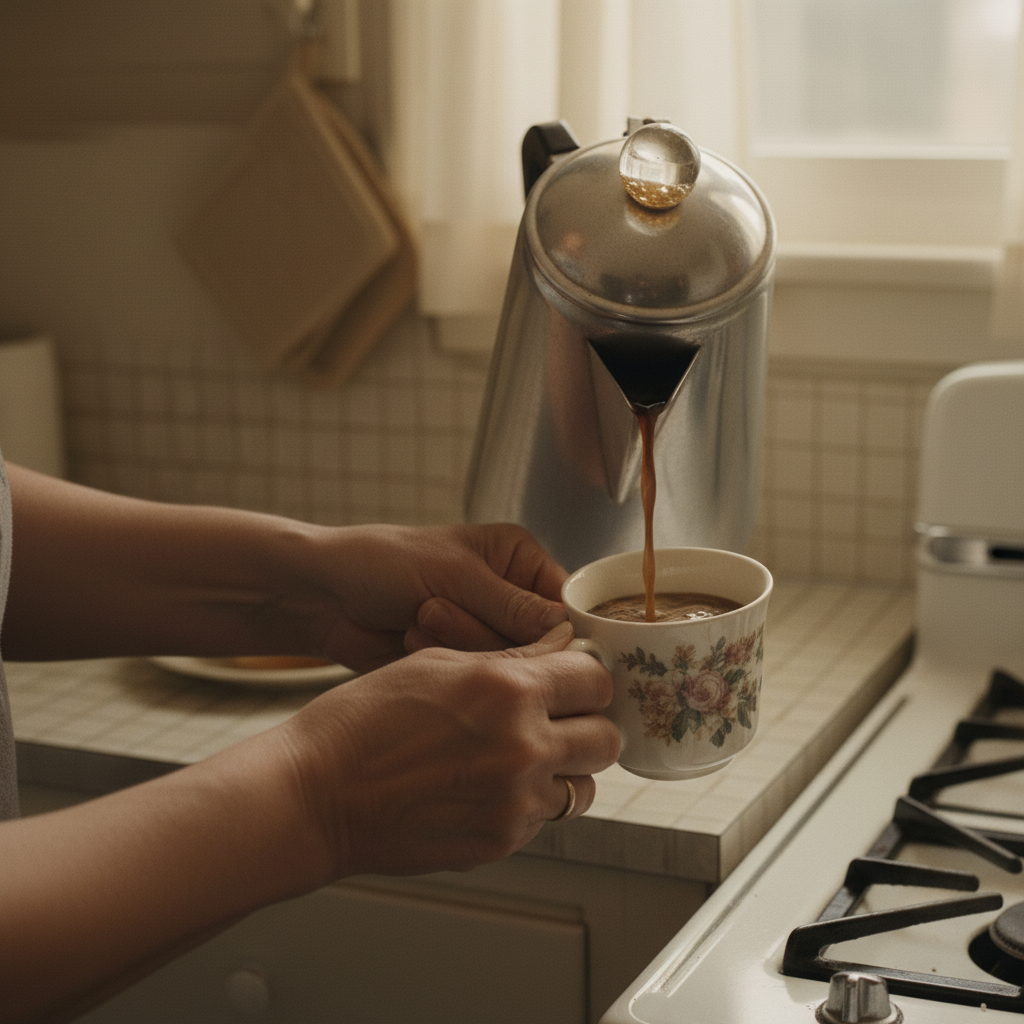
When visitors dropped by unannounced during the afternoon, the percolator came right back out of the cupboard for a second round. It anchored social visits across decades when neighborhood drop-ins happened without prior scheduling or calendar invites. Ceramic mugs filled with steaming black liquid sat on Formica tabletops while conversations stretched across the afternoon, accompanied by the clatter of spoons and ceramic saucers.
The shift toward electric drip makers in the late 1970s and 1980s altered kitchen routines by promising speed and filter-paper convenience. Percolators gradually retreated to the back of pantry shelves or thrift store donation bins as faster, quieter brewing methods took over the market. Though the constant gurgling faded from daily life, the distinct aroma of stove-heated grounds remains tied to an era when morning rituals required patience and attention.
Does this bring back memories?
Share this story with someone who would remember.
Relive the Memory
Find Vintage Treasures on eBay
Searching for: vintage kitchen percolator coffee pot
Shop the Memory on eBayAs an eBay Partner, WistMem may earn from qualifying purchases.