Make this page easier to read
Your choices are saved on this device.
A coal fire could make the front room the center of a winter evening. Keeping it going took fuel, attention, and cleaning; the glow was only one part of the story.
When a coal fire was the main source of warmth, the front room drew people toward it. A chair might be moved closer; clothes might be warmed before someone went out; the mantel and hearth became the room's fixed points. The glow is easy to recall. So are the jobs that kept it there: bringing in fuel, tending the grate, and clearing ash.
Why did one fire shape the whole room?
An open fireplace heated people and surfaces nearby more than it heated an entire house evenly. Historic England's guidance on historic heating systems explains that much heat from a fireplace escapes up the chimney. That helps explain why people gathered close while other rooms could remain cold. The hearth slab also had a practical purpose: Historic England notes that it protected a floor from burning fragments of wood or coal.
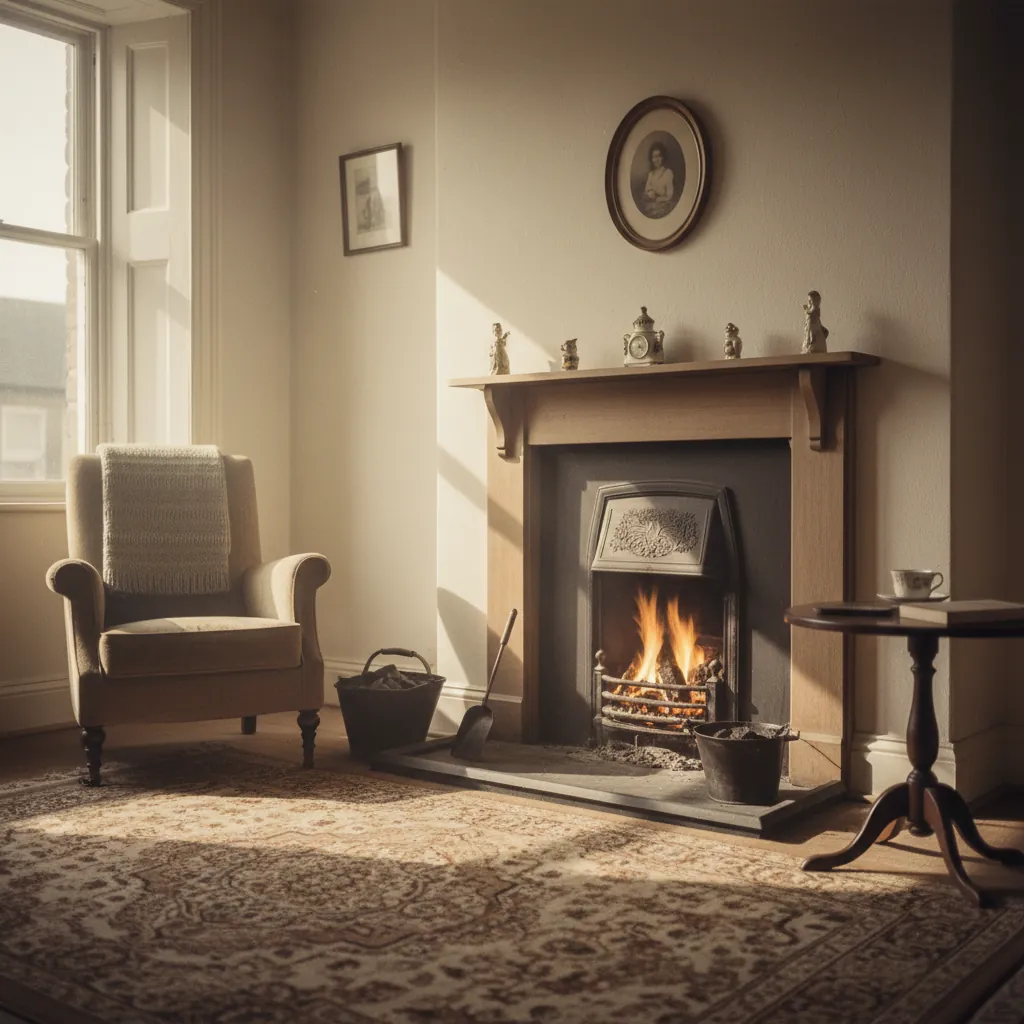 Illustration created for WistMem; not an archival photograph.
Keeping the fire was household work. Coal needed somewhere to be stored and a route into the room; the grate and surrounding area had to be cleaned. A memory of a warm evening may sit beside one of cold mornings before the fire was lit. Ask who carried the coal and who was allowed to tend the flames. Those answers show the division of labor as clearly as any photograph of the fireplace.
What changed when central heating arrived?
The change was uneven. An English Heritage teaching guide for Eltham Palace contrasts the rare central heating of the 1930s with more common coal or wood fires, even as that wealthy house used advanced heating. A later household might retain a coal fire for atmosphere, or replace it entirely. The date and place matter.
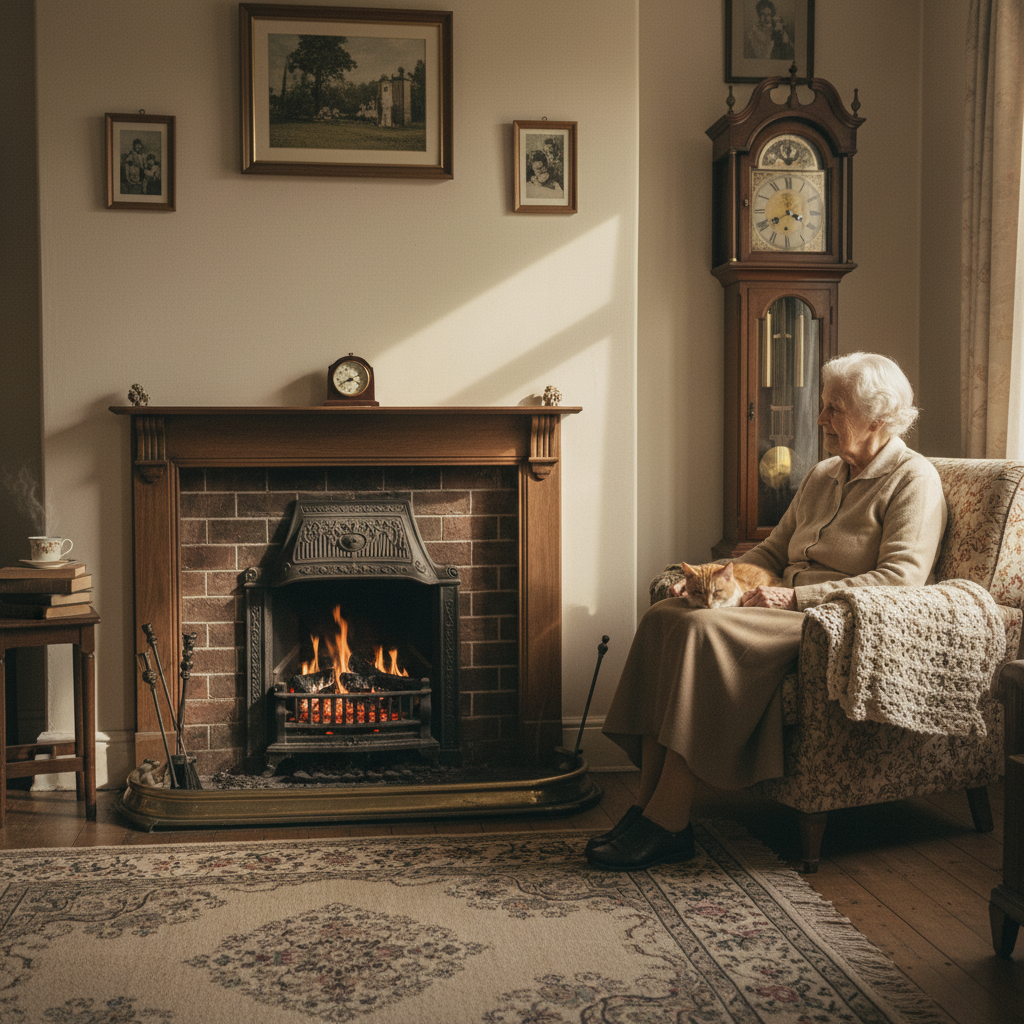 Illustration created for WistMem; not an archival photograph.
If a family picture shows the fireplace, look for the coal scuttle, tools, and arrangement of chairs. Ask who chose the front-room seat and whether a fire was lit every day or only in cold weather. The warmest room was often the room where everyone gathered. For a different source of household light and warmth before widespread electrification, see The Kerosene Lamp Before Electricity Arrived.
What does it bring back for you?
Ask someone who remembers, or begin with your own version. A few words can be enough.
What everyday sound or smell brings back a home you remember?
Then ask: Who was there, and what were they doing?
Find more conversation starters Choose what feels comfortable. Ask before recording or sharing someone’s words.Relive the Memory
Find a little of the story.
Something here bring back a memory? Take a look at what you can find today.
Searching for: vintage antique coal fire room
Vintage & collectible finds
Look for older objects and collectibles connected to this memory.
Search eBay (opens in a new tab)Related finds on Amazon
Explore items related to the same topic, from familiar styles to things made today.
Search Amazon (opens in a new tab)These links open search results. Items, prices, and availability vary.
Affiliate links. We may earn a commission at no extra cost to you.
As an Amazon Associate I earn from qualifying purchases. As an eBay Partner, WistMem may earn from qualifying purchases.
Does this bring back memories?
Share this story with someone who would remember.