Make this page easier to read
Your choices are saved on this device.
A winter pantry held foods preserved and bought at different times. A 1925 pantry book and current preservation guidance help explain the shelf without treating old jars as safe to eat.
The pantry offered a quiet kind of reassurance: jars, tins, and dry goods in a place where the cook knew what remained. Its shelves were not filled at once. Summer fruit, purchased staples, and food put by after a harvest might meet there months later, each item carrying a small decision about time and money.
What belonged on the shelf?
The Library of Congress preserves a 1925 book called The Story of a Pantry Shelf. Its imagined shelf was used to explain grocery specialties and the food industry of its day. It is a period view, not a list of what every home owned. A family's pantry may have been much plainer: flour, preserves, dried beans, bottled fruit, or commercial tins depending on place, income, and season. Ask which item was counted carefully and which was always replenished.
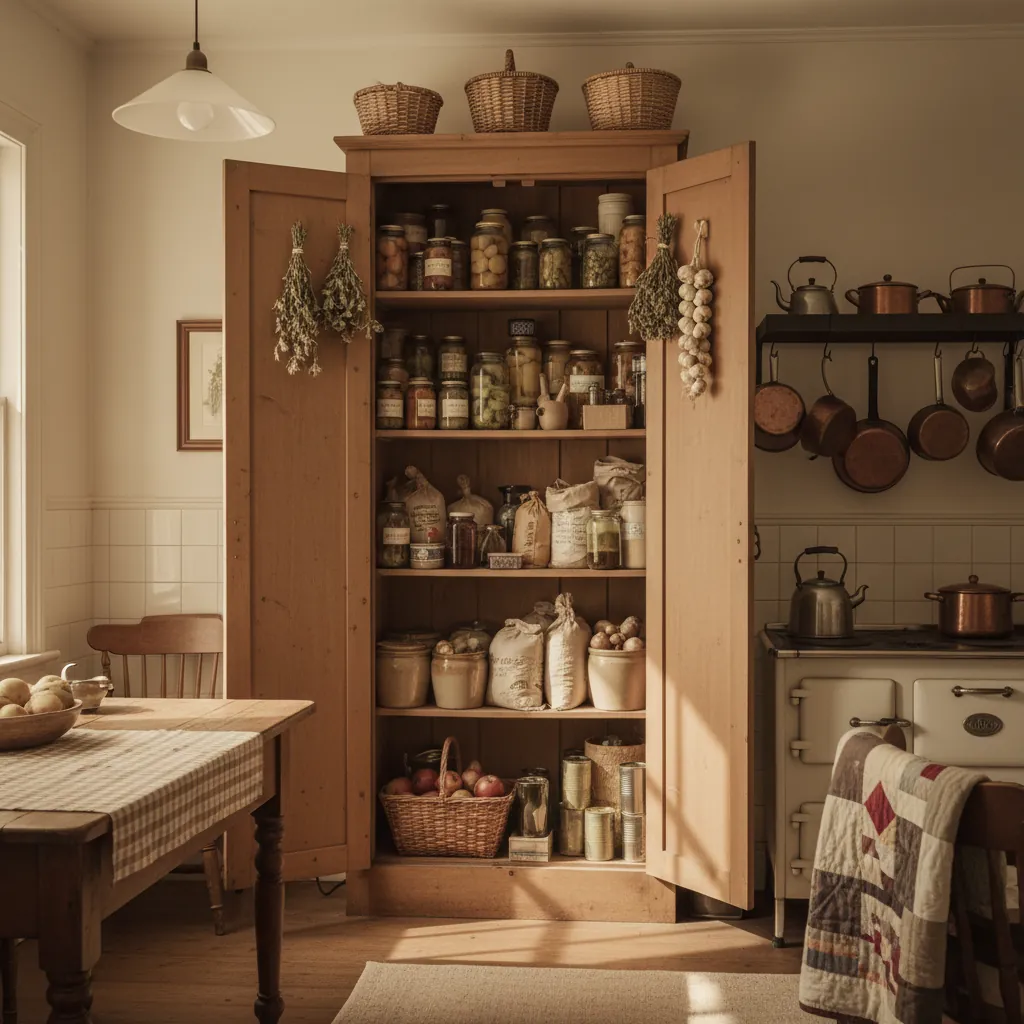 Illustration created for WistMem; not an archival photograph.
The shelf also represented labor done earlier. Someone washed jars, measured ingredients, labeled containers, or carried shopping home. The National Center for Home Food Preservation says properly processed home-canned jars should be labeled and dated, then kept clean, cool, dark, and dry for best quality. That current guidance helps interpret why a pantry location mattered. It does not certify a surviving family jar whose processing history is unknown.
What can an old pantry tell you now?
If you are recording a memory, photograph the arrangement and labels before moving things. Ask who decided what to preserve, what ran out first, and which food signaled that winter had really arrived. A handwritten date may connect the jar to a harvest year; a purchased tin may show a brand or retailer. Keep the story with those clues.
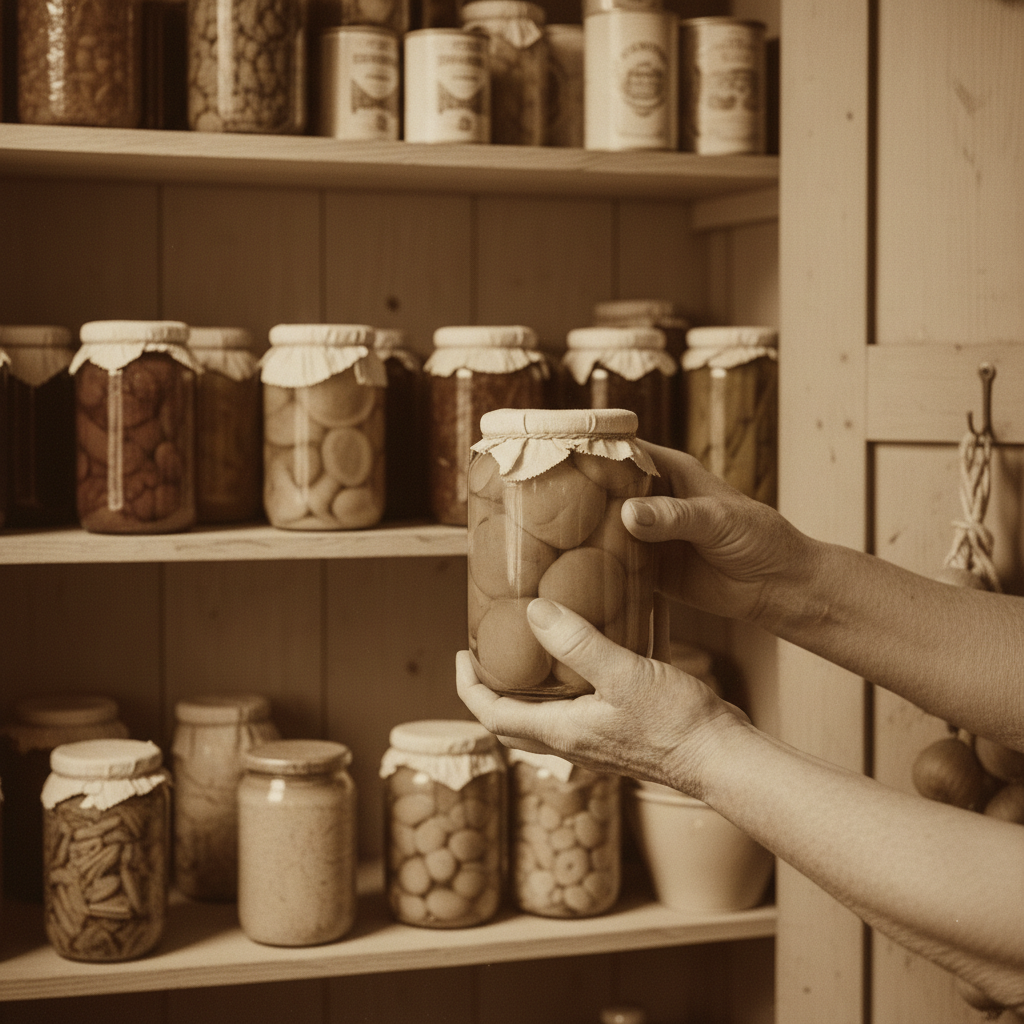 Illustration created for WistMem; not an archival photograph.
Do not taste an old home-canned jar just to recreate the memory. The preservation center's storage guidance says not to taste food with an unsealed lid or signs of spoilage, and notes that some unsafe low-acid food may show little warning. The safer inheritance is the recipe, photograph, and account of who stocked the shelf. Read The Canning Season in Late Summer for the work that came before storage.
What does it bring back for you?
Ask someone who remembers, or begin with your own version. A few words can be enough.
What everyday sound or smell brings back a home you remember?
Then ask: Who was there, and what were they doing?
Find more conversation starters Choose what feels comfortable. Ask before recording or sharing someone’s words.Relive the Memory
Find a little of the story.
Something here bring back a memory? Take a look at what you can find today.
Searching for: vintage antique pantry larder stocked winter
Vintage & collectible finds
Look for older objects and collectibles connected to this memory.
Search eBay (opens in a new tab)Related finds on Amazon
Explore items related to the same topic, from familiar styles to things made today.
Search Amazon (opens in a new tab)These links open search results. Items, prices, and availability vary.
Affiliate links. We may earn a commission at no extra cost to you.
As an Amazon Associate I earn from qualifying purchases. As an eBay Partner, WistMem may earn from qualifying purchases.
Does this bring back memories?
Share this story with someone who would remember.