Make this page easier to read
Your choices are saved on this device.
Long before automated tumbling drums dominated utility rooms, drying laundry meant navigating backyard weather, wooden pins, and long spans of galvanized wire.
"A wooden clothespin snapped shut with a familiar crack as damp cotton met the morning breeze."
Heavy wooden T-posts stood anchored in concrete at opposite ends of the lawn, supporting parallel strands of twisted galvanized wire that spanned the length of the yard. Between these stationary posts, lengths of clothesline sagged slightly under the weight of wet bedsheets and heavy denim trousers. A wooden prop pole, notched at the top, was often wedged beneath the center span to keep dripping garments from dragging across the grass. Every washday required carrying a wicker basket out the back door, placing it on a low stool to save aching lower backs from constant bending.
Hanging laundry efficiently demanded a specific method learned through daily repetition. Pillowcases went up first, folded over the wire and secured at the corners with spring-loaded wooden clothespins that weathered into a soft gray over the years. Shirts were suspended by their bottom hems to prevent shoulder puckers, while smaller items shared pin space to maximize line capacity. The rhythm of the task depended entirely on the weather forecast. A sudden shift in the wind or dark clouds rolling over the ridge meant dropping everything to rescue dry garments before an afternoon downpour soaked the entire load.
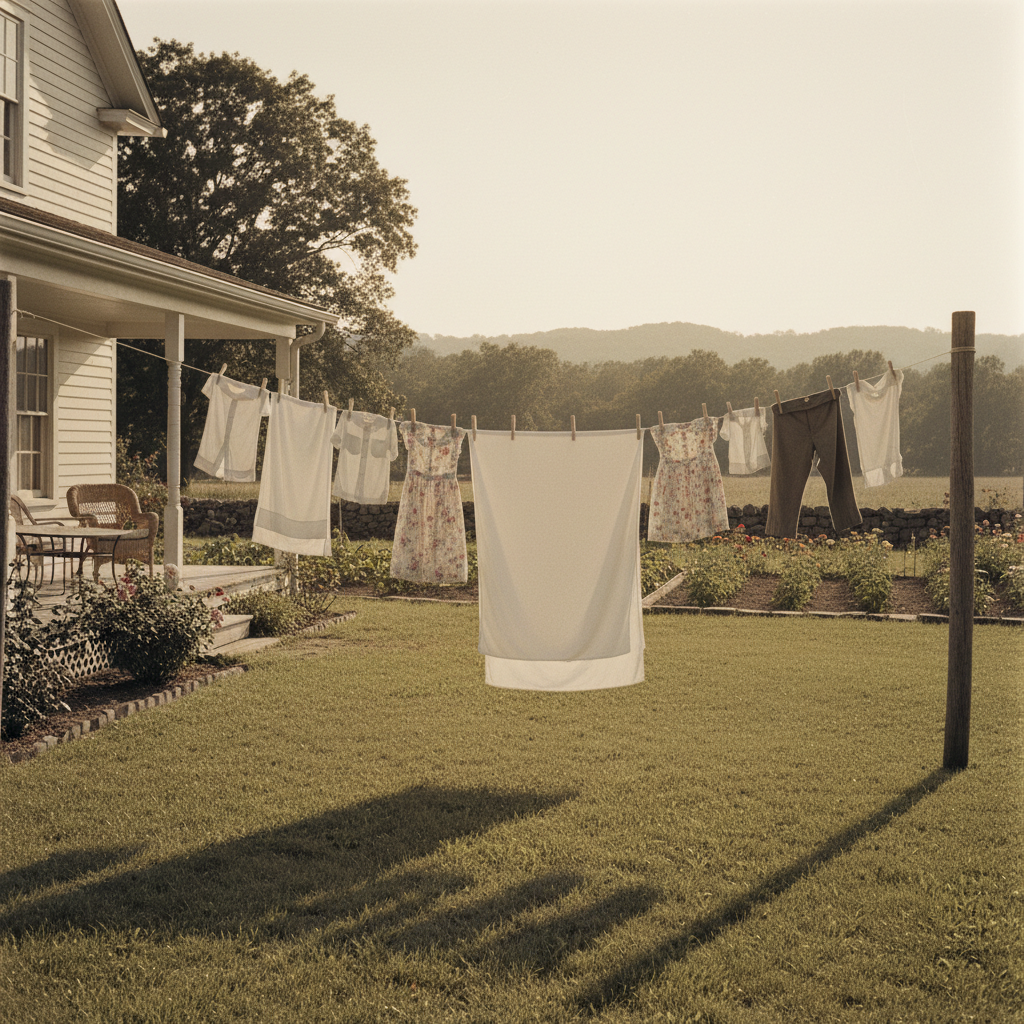
By the late twentieth century, automated electric and gas tumble dryers steadily replaced outdoor drying lines in suburban subdivisions. Utility rooms moved indoors, folding compact appliances into tight corners next to washing machines. Municipal housing covenants and neighborhood associations began banning visible clotheslines altogether, citing property aesthetics and property values. Yards that once fluttered with colorful quilts and work shirts grew quiet and uniform, clearing away the physical infrastructure of line-drying completely.
The physical labor involved in hauling wet loads outdoors changed how families managed household chores across the week. Laundry days were scheduled around clear skies and steady breezes rather than personal convenience, anchoring domestic routines to natural weather patterns. Children learned to duck beneath low-hanging sheets while playing tag in the yard, navigating a maze of damp fabric that transformed familiar backyards into temporary labyrinths.
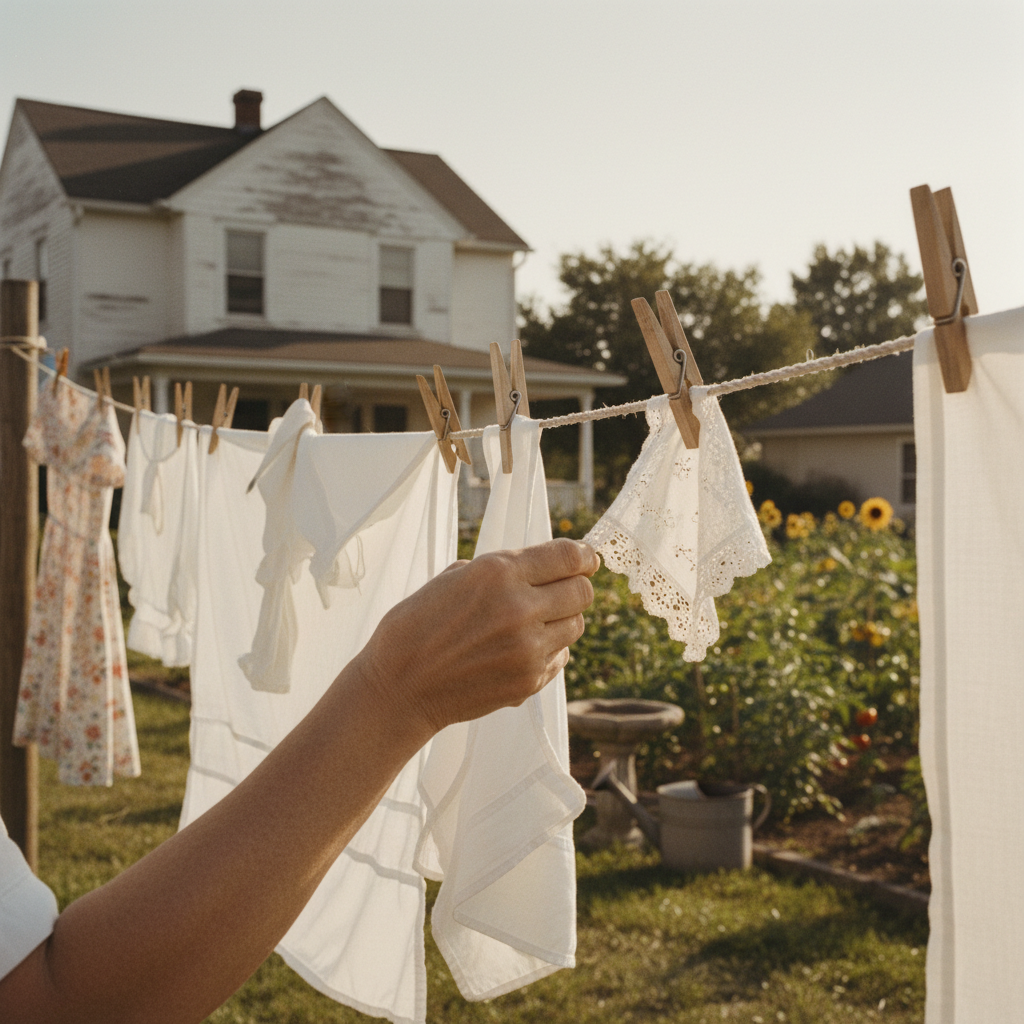
Fading from regular domestic use altered the sensory landscape of residential neighborhoods during the final decades of the twentieth century. The distinct scent of sun-baked cotton and wind-whipped linen disappeared from alleyways and suburban property lines as indoor exhaust vents replaced open-air drying. Clotheslines either rusted away silently in neglected corners of properties or were dismantled entirely to make space for larger patios, swimming pools, and modern landscaping.
A few households maintained the old routine out of habit or preference, valuing the electricity savings and crisp texture that commercial dryers failed to replicate. Yet these yards became exceptions rather than standard features of domestic architecture. The weathered wooden posts and taut wires gradually vanished from architectural blueprints, marking the silent retirement of a once-universal household fixture.
Does this bring back memories?
Share this story with someone who would remember.
Relive the Memory
Find Vintage Treasures on eBay
Searching for: vintage antique clothesline backyard
Shop the Memory on eBayAs an eBay Partner, WistMem may earn from qualifying purchases.