Make this page easier to read
Your choices are saved on this device.
The bread box was a practical piece of kitchen furniture. It also marked a familiar place where toast, sandwiches, and the day’s small meals began.
"The bread box did one quiet job well: it kept a common food where everyone knew to find it."
The bread box usually sat where it could be reached without thinking. It might have been near the kettle, beside the toaster, or tucked below a cupboard. Its shape depended on the kitchen: painted metal with a roll-top lid, wood with a small handle, or enamel with a chipped corner that had been there for years. Wherever it stood, it announced where the bread belonged.
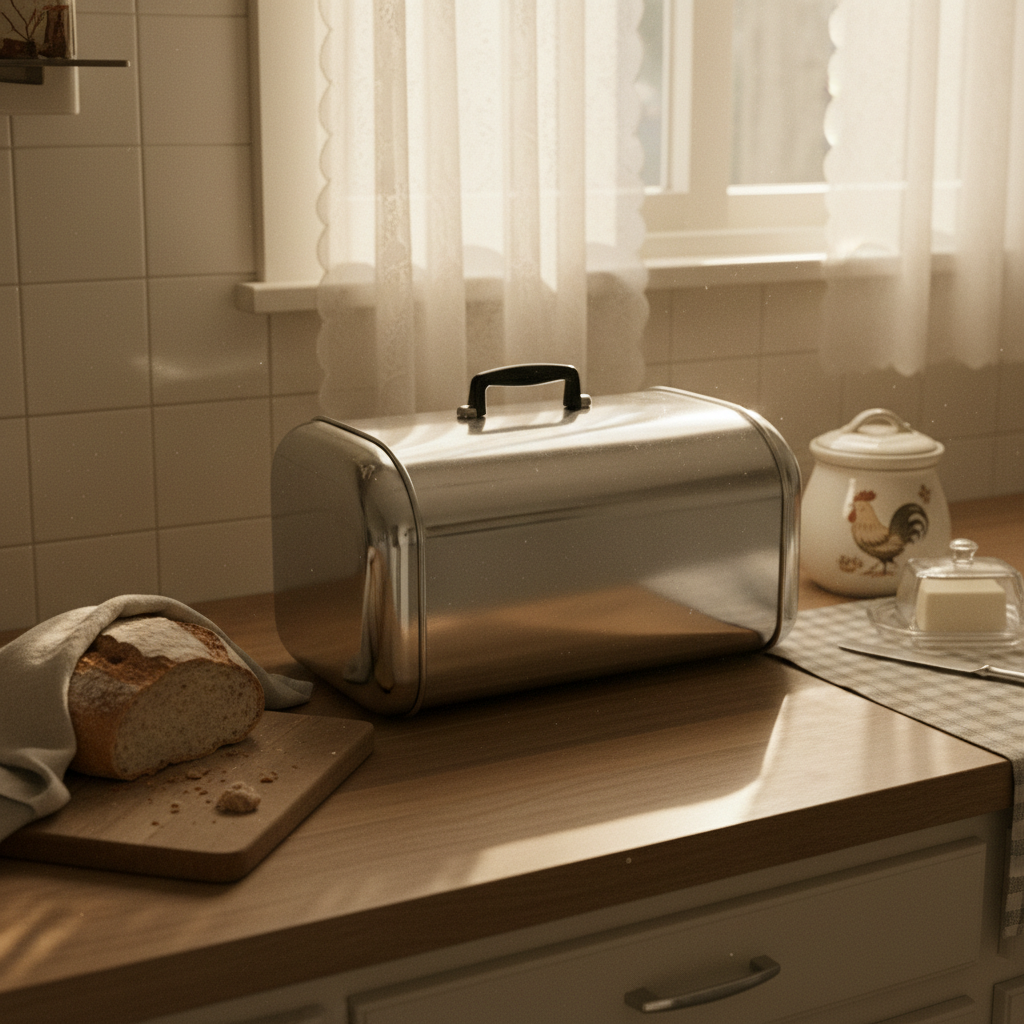
Opening the lid was part of an ordinary routine. A parent reached for a loaf before school. Someone made toast while coffee brewed. At lunchtime, the box supplied slices for sandwiches and then closed again with the soft scrape or click that became familiar in a busy kitchen. The best boxes kept bread away from the dampness of a counter and from hands that might otherwise leave a bag open.
The contents changed through the week. A fresh loaf sat squarely at the front on Saturday. By Thursday, there might be a heel left for toast, crackers behind it, and a folded bag of rolls that someone had forgotten. Children were often told to close the lid properly. Leaving it open meant the bread would dry out, a small household mistake that could be corrected with a reminder rather than a lecture.
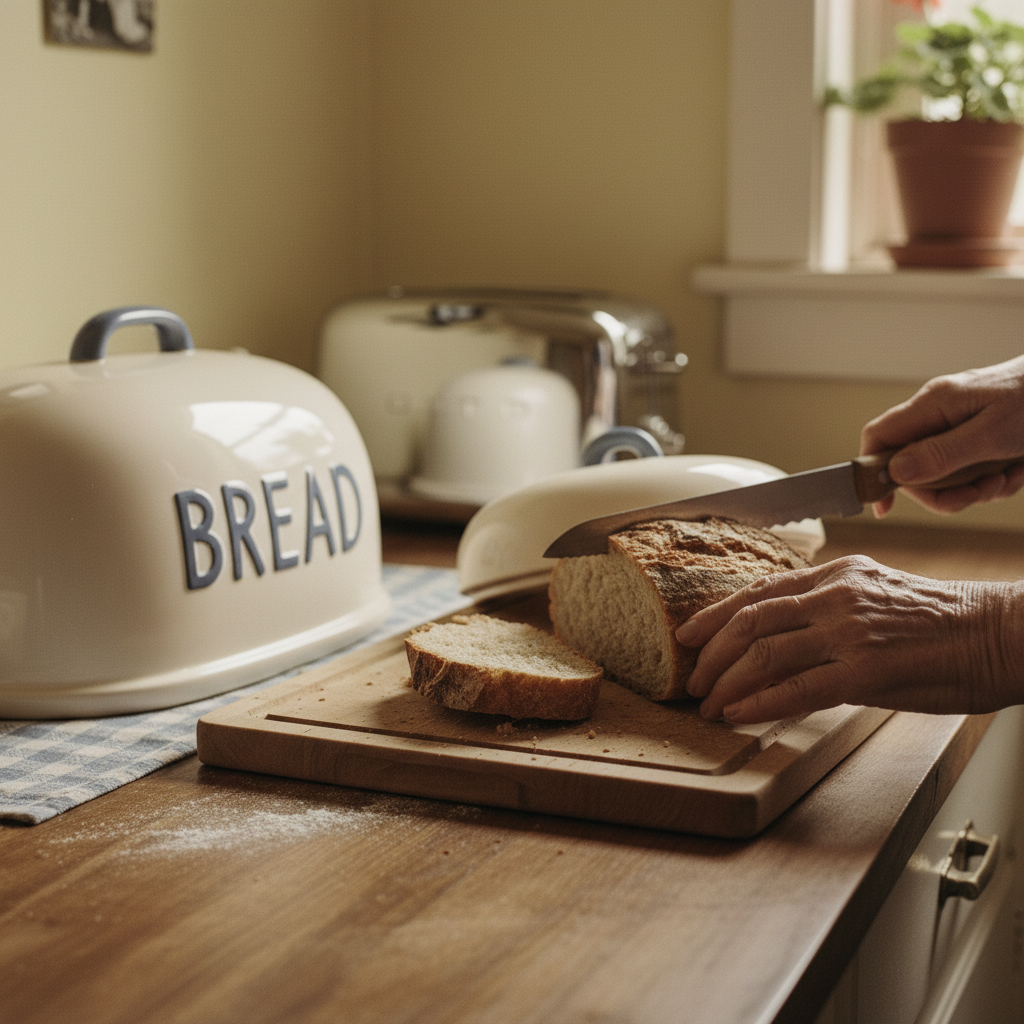
Bread boxes also gathered small evidence of family habits. Some held a knife wrapped in a tea towel, a packet of biscuits, or a note about what was needed from the shop. The top became a temporary shelf for letters, a sugar bowl, or a loaf cooling in its paper bag. It was useful furniture, not decoration, which is why its dents and worn paint usually stayed in place.
Plastic packaging, large pantries, and quick trips to the supermarket made the separate bread box less necessary. Many kitchens still have one, but the object no longer appears in every home. Its memory is simple: a familiar lid lifted, a loaf taken out, and a meal begun at the counter.
Does this bring back memories?
Share this story with someone who would remember.
Relive the Memory
Find Vintage Treasures on eBay
Searching for: vintage kitchen bread box counter
Shop the Memory on eBayAs an eBay Partner, WistMem may earn from qualifying purchases.