Make this page easier to read
Your choices are saved on this device.
Lifting the dust cover and guiding the needle onto the spinning vinyl was a deliberate daily ritual.
"We spent hours lost in the sound, reading the liner notes and tracing the grooves with our eyes."
A thick glass-like sheen covered the spinning black disc while the stylus rested gently in the outer groove. Operating a record player required patience and a steady hand, beginning with the careful extraction of the cardboard jacket from its outer plastic sleeve. You pulled the paper inner sleeve free, tilted it, and allowed the heavy vinyl to slide directly onto your open palm without touching the playable surface.
The machinery itself demanded attention and maintenance. Most living room setups featured a turntable mounted inside a wooden console or resting on a separate hi-fi rack with wired speakers. A rubber or felt mat cushioned the record on the platter, and a small metal spindle centered the hole. Before dropping the needle, you might use a carbon-fiber brush to sweep away microscopic dust particles gathered during the previous play.
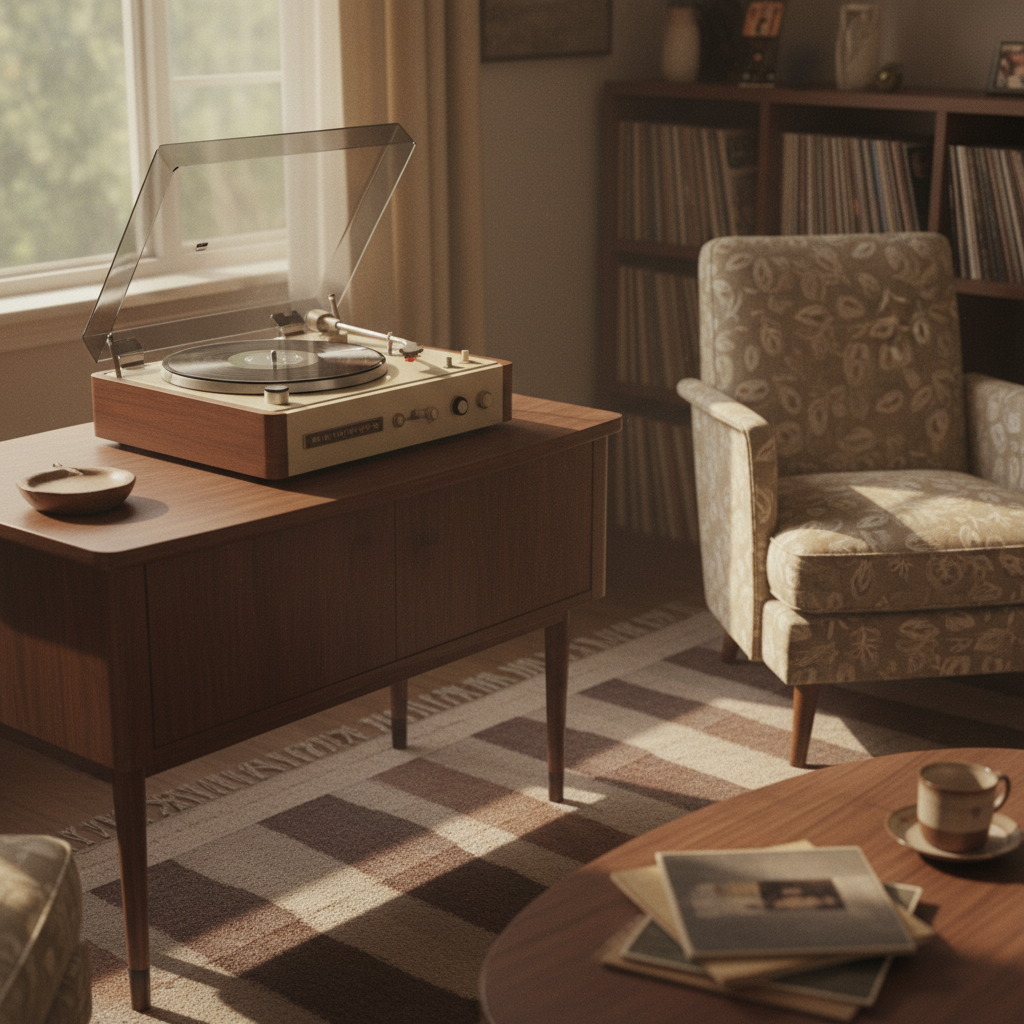
Lowering the tone arm was an exercise in precision, particularly on manual turntables lacking a hydraulic cueing lever. If your hand shook, the diamond tip might skid across the tracks with a harsh scratch that permanently marked the vinyl. Once the stylus settled into the lead-in groove, a familiar low-frequency hum and a soft hiss preceded the opening notes of the first track.
Album artwork served as a vital companion to the listening experience. Gatefold jackets opened up to reveal sprawling photographs, lyric sheets, and detailed production credits that demanded examination under a reading lamp. Listeners absorbed every detail of the graphic design while the music filled the room, turning passive hearing into an active, focused engagement with the physical artifact.
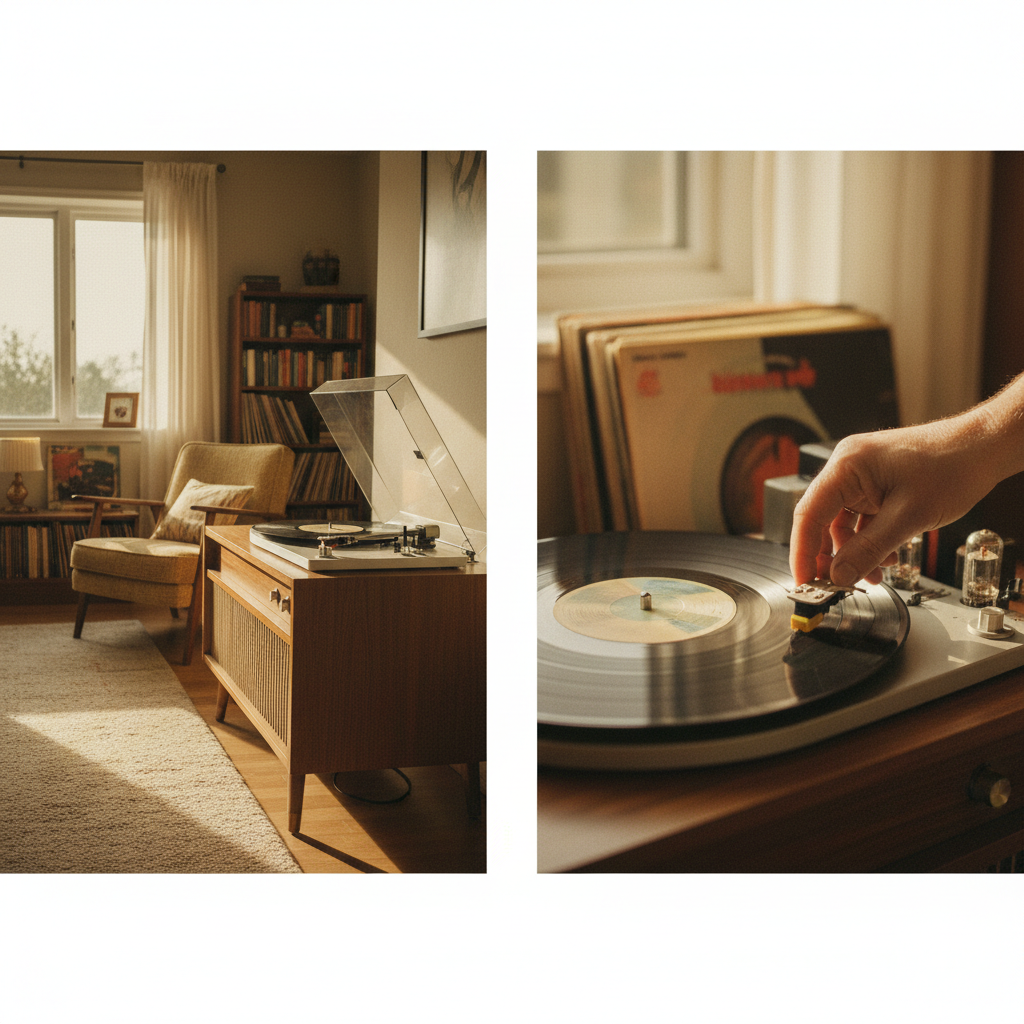
Albums were constructed as complete artistic statements divided neatly into two halves. You could not skip a track or shuffle songs without physically getting up from the couch to lift the tone arm and move it across the record. This limitation enforced a deliberate pacing, obliging listeners to experience an entire side of music in the exact sequence chosen by the band and producer.
Eventually, compact discs arrived with promises of pristine clarity and skip-free convenience, pushing turntables into basements and second-hand shops. The tactile routine of cleaning records, replacing inner sleeves, and manually flipping discs gave way to laser-read plastic trays. While the new format offered durability and ease of storage, it quietly dismantled the physical rituals that had anchored domestic music listening for generations.
Does this bring back memories?
Share this story with someone who would remember.
Relive the Memory
Find Vintage Treasures on eBay
Searching for: vintage vinyl record player
Shop the Memory on eBayAs an eBay Partner, WistMem may earn from qualifying purchases.