Make this page easier to read
Your choices are saved on this device.
Before silent keyboards and glowing monitors, writing required physical force, mechanical precision, and a deliberate rhythm that made every single word count.
"Each word was earned, struck into the page with a heavy, mechanical certainty."
You peeled back the plastic lid, unlatched the metal clasps of the carrying case, and lifted out a heavy chassis of molded steel and glass-topped keys. The machine sat dead-center on the desk with an undeniable gravity, smelling faintly of machine oil, ribbon ink, and cold metal. Loading a sheet of crisp bond paper meant sliding it around the rubber platen and spinning the side knob until it aligned at the top margin with a sharp click.
Typing on these manual or electric titans required an entirely different muscle memory than modern computing. Your fingers had to strike each key with authority, driving the metal typebars upward to crash against the inked ribbon and leave an impression on the paper. If you tapped too lightly, the letter came out faint and ghostly; if you jammed your fingers together, the metal arms crossed and locked in a tangled stalemate inside the housing.
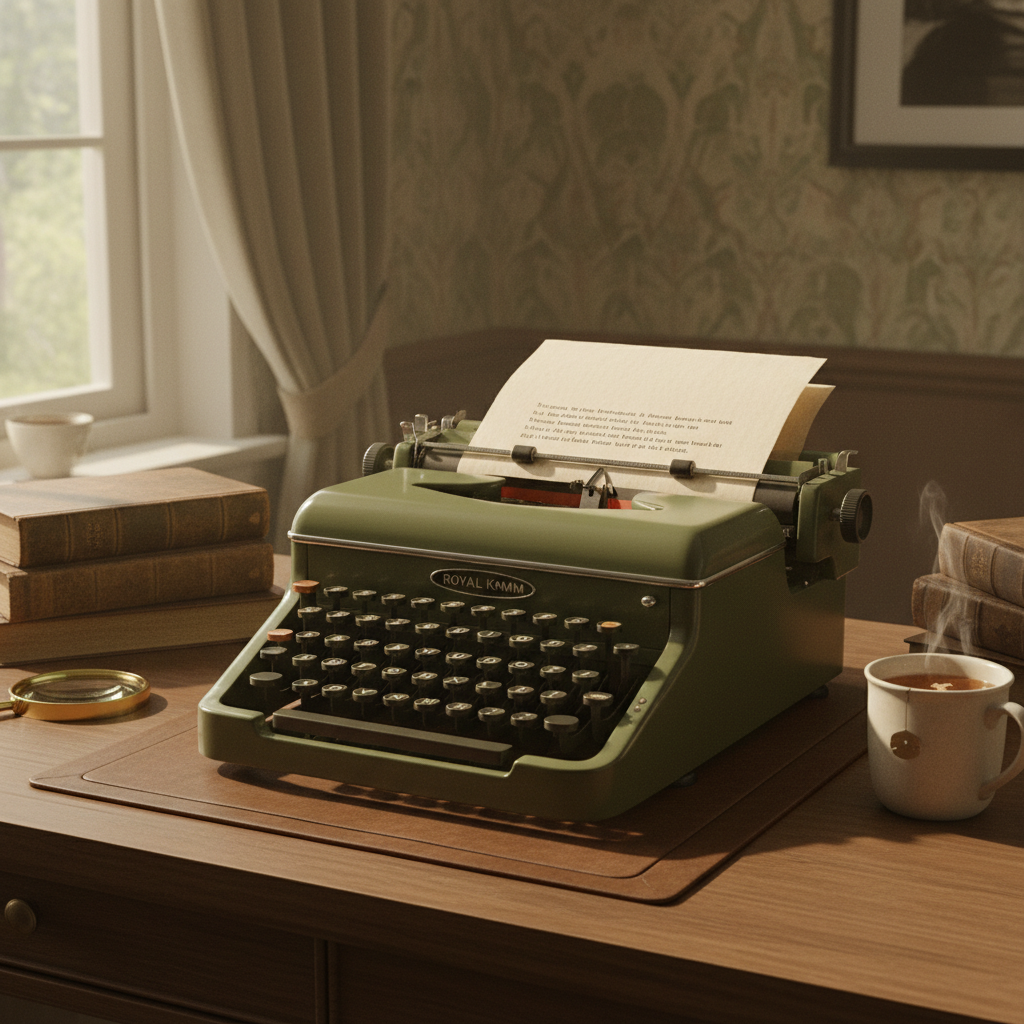
The physical act of composition was permanent and unforgiving. A stray typo could not simply be backspaced away in milliseconds. Instead, you reached for a small bottle of white correction fluid, brushed a dab over the error, blew on it until it dried into a chalky crust, and carefully re-typed the correct letter over the patch. Alternatively, you slipped a tiny gray correction tab behind the ribbon, struck the wrong letter again to mask it in white powder, and pressed onward.
Every operational phase had its own distinct acoustic signature. A rapid clatter of consonants echoed across the room like falling gravel, building to an urgent crescendo as you neared the right margin. Then a small bell rang out, warning you that only a few spaces remained before the end of the line. You grabbed the carriage return lever, threw it across with a firm sweep that spun the roller upward, and heard the heavy metal slide back to the left with a satisfying thunk.
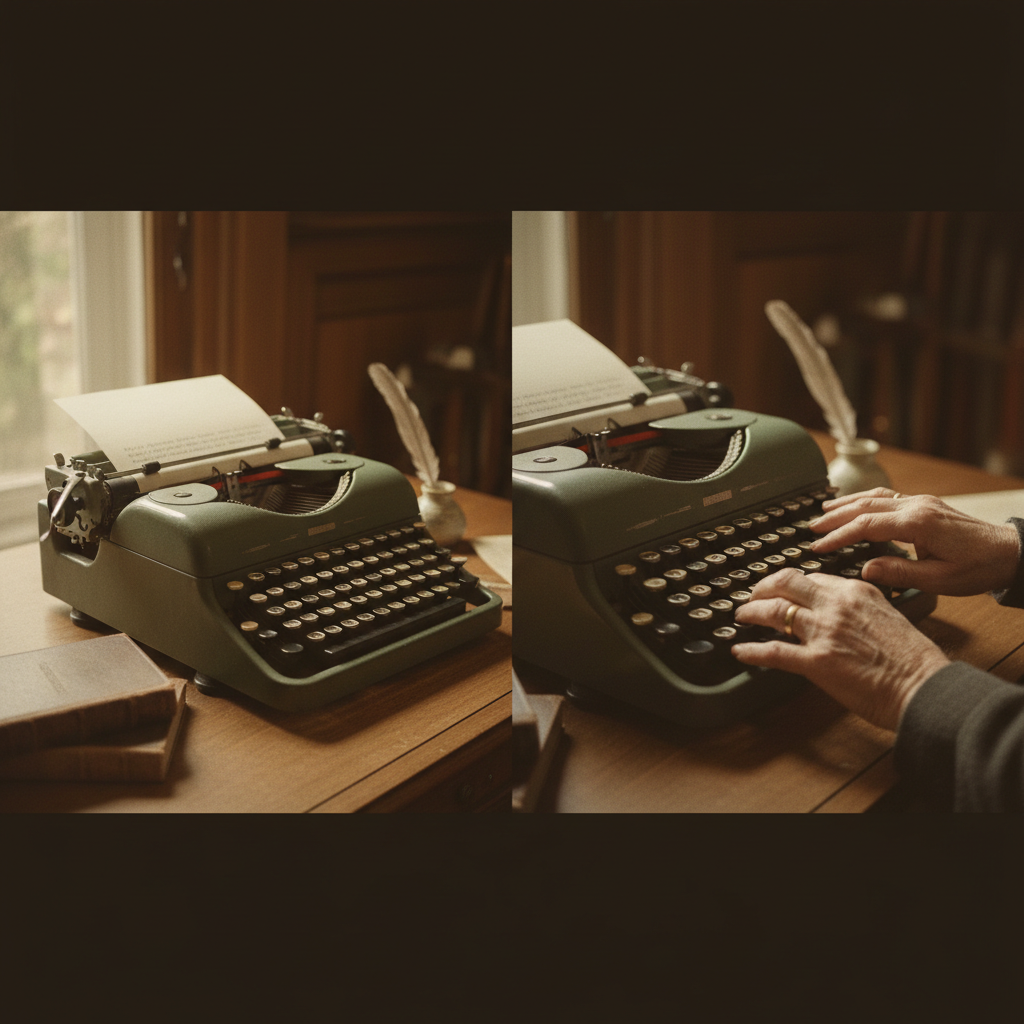
These devices anchored the daily workflow of entire industries. In newsrooms, reporters hammered out breaking stories against impossible deadlines amidst a deafening chorus of dozens of machines running simultaneously. In corporate typing pools, secretaries maintained blistering speeds with carbon paper layered between sheets to create instant duplicates. Even at home, students pecked out term papers late into the night under the harsh cone of a desk lamp.
Then the landscape shifted with surprising speed during the late 1980s and 1990s. Word processors and personal computers entered offices and living rooms, bringing silent plastic keyboards, glowing monitors, and the infinite flexibility of electronic deletion. The heavy iron machines were unceremoniously hauled down to the basement, relegated to dusty closet shelves, or handed over to children who regarded them as curious mechanical sculptures rather than tools for work.
Today, the old apparatuses survive primarily in thrift shops or collector displays, prized for their tangible craftsmanship. While nobody truly misses the physical fatigue of a jammed typebar or the permanence of a ruined page, the era left behind an appreciation for deliberate thought. When writing demanded physical labor, you chose your sentences carefully before your fingers ever touched the metal.
Does this bring back memories?
Share this story with someone who would remember.
Relive the Memory
Find Vintage Treasures on eBay
Searching for: vintage typewriter clatter
Shop the Memory on eBayAs an eBay Partner, WistMem may earn from qualifying purchases.