Make this page easier to read
Your choices are saved on this device.
Before digital streams and cables, capturing an evening broadcast required a delicate rooftop dance with aluminum rods and rotating signal dials.
"The aerial was the unsung hero of our evenings, standing tall against the wind to capture the invisible world."
A ladder leaned against the guttering was a familiar sight on any given weekend afternoon, signaling that the evening's entertainment was in jeopardy. Someone had to climb up onto the slate tiles to wrestle with the aluminum array that caught the airwaves. Down below, another person stood squinting through the glass of the living room window, watching the striped distortion of a snowy screen.
The rooftop antenna relied entirely on line of sight to distant transmitters. Every bend in the elements and every degree of rotation mattered immensely. If a passing lorry or a heavy gale knocked the mast out of alignment, the picture dissolved into chaotic static and rolling horizontal lines. Adjusting it required patience, coordination, and a great deal of shouting between the roof and the hearth.
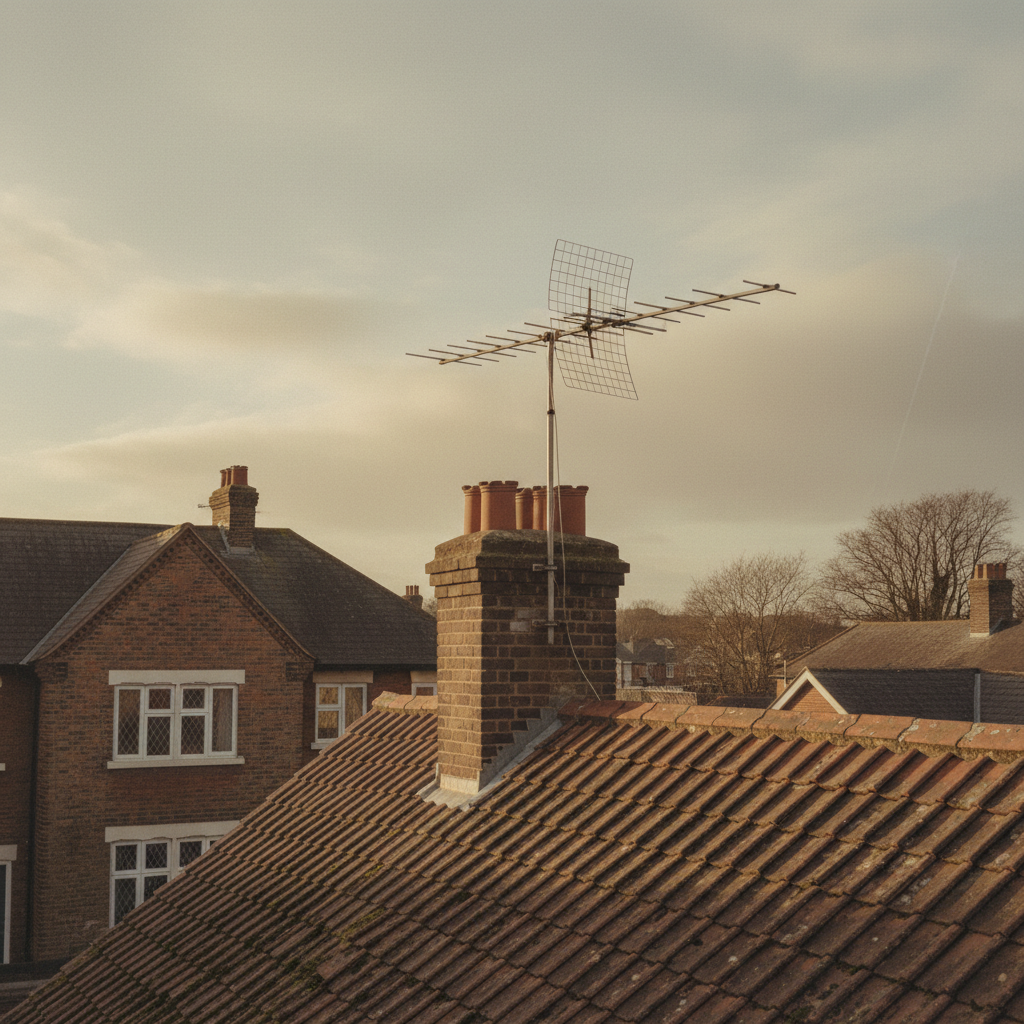
Families developed elaborate rituals around these atmospheric interruptions. During electrical storms or high winds, ghosting images would duplicate actors across the screen like pale shadows. Someone always volunteered or was elected to brave the chill or drizzle, turning the mast by fractions of an inch until the voice from the doorway called out that the picture had finally snapped into focus.
Neighborhood skylines once bristled with these metallic constructions. Each rooftop geometry pointed stubbornly toward regional broadcast towers, creating an urban forest of angled dipoles and reflectors. You could read the topography of a town just by looking at how high the masts reached and which directions the elements faced to pull in distant channels.
Inside the house, the television set itself was a heavy piece of furniture that required time to warm up, its vacuum tubes humming softly before the picture bloomed. Tuning knobs clicked heavily under hand, and fine-tuning dials were adjusted alongside the rooftop orientation. Watching a scheduled program meant being present at the exact minute it aired, because there was no rewind button and no pause menu.
Eventually, underground cables and small satellite dishes replaced the rooftop forest. Digital broadcasting eventually rendered analog ghosting and snow obsolete, replacing variable reception with either a perfect picture or a blank blue screen. The old aluminum masts were unbolted, lowered down in pieces, and hauled away to scrap yards.
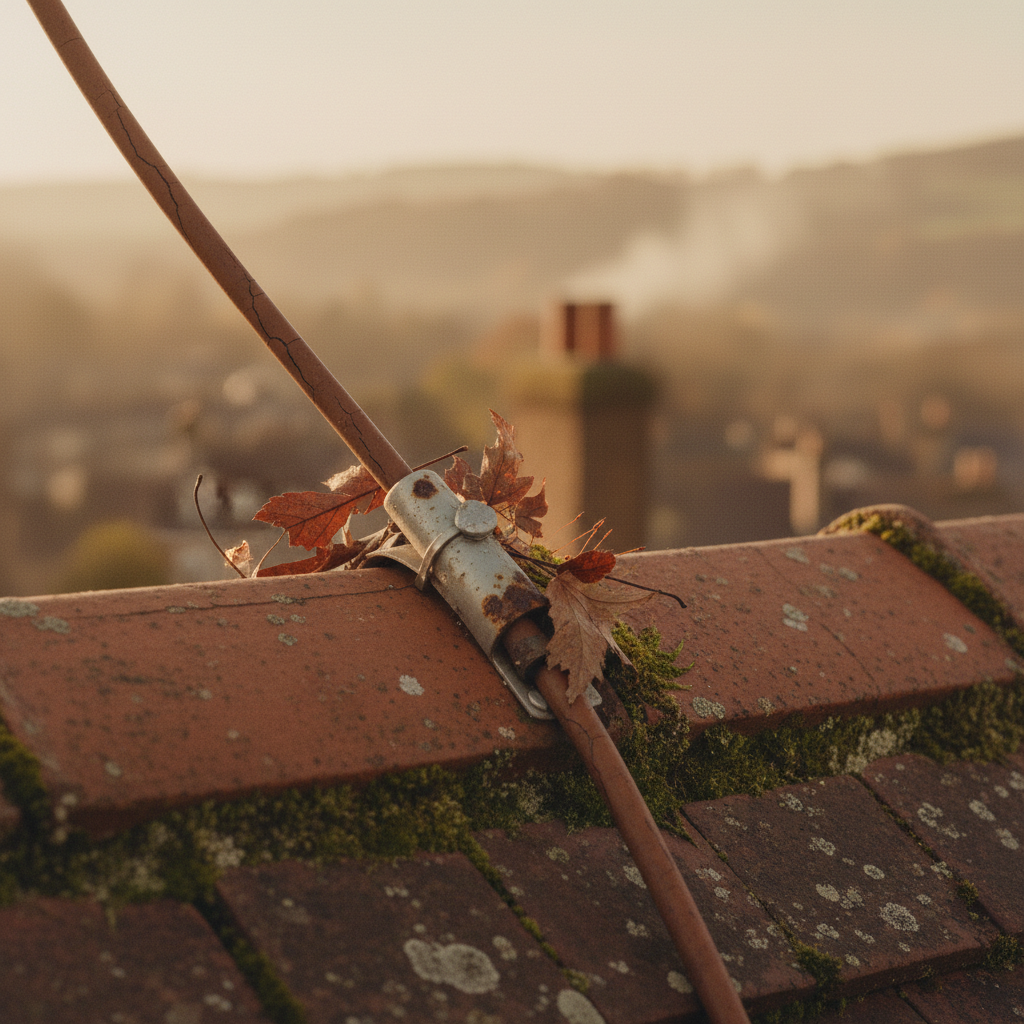
Today, those remaining iron brackets rust quietly against brick chimneys, holding onto memories of an era when bringing the world home took physical labor. The silent towers on the roof remind us of a time when television was an active collaboration between the viewer, the weather, and the sky.
Does this bring back memories?
Share this story with someone who would remember.
Relive the Memory
Find Vintage Treasures on eBay
Searching for: vintage electronics tv aerial roof
Shop the Memory on eBayAs an eBay Partner, WistMem may earn from qualifying purchases.