Make this page easier to read
Your choices are saved on this device.
When the paste-brush slapped wet paper against the station wall, everyone knew the circus was finally coming to town.
"The heavy wooden stake hit the turf with a dull thud, and the canvas sky began to rise."
The first sign was always the paste-brush slapping wet paper against the side of the feed store. Bright, crude lithographs appeared overnight on weathered board fences and lampposts, showing tigers frozen mid-leap through hoops of fire and impossibly slender women dangling from silver trapezes. Children stood on tiptoe to trace the borders with sticky fingers, whispering names of foreign cities printed in bold red ink. That paste smelled of flour and cold water, a distinct scent that signaled the ordinary routines of the week were about to be disrupted.
Then came dawn on the designated Tuesday, heralded by a low, ground-shaking rumble down the gravel road. The advance guard of flatbed trucks, painted canvas wagons, and lumbering tractors crawled past the courthouse square in a dusty, diesel-scented caravan. Local boys skipped school or lagged behind errands, chasing the convoy all the way out to the fairgrounds at the municipal boundary. By the time the sun cleared the telephone poles, the empty pasture was already alive with shouting men, heavy mallets, and the sharp clank of iron chains.
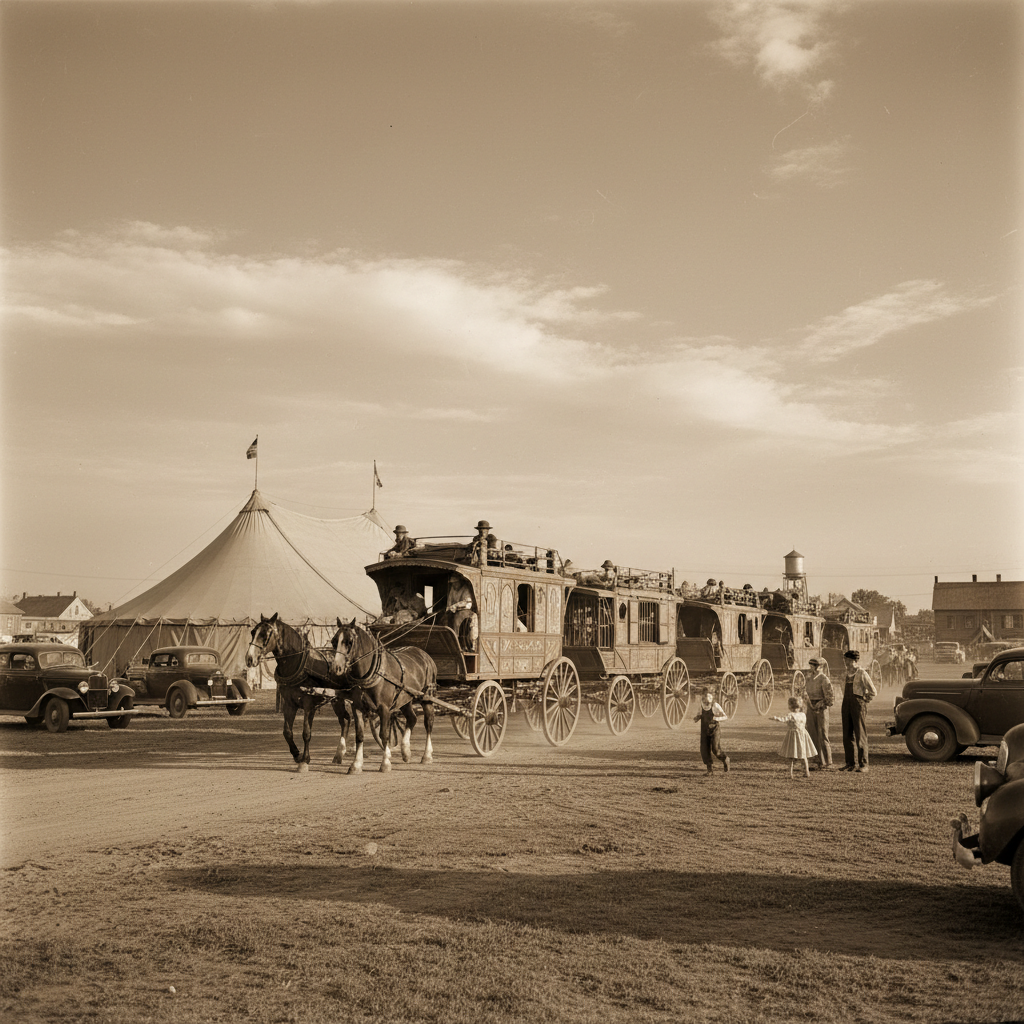
Raising the big top was an intricate ballet of muscle, steam, and canvas. Center poles, thick as ancient oaks, were winched upward with block and tackle while teams of draft horses or tractors hauled the Manila ropes taut. Every spectator standing at the perimeter rope line knew his job was to stay out of the way, watching as hundreds of square yards of heavy duck cloth billowed upward into a cathedral ceiling. The air quickly filled with the unmistakable odors of damp earth, bruised grass, sawdust, and the sharp, dry musk of caged animals.
Inside the rings, the world narrowed to colored spotlights and the sharp crack of a ringmaster’s whip. Acrobats in spangled tights climbed rope ladders into the dim reaches of the rafters, while greasepaint-faced clowns squirted water from fake boutonnières and tumbled across the sawdust floor. Concessionaires walked the sticky wooden bleachers shouting out paper cups of lemonade and boxes of roasted peanuts, their voices cutting through the brassy strains of a mechanical calliope that wheezed out Sousa marches between acts.
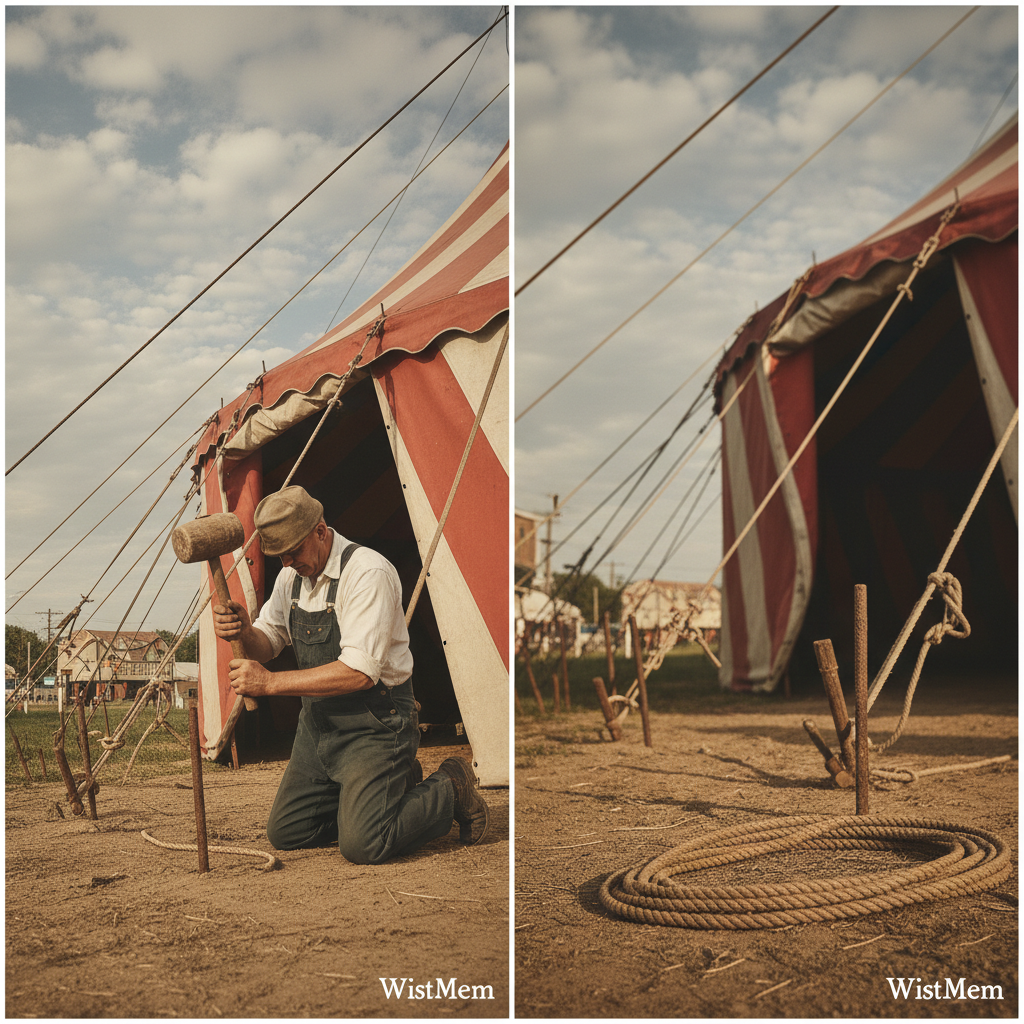
By midnight, the performance ended to the sound of fading applause and the tramping of thousands of boots heading back toward the parking lanes. But for the crew, the work was only beginning as the teardown commenced under flickering gasoline lanterns. Canvas was dropped, folded, and winched back onto high-sided wagons while the stakes were pulled one by one by heavy iron hooks. Before the local milk trucks made their morning rounds, the pasture was empty again, save for flattened patches of turf and stray bits of colored paper.
The gradual disappearance of the tented show happened quietly across the final decades of the twentieth century. Rising highway transport costs, changing municipal regulations, and shifting public tastes meant the logistics no longer worked for independent operators. Those dusty fields at the edge of town were eventually subdivided into housing tracts or paved over for strip malls, leaving no room for guy-ropes or tethered elephants. Today, the local paper announces touring concerts and theatrical road shows instead of traveling menageries, and the flatbed trucks bypass the county line entirely.
Does this bring back memories?
Share this story with someone who would remember.
Relive the Memory
Find Vintage Treasures on eBay
Searching for: vintage retro travelling circus coming
Shop the Memory on eBayAs an eBay Partner, WistMem may earn from qualifying purchases.