Make this page easier to read
Your choices are saved on this device.
Kneeling in the grass with a hammer, nail, and empty juice cans, children built simple acoustic links across the yard.
"The world went quiet as you pressed the cold metal to your ear, waiting for the scratch of a voice."
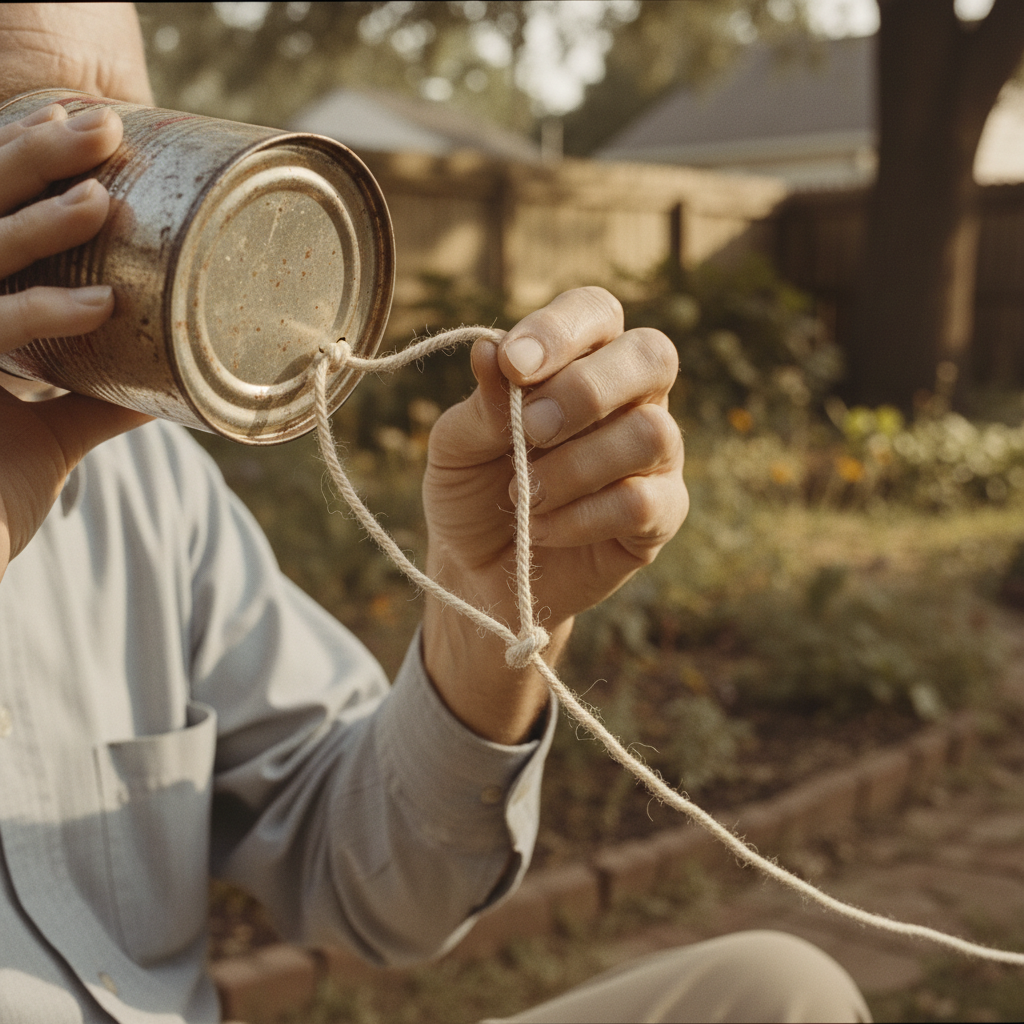
A hammer tapped a steel nail through the bottom of a soup can, punching a jagged little hole in the center. Two empty cylinders of tin lay on the back porch steps alongside a spool of thick white cotton kitchen twine. Cutting twenty feet of string required a steady hand and a pair of blunt school scissors. Threading the frayed end through the small aperture took patience, finishing with a fat, secure knot that would keep the line from pulling through under pressure.
With one can clutched in your palm, you walked backward across the lawn while your friend stood fixed near the garden hose. The string unspooled between you, dipping low over the dandelion patches until it grew taut. Pulling the line straight meant every blade of grass underneath served as a boundary for a private communication channel. Any slack in the cord meant immediate failure, turning the acoustic medium into a limp, silent thread.

Pressing the open metal rim against your ear required ignoring the sharp edge of the cut tin, sometimes softened with a strip of masking tape. The other person spoke directly into their cylinder across the yard, their voice vibrating the thin metal base. Those mechanical waves traveled along the stretched twine straight to your end, translating breath into a hollow, rattling whisper. You shouted back your reply, pitching your voice high so it carried down the line.
Neighbors walked past the alley while you knelt in the dirt, completely absorbed in keeping the tension right. Conversations consisted of simple operational tests and whispered secrets about what was happening inside the kitchen. The physics were entirely transparent, relying on direct physical cause and effect rather than invisible electronic towers. Success depended wholly on physical distance and the uninterrupted straightness of the cord between two pairs of hands.
Rotary dial landlines eventually appeared in the hallway, bringing heavy plastic receivers and clear, unobstructed copper-wire tones. The neighborhood yard lines quietly disappeared as children grew older and traded steel cans for bicycle rides down to the corner store. Pulling taut twine across a garden path seemed entirely obsolete once household phones allowed instant access without any preliminary engineering.
Modern telecommunications eventually replaced those heavy wired wall units with pocket-sized digital devices that transmit voices anywhere across the globe instantly. Yet the mechanics of that physical wire connection remain fixed in the early landscape of childhood domestic experiments. Constructing a temporary line of communication out of household trash offered a distinct lesson in how sound travels through physical matter.
Does this bring back memories?
Share this story with someone who would remember.
Relive the Memory
Find Vintage Treasures on eBay
Searching for: vintage retro tin can telephone
Shop the Memory on eBayAs an eBay Partner, WistMem may earn from qualifying purchases.