Make this page easier to read
Your choices are saved on this device.
Before automation replaced the switchboard, telephone operators served as the living hubs of community life in towns large and small.
"She was the original social network, holding the threads of local life right in her hands."
A heavy plug slid into a brass-rimmed jack with a dull click, instantly lighting a tiny bulb on the upright wooden board. The operator sat before thousands of these small holes, her hands moving with practiced speed across rows of cords that hung like heavy vines. When a caller lifted a receiver, a shutter dropped or a lamp flared, signaling her to interrupt whatever else she was tracking. She pulled a listening key toward her chest, leaned into the leather-padded mouthpiece of her headset, and spoke the standard greeting that bridged every local distance.
In communities across the country from the 1930s through the 1960s, this apparatus anchored local communication. Subscribers shared party lines, meaning four or five households might ring through the exact same copper wire, distinguished only by a specific cadence of short and long bells. If you wanted to reach the hardware store or check on a neighbor down the road, you did not dial digits. You simply waited for the operator to answer and told her whose voice you needed to hear.
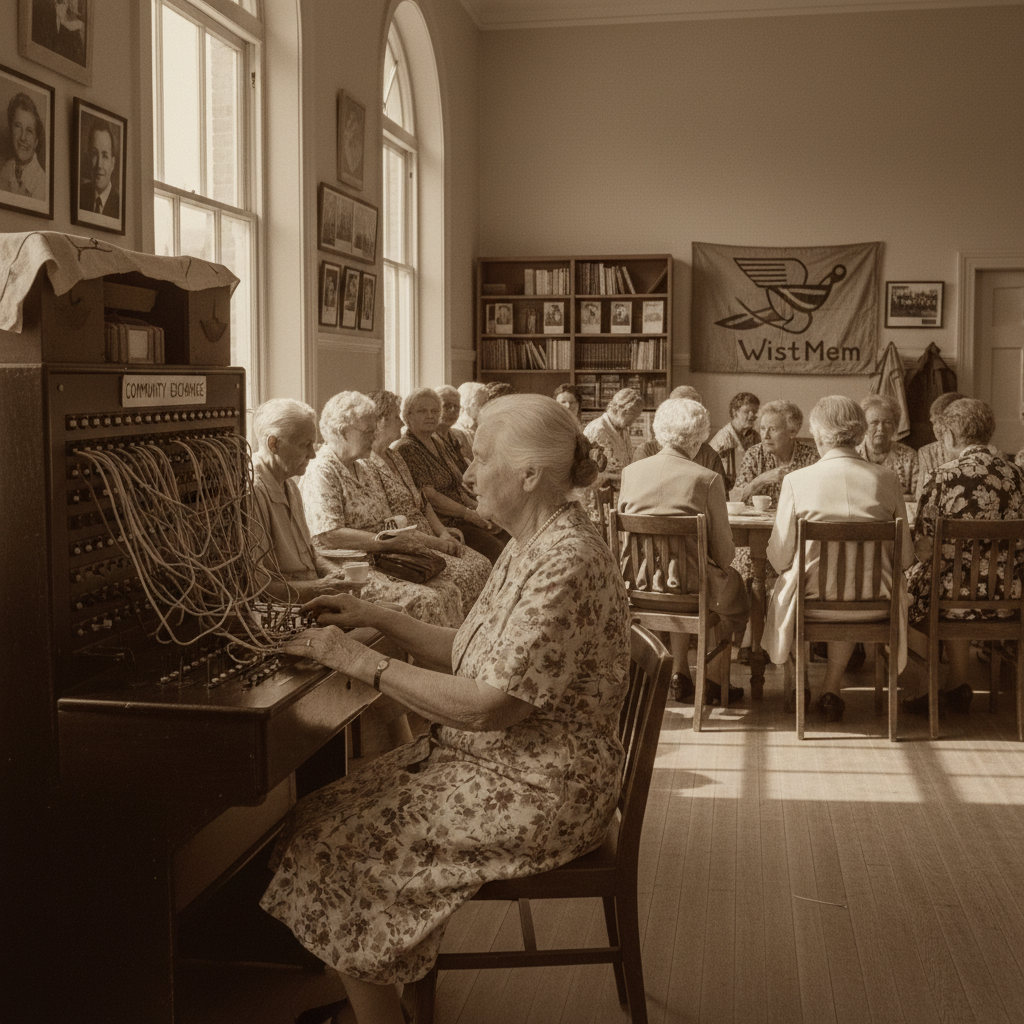
Operators performed tasks far beyond routine call routing. They doubled as emergency dispatchers, keeping a mental log or a written pad of who had left town, who was on call at the hospital, and which families faced sudden trouble. If a barn fire broke out at midnight, the call went straight to the switchboard, where the operator immediately began pulling plugs and ringing every farm in the vicinity. She knew which physicians stayed out late on house calls and which elderly residents required a morning wellness check.
Working the board required intense physical endurance and a sharp memory. Operators sat on high, straight-backed stools for eight-hour shifts, wearing heavy headsets that strained the neck by afternoon. They memorized hundreds of local names and corresponding numbers, often bypassing directories entirely when a caller asked for someone by description rather than a formal title. A request for the plumber or the bakery brought an immediate, unhesitating connection without a pause for consultation.
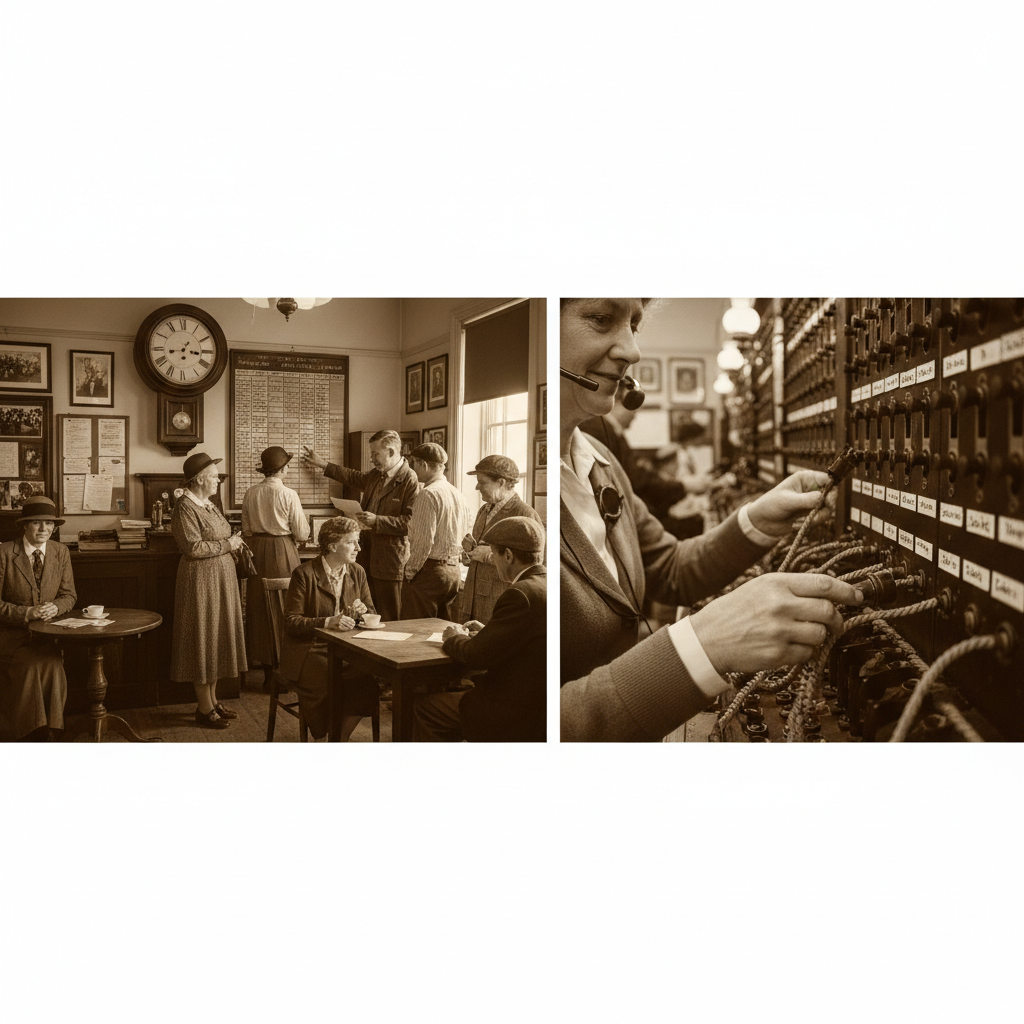
The rhythm of this shared system began to change as the Bell System and independent companies introduced dial telephones and automated switching equipment. Heavy rotary dials replaced the simple act of speaking to an intermediary, routing calls through mechanical relays instead of human hands. Small-town central offices were phased out one by one as regional hubs took over, and the switchboards that once hummed with quiet conversation were dismantled and hauled away.
The disappearance of the local operator brought undeniable efficiency and privacy to daily communication, ending the era of the party line where neighbors might listen in on a quiet channel. Yet that transition also removed a distinct layer of neighborhood familiarity. When the switchboards went dark, households gained direct access to the wider world, but they lost the comforting presence of the voice that once tied the whole street together.
Does this bring back memories?
Share this story with someone who would remember.
Relive the Memory
Find Vintage Treasures on eBay
Searching for: vintage antique telephone operator who
Shop the Memory on eBayAs an eBay Partner, WistMem may earn from qualifying purchases.