Make this page easier to read
Your choices are saved on this device.
The distinctive clatter of a bicycle kickstand and a crisp yellow envelope brought a mix of dread and anticipation to every household across mid-century America.
"That small yellow envelope held the extraordinary power to alter the course of an entire afternoon."
The heavy iron gate clicked shut, followed instantly by the sharp scrape of a bicycle kickstand hitting the pavement. In the mid-twentieth century, that specific sound commanded total silence across the front porch. Whether you were shelling peas or drying dishes, the rhythm of the household stopped the moment the telegraph boy stepped onto the walkway. He wore a stiff cotton cap and carried a leather satchel across his chest, bearing news that could not wait for the regular postal delivery.
Telegram delivery was built on urgency and precision. Because long-distance telephone calls were expensive luxuries reserved for emergencies or deep financial necessity, the telegraph network served as the vital pulse for rapid communication. Messages were wired using Morse code across vast networks of copper lines to local Western Union or postal offices. There, operators transcribed the words onto narrow paper strips, glued them onto iconic yellow forms, and folded them into windowed envelopes.
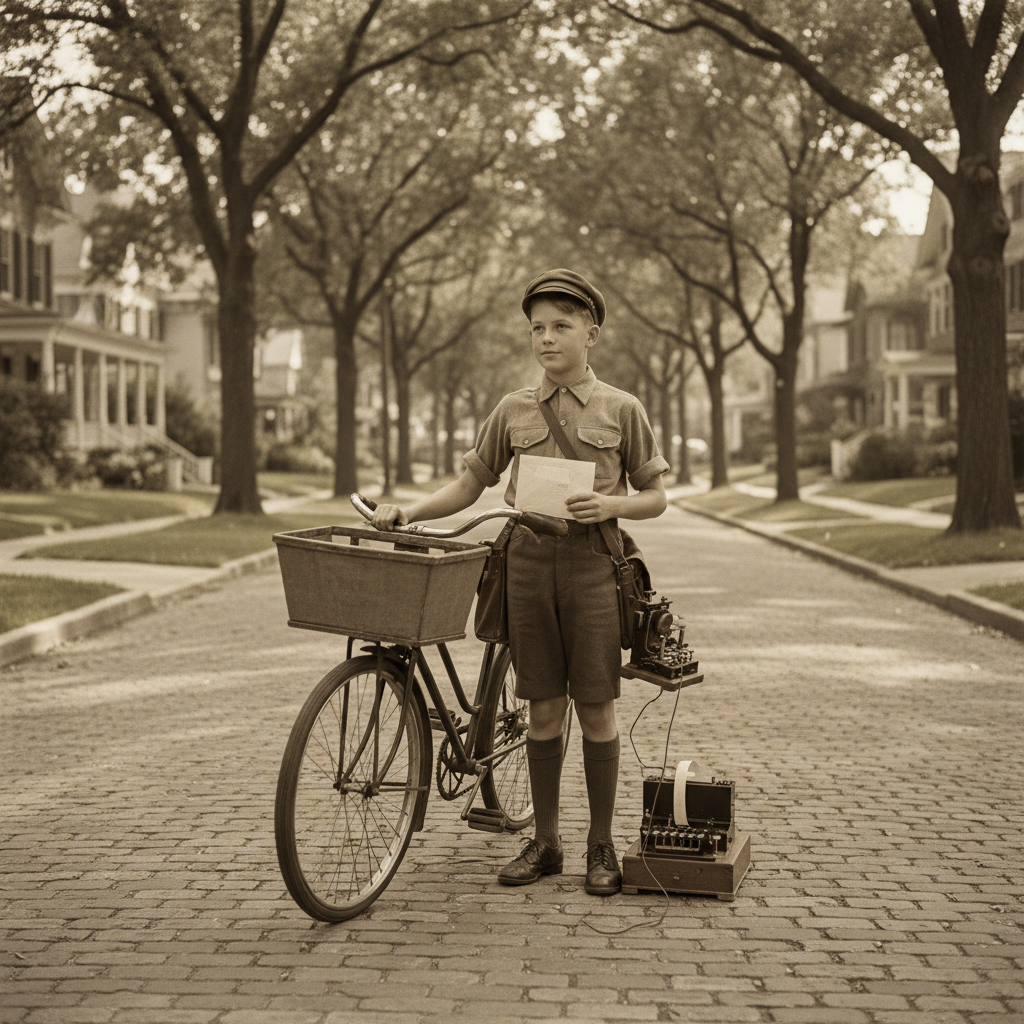
The boy who delivered the message was often a teenager working a summer job or an early morning shift before school. He waited patiently on the porch while the recipient signed the logbook with a stubby wooden pencil. People learned to read the posture of the messenger before he even reached the top step. A quick stride and an easy nod often signaled routine business or a birthday greeting, while a hesitant shuffle suggested a different weight altogether.
Every family harbored a quiet anxiety regarding those yellow slips. They arrived without warning, bridging vast distances in a matter of hours. A telegram could announce the safe arrival of a soldier returning from overseas, or it could bear the formal, dreaded notification of a sudden bereavement. The paper itself felt different from ordinary mail—crisp, thick, and demanding immediate attention.
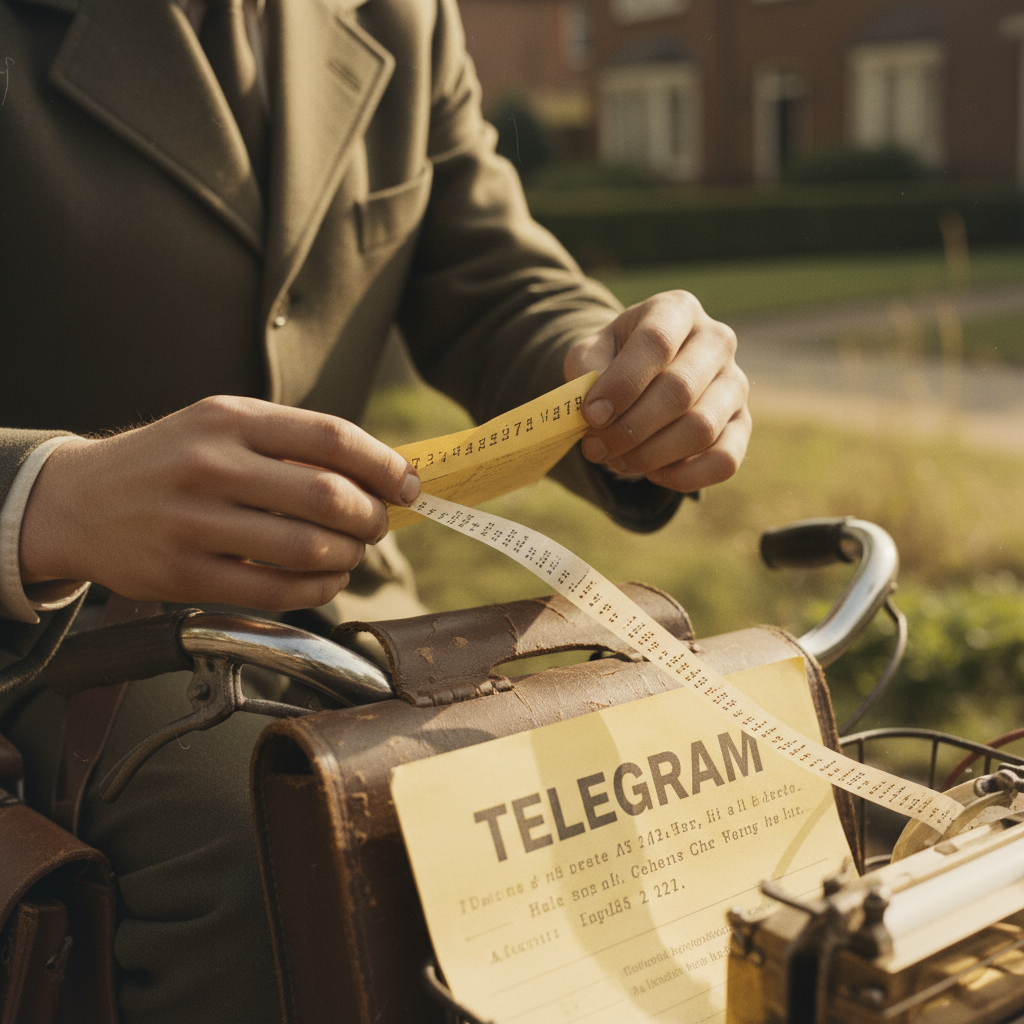
As the decades progressed past the Second World War, the infrastructure supporting the telegram began to shift. Direct-dial telephony became affordable and reliable, spreading into suburban living rooms and rural kitchens alike. The need to dispatch a human rider on a bicycle to hand-deliver typed strips of paper slowly eroded as teletype machines and household telephones took over the burden of rapid messaging.
By the close of the 1960s, the Western Union delivery boy had largely vanished from neighborhood streets, replaced by the impersonal ring of a telephone bell. The distinct anticipation tied to the bicycle at the curb faded into the background of technological progress, leaving behind only the memory of how distance once required a special kind of delivery.
Does this bring back memories?
Share this story with someone who would remember.
Relive the Memory
Find Vintage Treasures on eBay
Searching for: vintage electronics telegram delivery boy
Shop the Memory on eBayAs an eBay Partner, WistMem may earn from qualifying purchases.