Make this page easier to read
Your choices are saved on this device.
Gathering around a low table on thick floor cushions anchored daily life in the traditional Japanese home.
"Dinner was a slow unfolding around the low table."
Sliding shoji screens parted to reveal a room defined by the crisp, grassy scent of woven rush mats. Bare feet walked across the firm, pale green surfaces that gave slightly underfoot with a clean, dry resilience. This was the domestic center of the mid-century Japanese household, where furniture remained low to the ground and spaces transformed fluidly throughout the day. By late afternoon, heavy wooden frames were pushed aside, and preparations for the evening meal began.
Arranging the seating required placing square cotton zabuton cushions neatly around a lacquered wooden chabudai table [1.1.2]. Each cushion was plump and filled with dense cotton batting, offering firm support on the hard flooring. Family members knelt or crossed their legs upon these squares, positioning themselves at equal eye levels. Meals served this way relied on shared proximity, with every dish positioned within arm's reach on the polished tabletop.
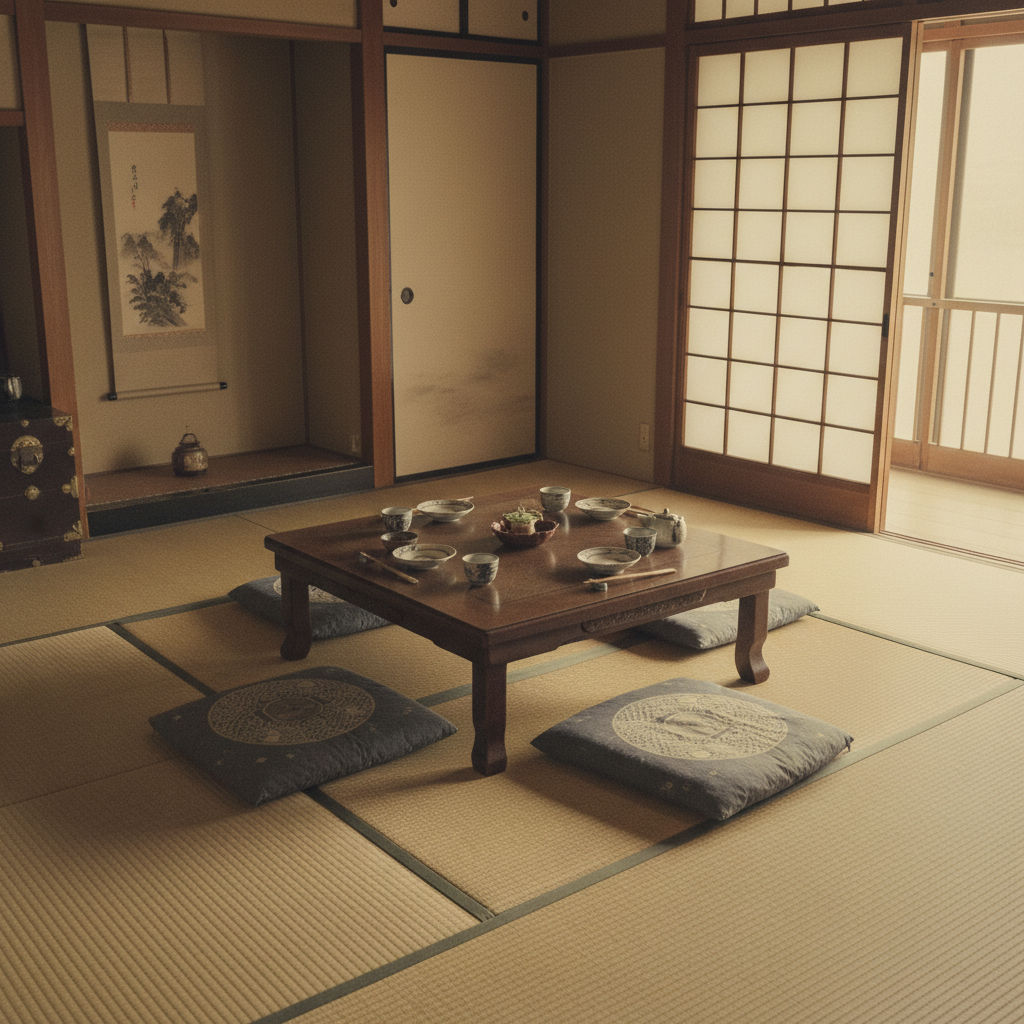
Dishes arrived in sequence from the kitchen on small ceramic plates and lacquered bowls. Steaming rice, grilled fish, pickled vegetables, and hot miso soup filled the center space, shared collectively rather than portioned out individually beforehand. Eating at this height demanded a certain posture and awareness of movement. Chopsticks clicked softly against bowls, and conversations unfolded at a measured, unhurried pace under the warm glow of overhead paper lanterns.
As the decades progressed into the nineteen-seventies and eighties, urban housing designs shifted toward Western-style dining sets and elevated chairs. Real estate constraints in expanding cities favored multi-purpose rooms over dedicated washitsu layouts. Dining tables with legs entered the floor plan, replacing the ritual of sitting directly on floor cushions for many younger households.
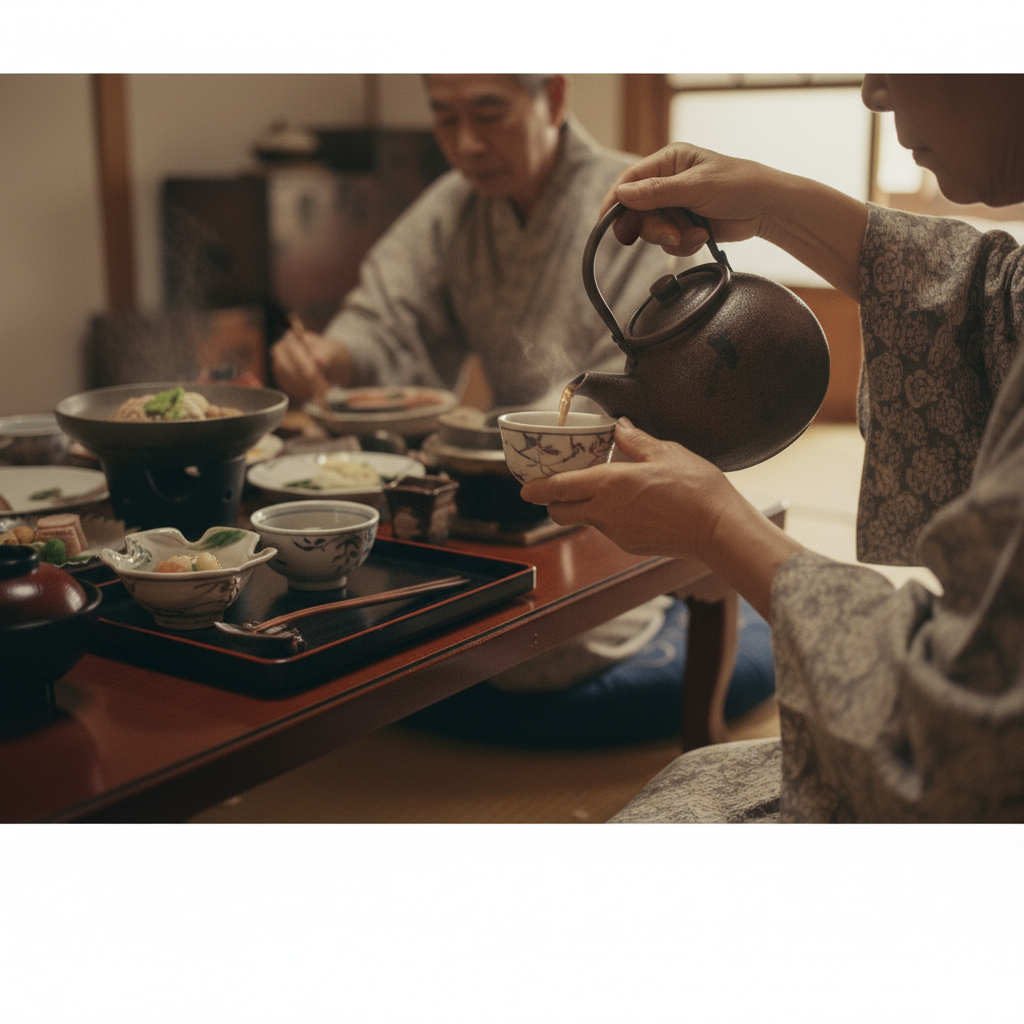
The physical sensation of sinking onto a zabuton and lowering oneself to tatami level gradually receded from daily routines. Modern apartments prioritized modular layouts and permanent seating configurations that saved space and spared aging knees. Traditional rooms transformed from everyday dining spaces into occasional guest quarters or formal areas reserved for holidays.
What remains of that era survives in specialized ryokan inns, traditional restaurants, and older family homes where rush mats are still meticulously replaced every few years. The practice of ground-level dining endures as a deliberate choice rather than an automatic domestic standard. Those who grew up sharing meals around the low table still recognize the distinct rustle of rush grass as an unmistakable signal of home.
Does this bring back memories?
Share this story with someone who would remember.
Relive the Memory
Find Vintage Treasures on eBay
Searching for: vintage antique tatami room floor cushion
Shop the Memory on eBayAs an eBay Partner, WistMem may earn from qualifying purchases.