Make this page easier to read
Your choices are saved on this device.
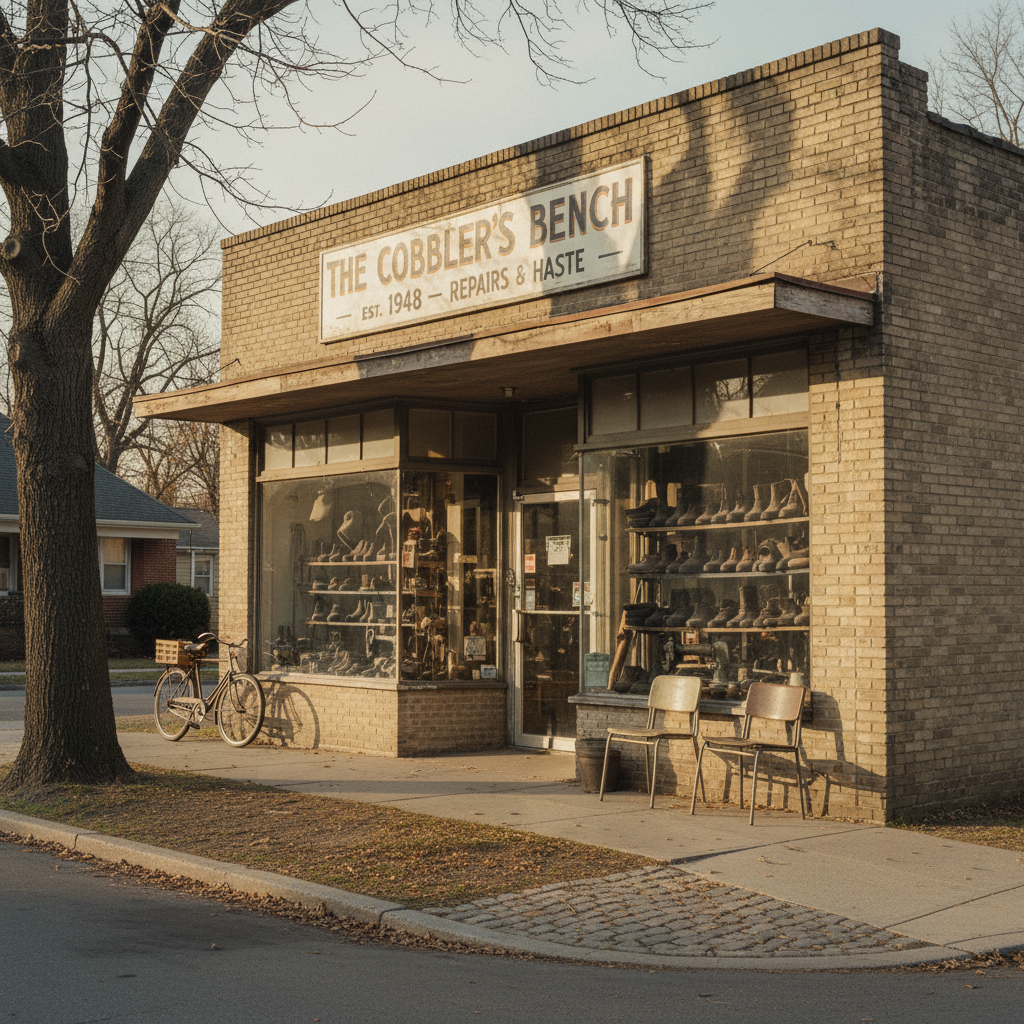
Stepping into the corner shoe repair shop meant entering a sanctuary of leather dust, heavy machinery, and the steady rhythm of a craftsman's hammer.
"He knew the difference between a good welt and a quick fix, and he always chose the former."
The little brass bell above the door gave a sharp, bright jingle that cut straight through the low hum of the buffer motor. Pushing open that heavy wooden door released a distinct, heavy atmosphere thick with the smell of neat's-foot oil, contact cement, rubber shavings, and hot leather fresh from the grinding wheel. It was a sensory anchor on the edge of the business district, remaining entirely unchanged while storefronts around it cycled through trendy boutiques and dry cleaners.
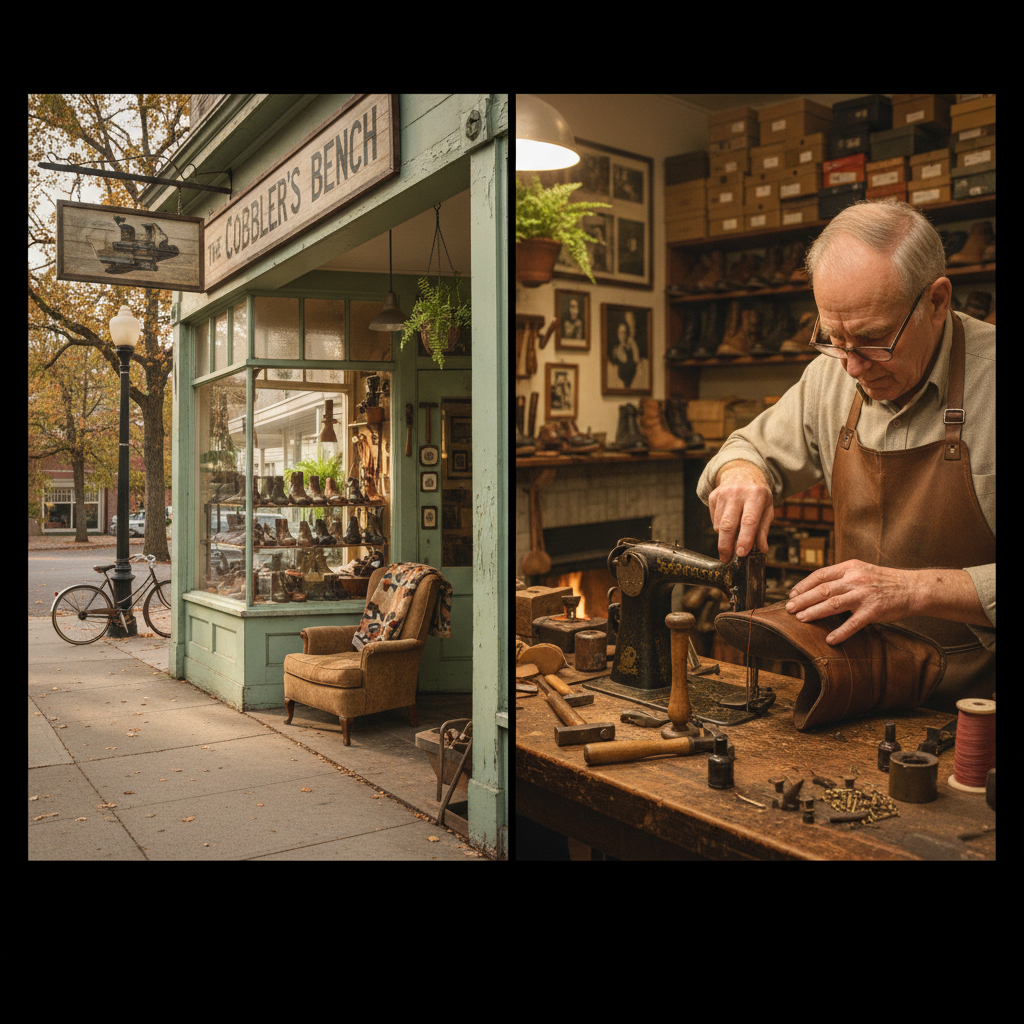
Behind the high counter stood the cobbler, almost always framed by towering wooden shelves stacked with cardboard boxes and rows of finished footwear wearing handwritten paper claim tags. His heavy canvas apron was stiffened by decades of polish stains, shoe cream splatters, and dark rings of dye. Without looking up from the shoe clamped between his knees, he would greet regular customers by name while continuing to drive brass tacks into a thick leather sole with rhythmic, precise blows.
The workbench was an organized ecosystem of specialized tools that looked medieval to modern eyes. Curved awls, heavy pincers, wire brushes, and curved needles sat within arm's reach of the cast-iron sewing machine used for stitching heavy welts. Overhead, fluorescent tubes flickered over the spinning grindstone where heels were sanded down to a smooth, flat finish. A quick touch to the wheel sent a brief shower of orange sparks flying into the metal tray below, illuminating the thick dust motes dancing in the air.
Repairing a pair of shoes was a deliberate, multi-step process that required patience. First came the inspection of the welt and shank to see if the inner structure remained sound enough to merit new construction. The worn-out rubber or leather outsole was peeled back using a knife, the old cork filling was scraped out if necessary, and a fresh layer of leather was cut to fit the exact contours of the last. Using industrial adhesive and rows of tiny galvanized nails, the new sole was secured before being trimmed and edged by hand.
People brought everything through that door because discarding a good pair of leather oxfords or sturdy work boots was simply not done. Sunday church shoes, winter galoshes with stubborn brass zippers, and scuffed children's loafers all found their way onto that counter for resoling, heel lifts, or stretched toes. The cobbler could read the hidden history of a person's physical habits simply by examining the uneven wear patterns along the outer heel or the ball of the foot.
Eventually, the economic landscape shifted underneath those heavy oak benches. Mass-produced footwear manufactured overseas flooded the market with cheap synthetic materials and glued-on soles designed to be tossed out rather than mended. When the cost of a brand-new pair of shoes dropped below the price of a proper half-sole replacement, the steady stream of customers slowed down to a trickle.
The old shops closed their doors quietly, replaced by parking lots, bank branches, or empty storefronts with brown paper taped over the windows. The specialized tools were auctioned off or left to rust in basements, taking with them a quiet corner of community life where things were built to be kept.
Does this bring back memories?
Share this story with someone who would remember.
Relive the Memory
Find Vintage Treasures on eBay
Searching for: vintage shoe repair shop lasted
Shop the Memory on eBayAs an eBay Partner, WistMem may earn from qualifying purchases.