Make this page easier to read
Your choices are saved on this device.
A shoe repair shop measured a pair by its worn soles and the life still left in its leather. Historic photographs preserve the workbench and customers behind the counter.
A pair of shoes arrived in a paper bag, each sole worn more on one side than the other. The repairer turned them over, pressed a thumb against the heel, and explained what could be done. A customer who had walked in expecting to replace the pair could leave with a date to collect it instead.
Work at the bench
The Library of Congress's shoe collection includes images of repair shops and people mending footwear. Its 1939 photograph inside a Texas shoe shop places the worker, equipment, and used shoes together. Those records show repair as skilled everyday labor, not simply an old-fashioned sign on a high street. A sole had to fit the upper; a heel had to be made even; polish could finish work that began with cutting and fastening.
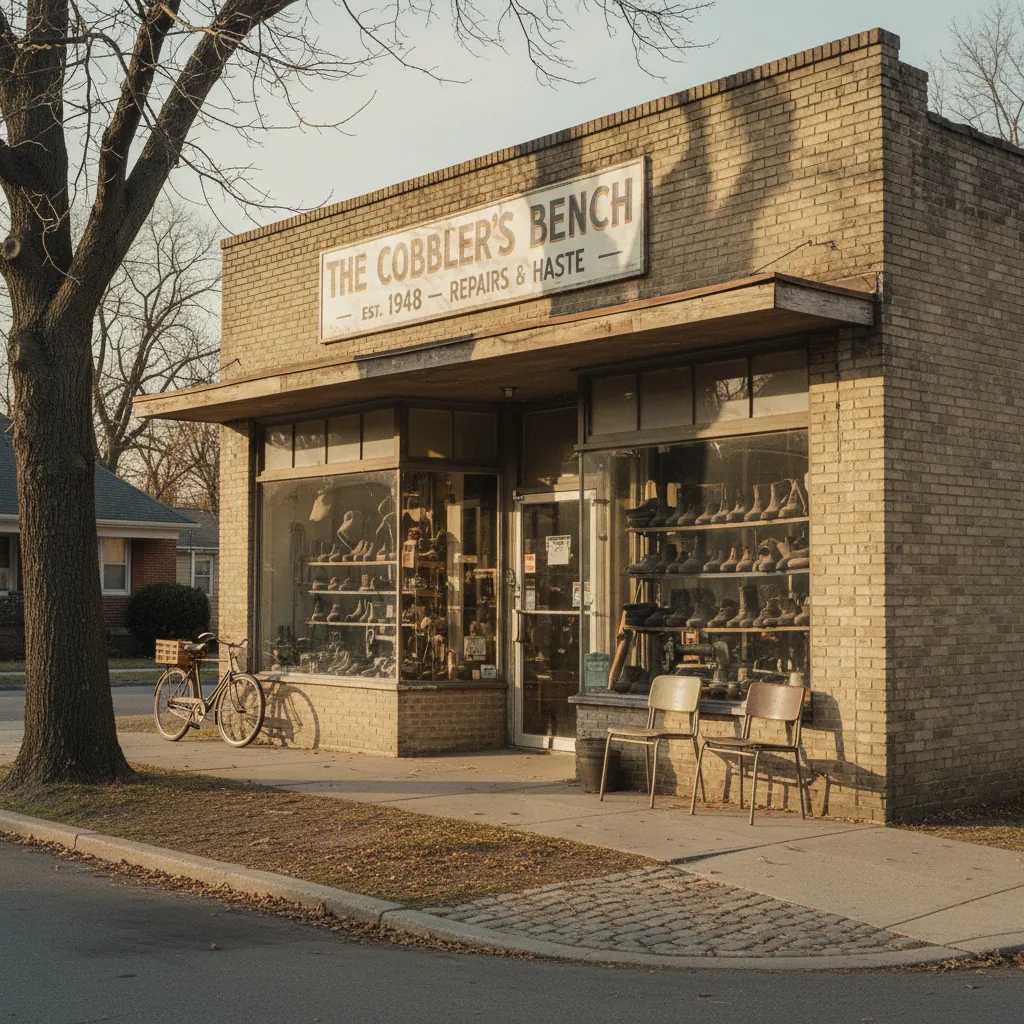 Illustration created for WistMem; not an archival photograph.
Why people came back
Shoes that had already shaped themselves to a foot were worth saving. The shop might know which customer needed a quick heel before work or which child would soon outgrow the pair. A Library photograph of a New York repair and shoeshine parlor shows customers waiting while shoes were repaired. That wait could become part of the place: a conversation by the counter, a look at other pairs lined up for collection, and trust that the repair would last. Some repairs were almost invisible when the shoe came back; others left a new heel edge or a line of stitches that made the craft easy to see. Either way, the customer left with the same pair, altered for another season.
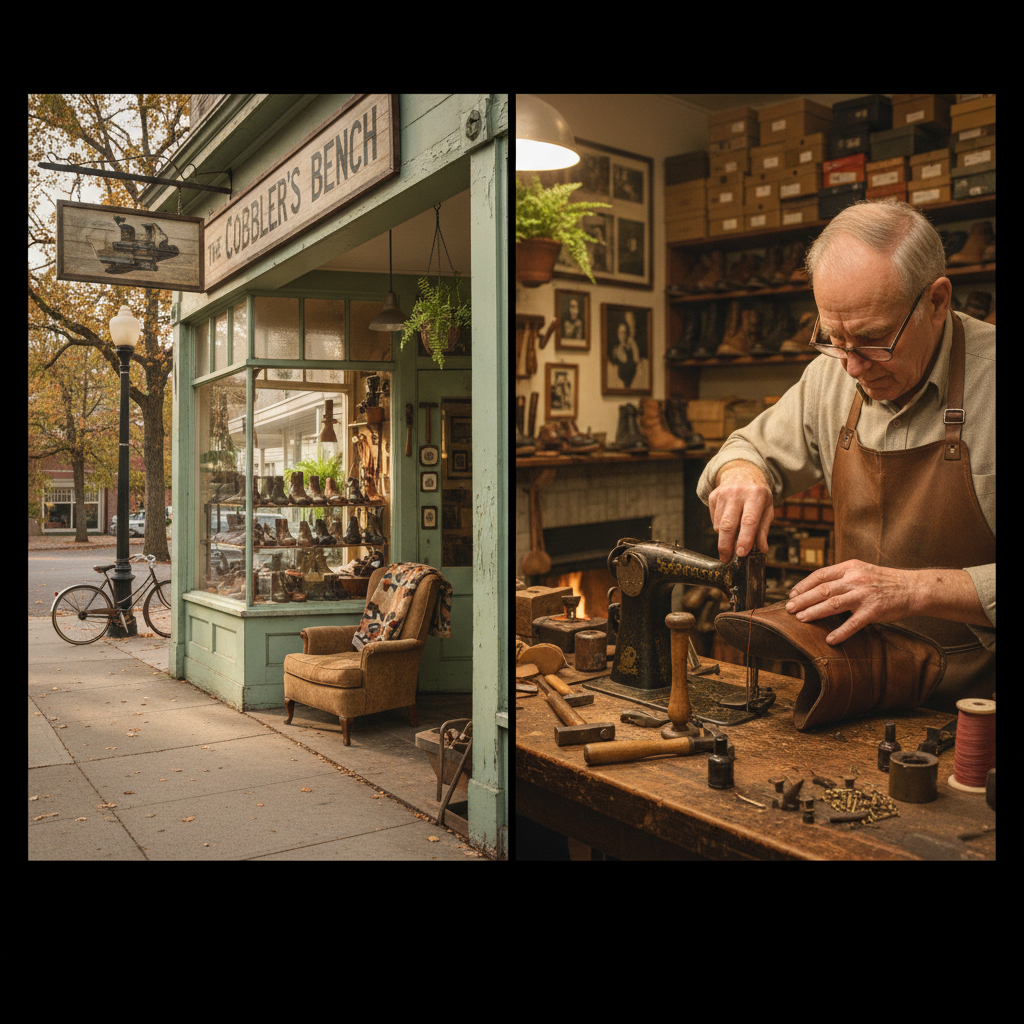 Illustration created for WistMem; not an archival photograph.
A shop measured in return visits
The most revealing family story may be the pair brought back more than once. Ask who repaired it, how the owner knew the shop was open, and what made them keep the shoes. A repaired shoe returned with its old shape and a new chance to travel.
For a British high-street service with a similarly familiar chair, read The Neighbourhood Barber Shop.
What does it bring back for you?
Ask someone who remembers, or begin with your own version. A few words can be enough.
Which local place do you remember visiting often?
Then ask: What made a visit there different from anywhere else?
Find more conversation starters Choose what feels comfortable. Ask before recording or sharing someone’s words.Relive the Memory
Find a little of the story.
Something here bring back a memory? Take a look at what you can find today.
Searching for: vintage shoe repair shop lasted
Vintage & collectible finds
Look for older objects and collectibles connected to this memory.
Search eBay (opens in a new tab)Related finds on Amazon
Explore items related to the same topic, from familiar styles to things made today.
Search Amazon (opens in a new tab)These links open search results. Items, prices, and availability vary.
Affiliate links. We may earn a commission at no extra cost to you.
As an Amazon Associate I earn from qualifying purchases. As an eBay Partner, WistMem may earn from qualifying purchases.
Does this bring back memories?
Share this story with someone who would remember.