Make this page easier to read
Your choices are saved on this device.
Before sleek plastics and molded boots dominated the pavement, clamp-on metal roller skates and their accompanying keys taught children balance through trial, error, and scraped knees.
"A twist, a turn, the satisfying click-clack as the side clamps tightened around your everyday shoes."
The heavy steel clamps rested against the sides of everyday leather shoes or worn sneakers while the rider sat cross-legged on the driveway. Adjusting the length required sliding the metal plates apart until the toe and heel matched the exact dimensions of the foot. A single threaded bolt underneath held the two halves together, requiring occasional tightening with a screwdriver when the friction wore thin from miles of continuous rolling.
Then came the ritual of the key. That small, winged piece of stamped metal lived on a piece of string worn around the neck or stayed deep inside a pants pocket. Kneeling on the concrete, the rider fitted the key into the socket on the side of the skate and turned it clockwise. The screw mechanism drove the side clamps inward until they bit firmly into the shoe leather, securing the foot in place.
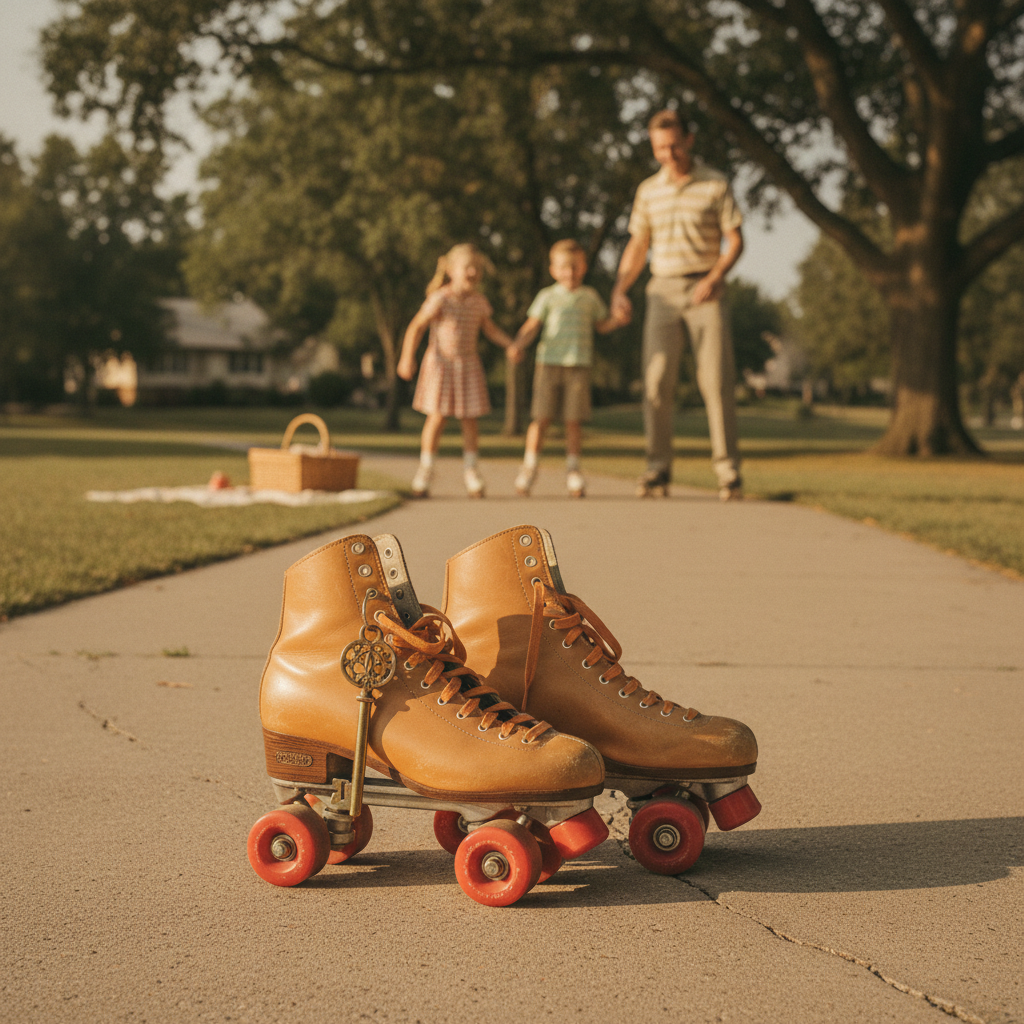
Checking the fit demanded a deliberate stomp and a wiggle of the toes before attempting any movement. A loose clamp meant the skate would shift sideways halfway down the block, resulting in a sudden stumble and torn trousers. Securing the leather ankle strap provided the final layer of stability, though the thin strap offered little protection when gravity won a dispute on a steep slope.
The steel wheels generated a distinct, heavy rumble that announced a child's arrival long before they came into view. Smooth pavement allowed for decent momentum, but cracks, expansion joints, and pebbles acted as sudden, rigid brakes. Stopping required dragging the toe or the side of the shoe sole against the pavement, turning leather and rubber into sacrificial pads that parents regularly complained about.
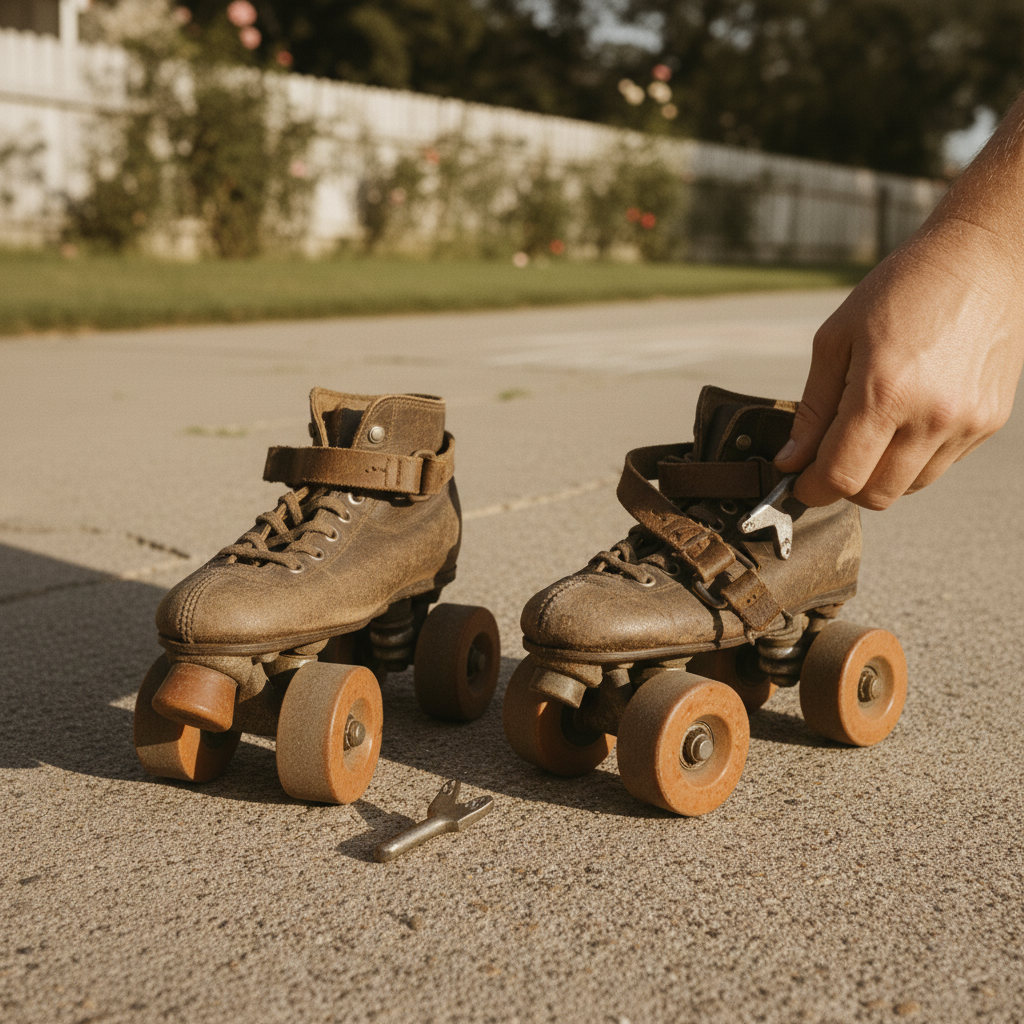
Neighborhood streets and wide concrete sidewalks served as the primary tracks for these afternoon expeditions. Friends gathered to compare speeds, trade adjustment keys, and test who could coast the farthest down a slight incline without losing balance. Older siblings often shared tips on how to negotiate turns or avoid the dreaded sidewalk seam that could stop a front wheel dead in its tracks.
As the decades progressed, manufacturing shifted toward molded plastic boots, polyurethane wheels, and permanently attached bearings that rendered the old clamp-on designs obsolete. The neighborhood soundscape changed as the metallic clatter gave way to the soft, muffled hum of urethane rolling over asphalt. Today, those winged keys turn up mostly in antique shops and junk drawers, relics of an era when a pair of skates required manual labor just to get rolling.
Does this bring back memories?
Share this story with someone who would remember.
Relive the Memory
Find Vintage Treasures on eBay
Searching for: vintage retro roller skates with
Shop the Memory on eBayAs an eBay Partner, WistMem may earn from qualifying purchases.