Make this page easier to read
Your choices are saved on this device.
Stepping down into a cool, stone-lined cellar revealed wooden shelves densely packed with home-canned preserves and root vegetables meant to sustain a household through the coldest months.
"Every single jar represented hours of labor under hot summer stoves, neatly lined up to face the coming frost."
Heavy wooden cellar doors swung open with a familiar groan, releasing a steady draft of cool, damp air smelling of moist soil and stored apples. Descending the wooden steps meant leaving behind the warmth of the kitchen to enter a dim subterranean room illuminated by a single overhead bulb. The whitewashed stone walls stayed remarkably chill even in late autumn, creating a natural anchor point for household food storage that stretched from floor to ceiling.
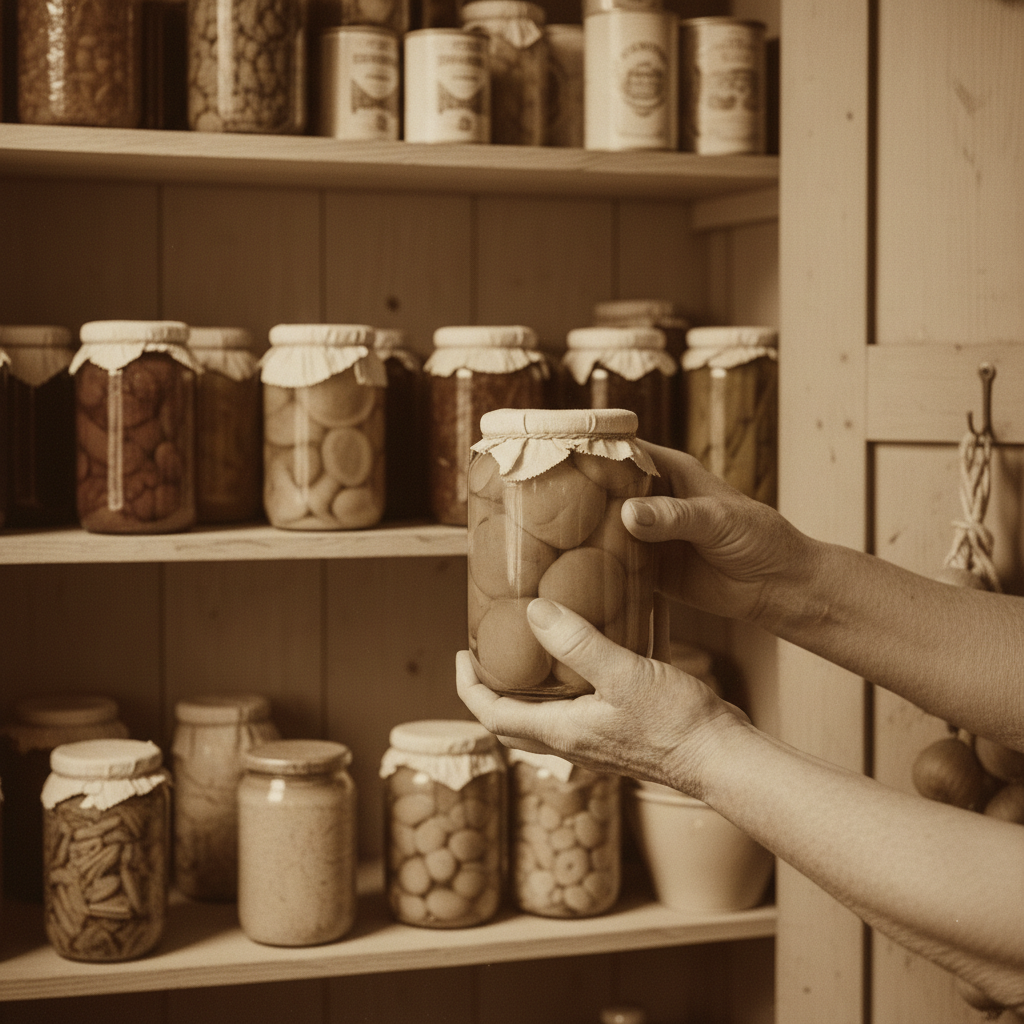
Sturdy pine shelving units held rows of glass canning jars filled during the peak harvest weeks of August and September. Mason jars secured with zinc lids and rubber rings displayed ruby red tomatoes, amber peach halves, and dark purple pickled beets [1.2.4]. Each lid required a firm tug to verify the vacuum seal before the contents were approved for winter rationing. Behind the glass sat earthenware crocks packed tight with fermented cabbage or brined cucumbers sitting heavy in salted water.
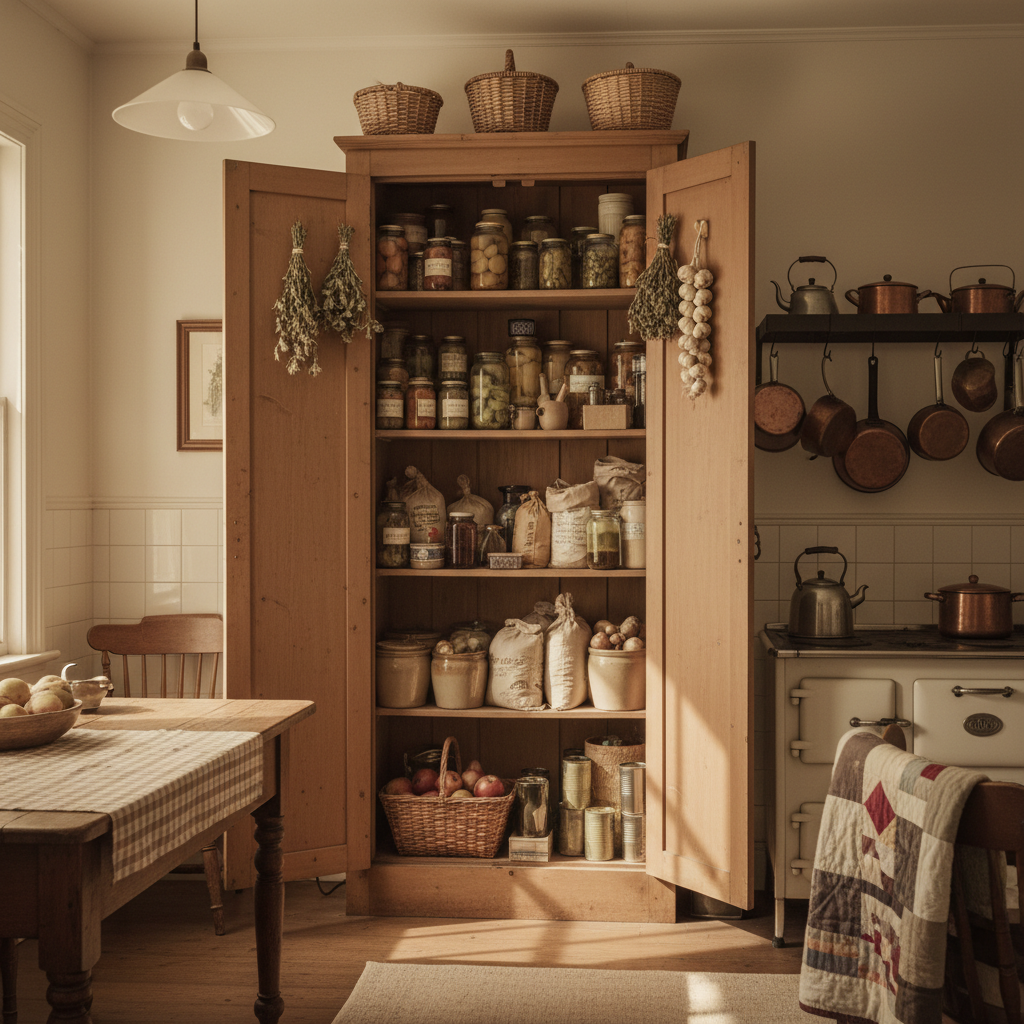
Wooden crates tucked into the darkest corners contained Russet potatoes and yellow onions individually wrapped or layered in dry straw to prevent bruising and sprouting. Sacks of dried navy beans and coarse white flour lined the lower platforms alongside heavy burlap bags of cornmeal. Hanging from exposed ceiling joists, cured pork shoulders and smoked hams added a rich, savory aroma to the ambient scent of earth and vinegar.
Preparing these stores occupied weeks of grueling labor during the hottest days of the year when wood-fired or gas stoves ran constantly. Families hauled bushels of produce from local farms or backyard plots, blanching, peeling, and sterilizing in assembly-line fashion. Pressure canners hissed on stovetops while huge enamel pots boiled water for the hot-pack method, turning kitchens into steamy workshops dedicated entirely to preservation.
As commercial supermarkets expanded their reach through the post-war decades, fresh citrus and out-of-season vegetables appeared reliably on local grocers' shelves year-round. The introduction of affordable home chest freezers provided a simpler alternative to hot water bath processing, allowing households to freeze corn and berries directly without hours of canning labor. Slowly, the routine of late-summer bottling gave way to convenience, leaving basement shelves to empty out.
Most of those old cellars have since been converted into utility rooms or storage spaces for holiday decorations and old furniture. The physical architecture of self-reliance faded as supply chains lengthened and daily life accelerated away from seasonal eating patterns. Yet the heavy imprint of those stocked winter larders remains visible in the design of older mid-century basements.
Does this bring back memories?
Share this story with someone who would remember.
Relive the Memory
Find Vintage Treasures on eBay
Searching for: vintage antique pantry larder stocked winter
Shop the Memory on eBayAs an eBay Partner, WistMem may earn from qualifying purchases.