Make this page easier to read
Your choices are saved on this device.
Before manicured fields and scheduled practices, the neighbourhood sandlot was where kids built their own rules, carved out bases in the dirt, and learned the rhythm of summer afternoons.
"Bases were worn into the dirt by countless sliding feet, and boundaries were defined by Mrs. Henderson's rose bushes."
You carried the bat on your shoulder, walking down the alleyway until the pavement gave way to packed earth and weeds. Someone always arrived first to drag a heavy limb across the dust, scraping out a home plate and a rough approximation of a pitcher's mound. The equipment was whatever you could scrounge together. A single battered Louisville Slugger with a taped handle served twenty kids, and the baseballs were usually soft-seamed, held together with black electrician's tape after too many trips over neighbour fences.
Rules were established before the first pitch through intense, democratic shouting matches. If turnout was low, right field became an imaginary vacuum and a ghost runner took over second base. Every obstacle on the property dictated the game's architecture. A concrete utility pole stood in play as a home-run obstruction, while a thicket of blackberry bushes marked ground-rule doubles. You learned quickly that the local geography demanded total concentration, whether you were dodging gravel pits or keeping an eye out for Mr. Henderson on his porch.
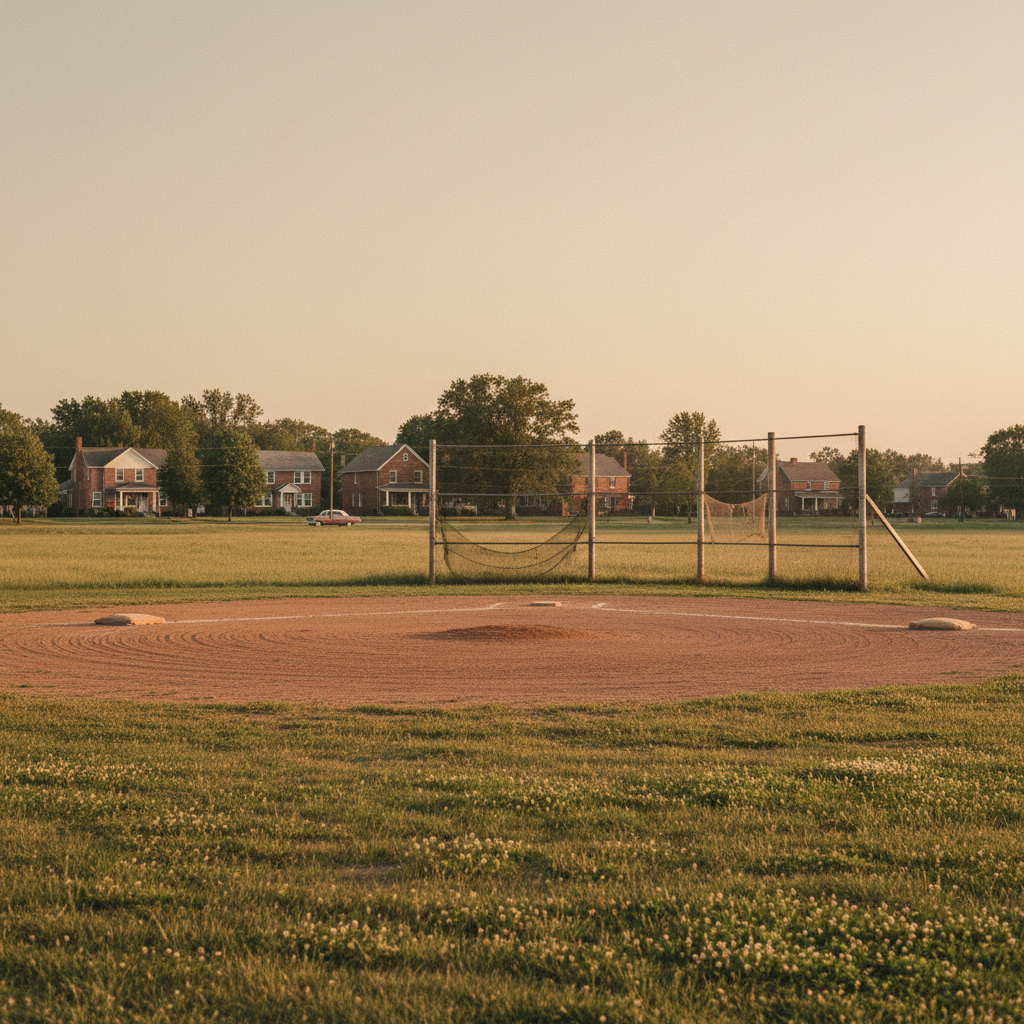
Generations mixed on that patchy grass in a way modern schedules rarely allow. Ten-year-olds shared an outfield with fourteen-year-olds who already possessed deep voices and the raw confidence of high school athletes. Pitching speeds varied wildly, and catching required genuine nerve when the neighbourhood's fastest thrower took the mound without a helmet or shin guards in sight. Standing in that box, you watched the older boys closely, absorbing their stances and trying to mimic the smooth follow-through of a proper swing.
Afternoons dissolved into a blur of dust, skinned knees, and the metallic tang of warm tap water from a garden hose down the street. Disputes over whether a runner was safe at first brought the game to a dead stop for five minutes of loud argument before someone compromised and play resumed. Nobody checked a watch or waited for an umpire. The game ended only when the orange autumn sun dipped completely behind the rooftop line and you could no longer track the flight of a white sphere against the dusk.
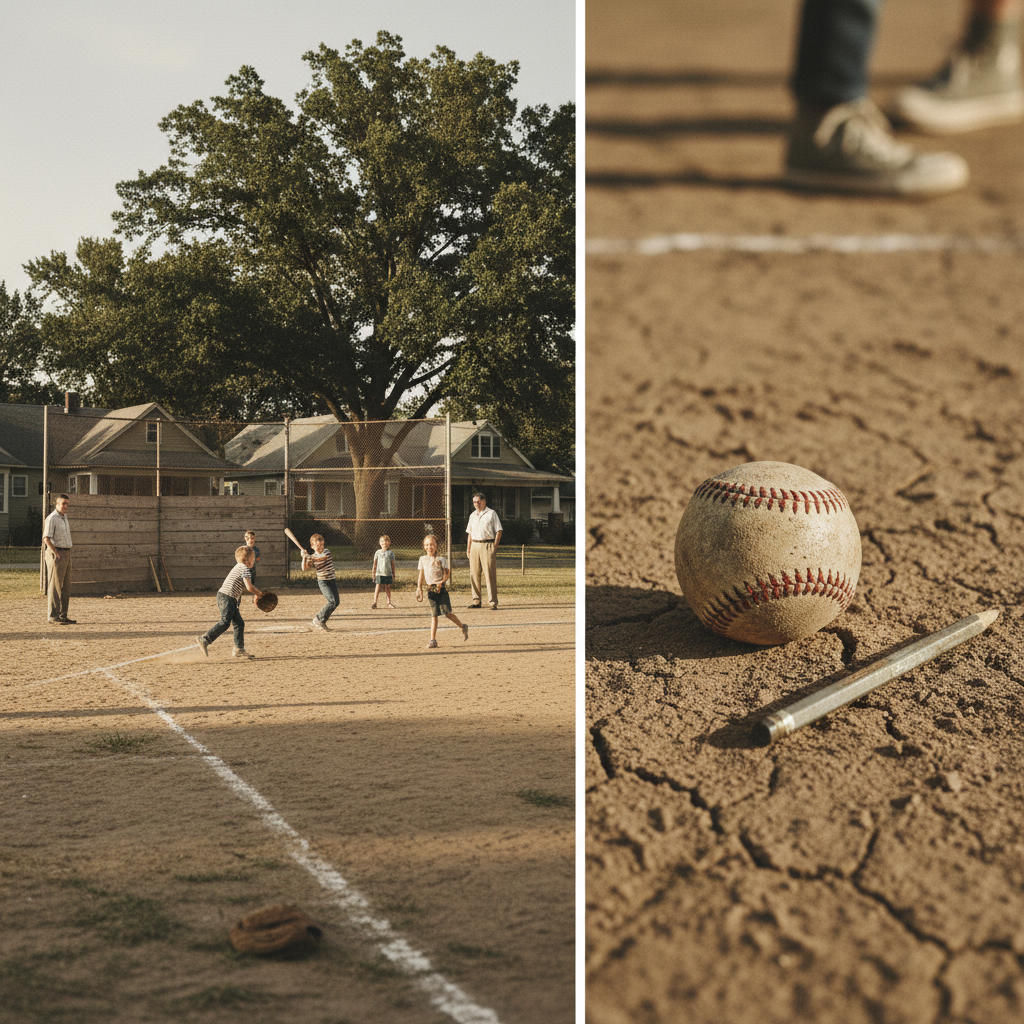
Those open spaces began to vanish as suburban expansion accelerated through the late decades of the twentieth century. Vacant lots sprouted foundations for split-level homes or asphalt parking lots, pushing neighbourhood games onto narrow sidewalks or prohibiting them entirely. At the same time, parents shifted toward structured Little League organizations complete with matching uniforms, professional coaches, and parents sitting in aluminum bleachers with clipboards.
The official leagues offered regulation fields and standardized pitching distances, but they replaced a specific kind of autonomy. On the sandlot, you learned how to negotiate fairness, manage conflict, and invent entertainment out of nothing at all. The vacant lot is gone now, replaced by pavement and property lines, but the sharp crack of a wooden bat against a taped-up ball remains fixed in the landscape of those long, unsupervised afternoons.
Does this bring back memories?
Share this story with someone who would remember.
Relive the Memory
Find Vintage Treasures on eBay
Searching for: vintage retro neighbourhood sandlot baseball diamond
Shop the Memory on eBayAs an eBay Partner, WistMem may earn from qualifying purchases.