Make this page easier to read
Your choices are saved on this device.
Sliding a protective plastic cartridge into a metallic silver player felt like stepping into the future of personal music during the 1990s.
"You'd connect it to your stereo, carefully setting levels, watching the little digital display light up."
Sliding a protective plastic cartridge into a metallic silver player felt like stepping into the future of personal audio during the 1990s. The casing was cool and rigid, safeguarding the reflective disc inside from the scratches that routinely plagued standard compact discs. When you pressed the power button, a soft whir signaled the mechanical read head spinning into position, accompanied by the crisp click of micro-switches.
Recording your own audio transformed passive listening into an active craft. By tethering the unit to a home stereo or CD player with an optical cable, you could transfer tracks directly onto the writable medium. The onboard screen displayed track numbers and level meters, allowing you to monitor volume peaks and prevent clipping before laying down the final audio tracks.
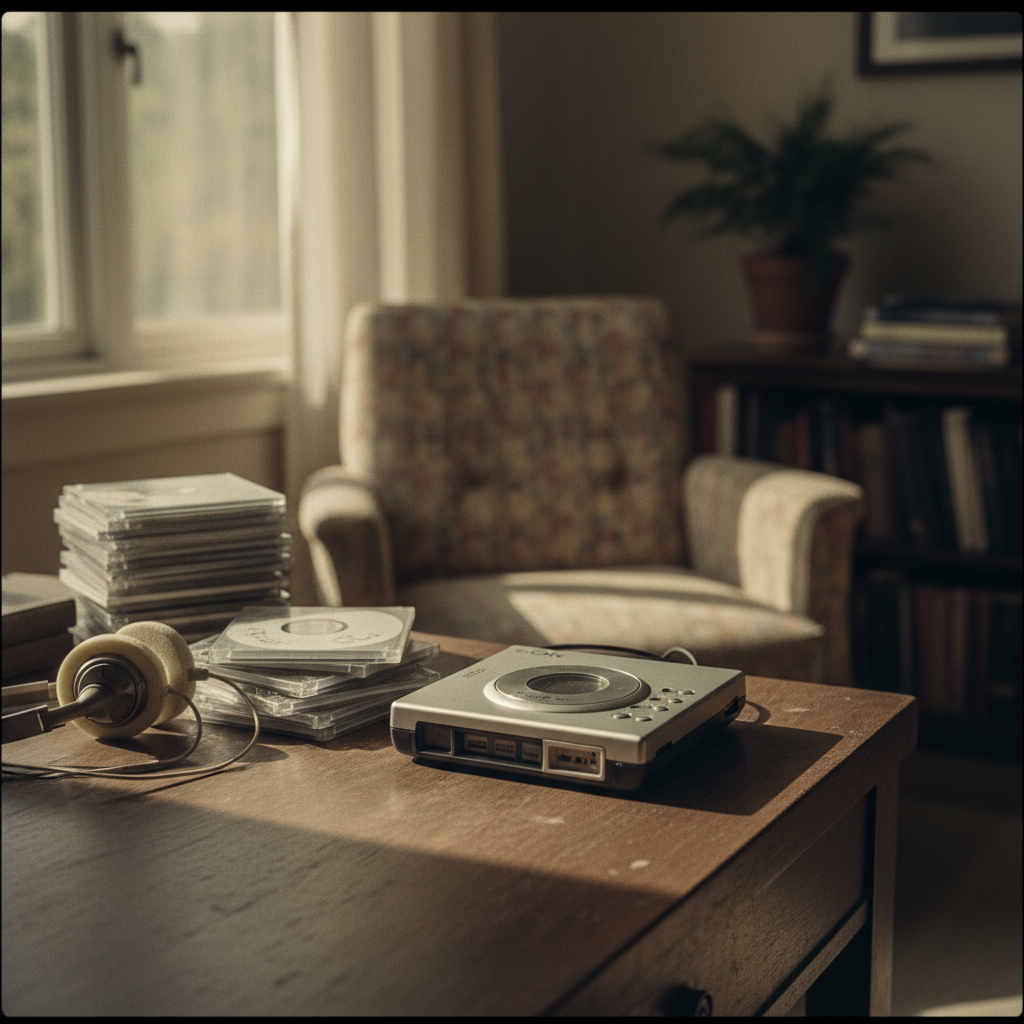
Editing capabilities set the format apart from anything else available at the time. Once a track was recorded, you could split, combine, move, or erase segments directly on the hardware. Typing titles letter by letter using the tiny jog dial or a miniature plug-in keyboard turned blank media into meticulously organized albums tailored for specific occasions.
Physical resilience made these units exceptionally popular for daily commuters and travelers. Unlike portable CD players that skipped violently at the slightest jolt, ATRAC compression paired with shock-resistant memory buffers ensured uninterrupted playback while walking or riding public transit. The sound remained crisp, bright, and steady regardless of movement.
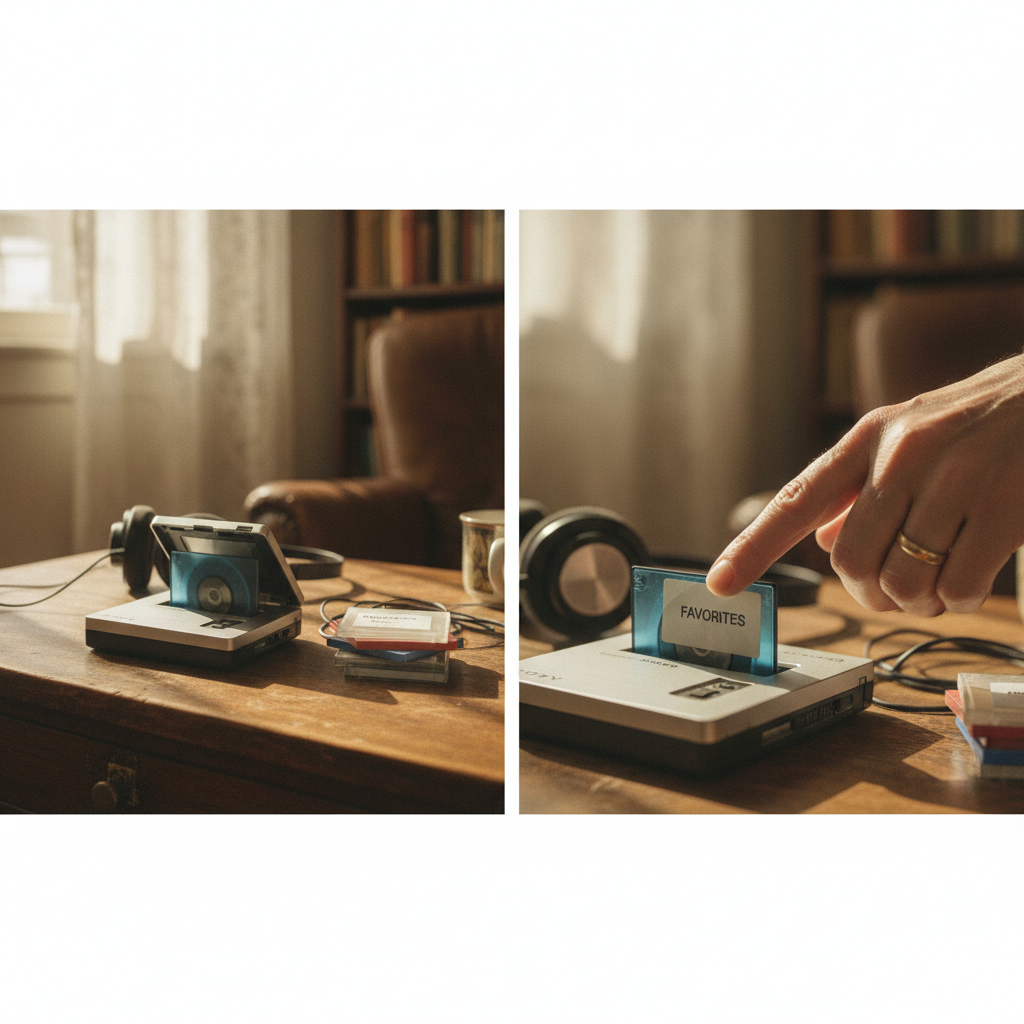
Stacks of blank discs in slim jewel cases filled drawers alongside fine-tipped pens used for labeling spines. Organizing a personal library required patience and precision, turning mixtape curation into a tactile ritual. Every disc represented hours of thoughtful selection, creating a physical archive that sat neatly on a shelf.
The format eventually receded as solid-state MP3 players and hard-drive devices entered the consumer market, offering thousands of songs without the bulk of physical media. Yet the mechanical hum, the glowing monochrome screen, and the satisfying weight of the hardware remain distinct touchstones of an era caught between physical tape and digital files.
Does this bring back memories?
Share this story with someone who would remember.
Relive the Memory
Find Vintage Treasures on eBay
Searching for: vintage electronics minidisc player that
Shop the Memory on eBayAs an eBay Partner, WistMem may earn from qualifying purchases.