Make this page easier to read
Your choices are saved on this device.
Sidewalk lemonade stands once turned lazy summer afternoons into lessons in commerce, armed with a chipped glass pitcher, hand-painted signs, and a handful of ice.
"The pitcher sweated condensation onto the wood, and ice clinked inside like a promise of relief."
A wobbly card table dragged across hot concrete marked the beginning of the operation. You propped it up near the curb where passing foot traffic might spot your hand-lettered cardboard sign. The cardboard usually bore a price written in black crayon, marking cups at five or ten cents apiece. An old metal folding chair waited behind the table for whoever drew the first shift in the sun.
The recipe required patience and sticky kitchen counters. Real lemons were sliced in half and pressed hard against a glass reamer until the yellow rinds yielded every drop of juice. Granulated sugar went into the pitcher next, stirred continuously with a long wooden spoon until the grains dissolved into a murky, pale syrup. Cold tap water filled the rest of the container, diluting the sharp bite into something drinkable.
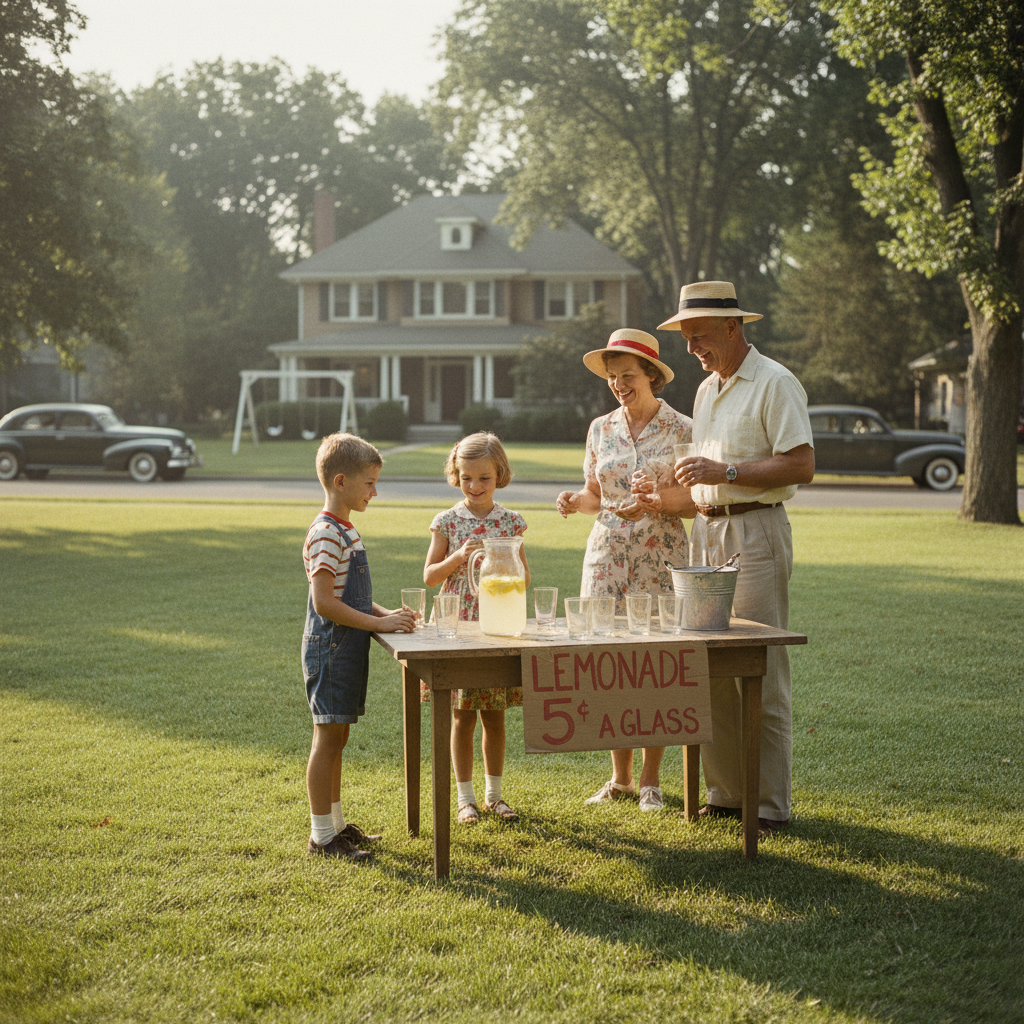
Ice cubes added a vital soundtrack to the venture. Every time a customer paid their nickel, you scooped up cubes from an ice tray retrieved from the refrigerator, dropping them into pleated paper cups. The ice clinked loudly against the glass pitcher during the pour. That sound drew attention from down the block, signaling to neighbors that cold refreshment was available.
Transactions relied entirely on loose change kept in a cigar box or a plastic butter tub. Quarters, dimes, and nickels rattled inside whenever a neighbor stopped by during an afternoon walk. Adults usually paid with exact change or handed over a coin and told you to keep the difference. By late afternoon, the heavy container held enough coins to finance a comic book or a paper bag of penny candy from the corner store.
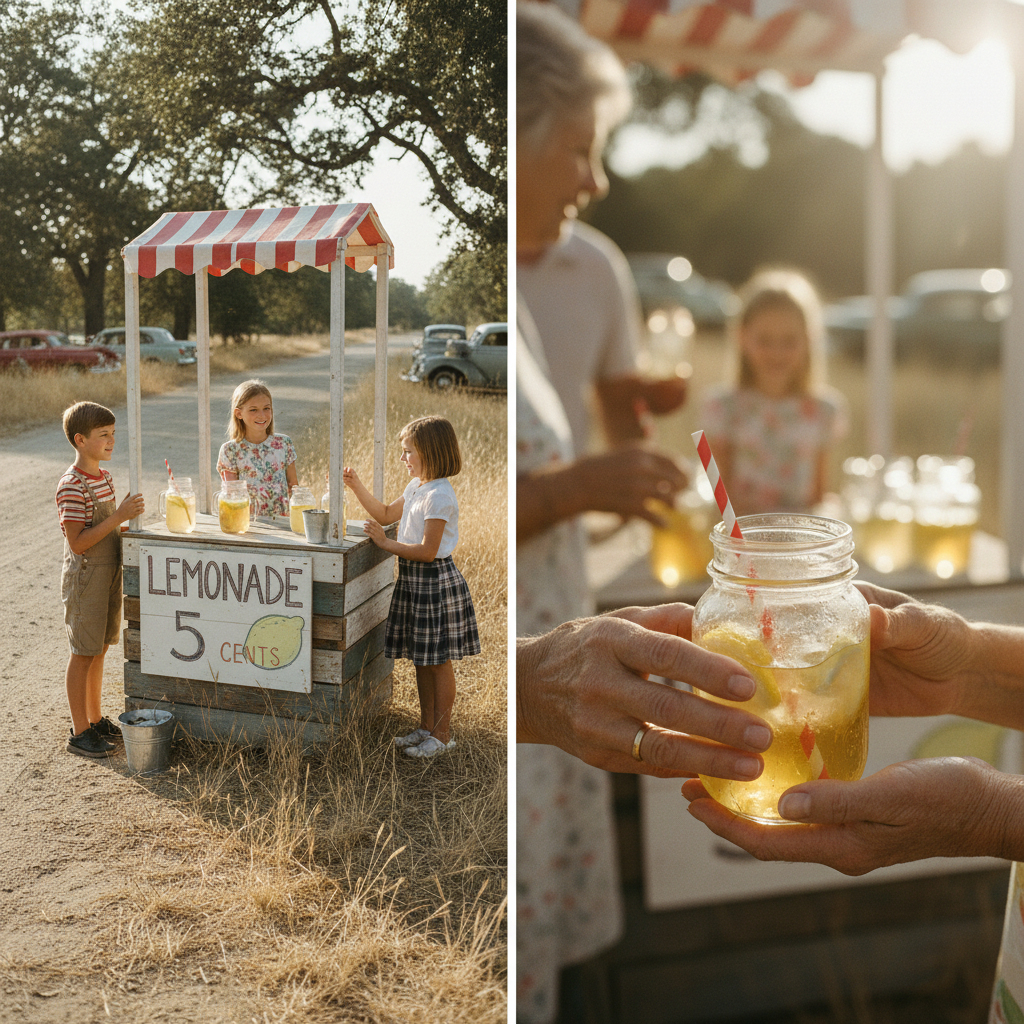
Competition occasionally arose when neighborhood friends set up another table three houses down. This led to hurried consultations about pricing strategies and foot traffic patterns. Yet the rivalry rarely lasted long before both camps pooled their small earnings to buy shared treats. The afternoon ended when the pitcher finally ran dry and the cardboard sign was folded flat.
Streets look different now, largely emptied of unsupervised children running sidewalk ventures with homemade pitchers. Local health codes, busier traffic, and shifting neighborhood routines have made spontaneous curbside setups rare sights. The old card tables have moved into garages, leaving behind the memory of sticky hands and heavy pockets filled with loose change.
Does this bring back memories?
Share this story with someone who would remember.
Relive the Memory
Find Vintage Treasures on eBay
Searching for: vintage retro lemonade stand hot summer
Shop the Memory on eBayAs an eBay Partner, WistMem may earn from qualifying purchases.