Make this page easier to read
Your choices are saved on this device.
Clutching crumpled paper currency at the box office unlocked a sprawling afternoon of newsreels, cartoons, and back-to-back feature films.
"Two complete films, a newsreel, and a cartoon unspooled for the price of a single ticket."
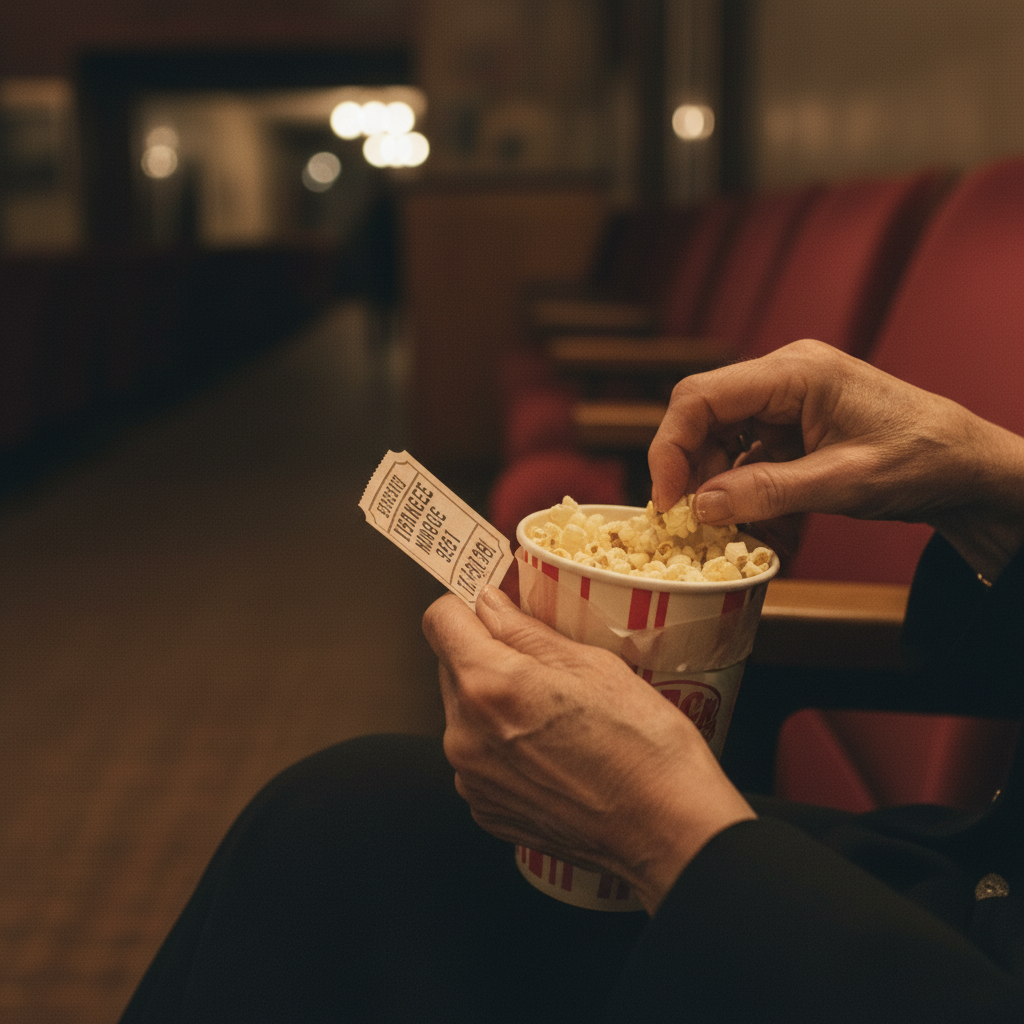
Pushing open heavy felt-lined doors plunged patrons immediately from the afternoon glare into deep velvet shadows. The box office window accepted loose coins in exchange for a cardboard ticket that the usher snapped in half with a quick downward pull. Inside, the floor sloped sharply toward a massive silver screen framed by heavy draperies. A distinct aroma hung in the air, mixing heated butter, sugary soda syrup, and decades of old floor wool.
Before any dramatic feature flickered to life, the house lights dimmed further for the newsreel. Grainy black-and-white footage flickered on screen, showing global events, sports highlights, and weather updates compiled weeks prior. Next came an animated short or a slapstick comedy reel that set off waves of high-pitched giggles from children packed near the front rows. Only after these supporting segments did the title card of the first main feature appear with an orchestral swell.
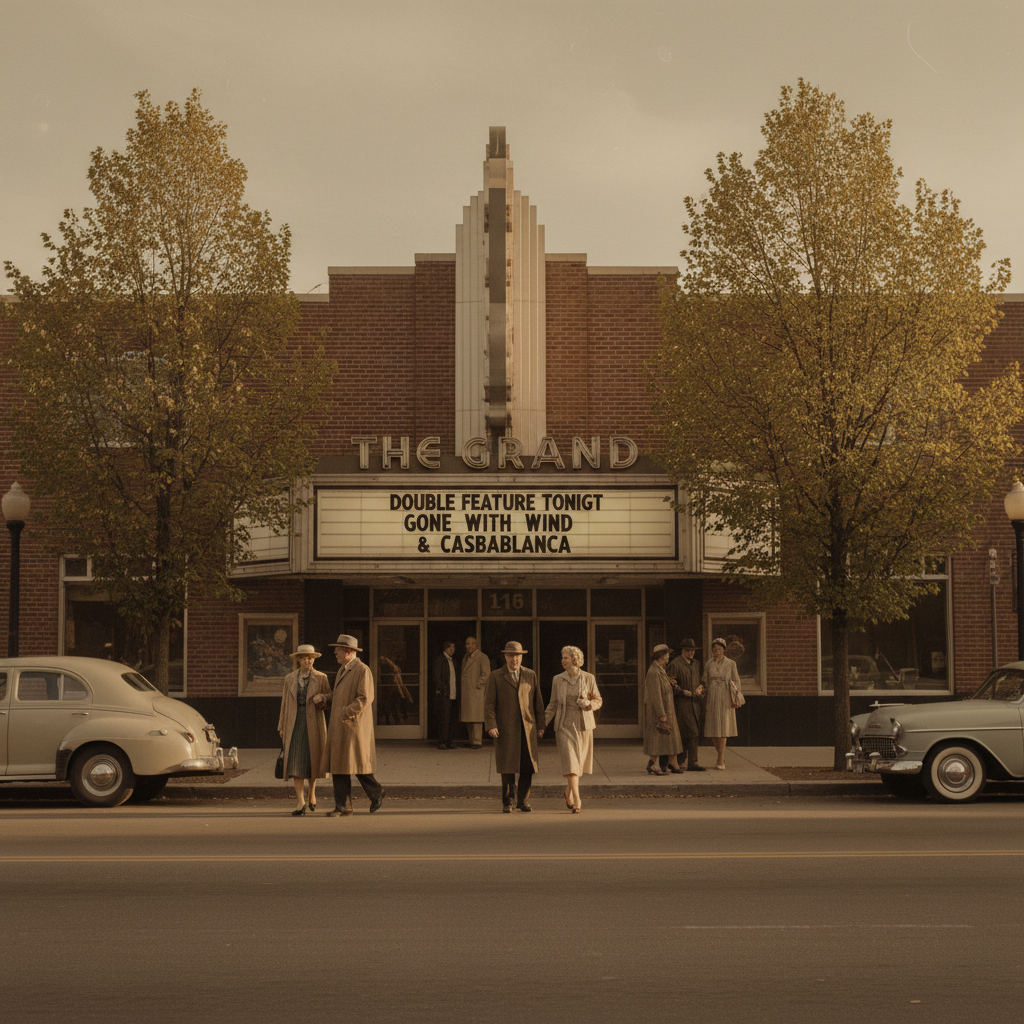
The format relied on a paired bill where an ambitious studio A-picture shared the evening with a lower-budget B-movie. Audiences might watch a gritty western followed by a lighthearted musical, or a tense detective mystery paired with a historical drama. Intermissions arrived midway through the program, allowing the projectionist time to manually swap heavy film reels [1.1.5] while patrons rushed back to the lobby for milk duds or licorice.
Operating under this continuous-run system meant visitors could walk in midway through the first showing and simply stay seated until the narrative loop caught up again. Nobody checked timestamps or forced crowds out between screenings. Parents frequently sent children off with a handful of coins to spend entire Saturdays occupying balcony seats while the outside world kept turning without them.
Economic pressures and shifting studio practices gradually dismantled the multi-feature format during the nineteen-seventies. Rising distribution costs and the expansion of suburban multiplexes favored single-screen turnarounds with tightly scheduled showtimes. Neighborhood independent houses could no longer sustain long programs when television sets in living rooms offered immediate visual entertainment every evening.
Most of those grand local movie palaces have long since been demolished or converted into furniture showrooms and parking lots. The continuous afternoon lineup vanished, replaced by streamlined modern releases that end abruptly before the credits finish rolling. Yet the cadence of that routine remains distinct, rooted in an era when celluloid reels spun endlessly inside a dark, crowded room.
Does this bring back memories?
Share this story with someone who would remember.
Relive the Memory
Find Vintage Treasures on eBay
Searching for: vintage retro double feature neighbourhood
Shop the Memory on eBayAs an eBay Partner, WistMem may earn from qualifying purchases.