Make this page easier to read
Your choices are saved on this device.
Stepping off the escalator meant navigating a sensory landscape of floor wax and perfume before finding the polished calm of the lunch counter.
"The waitress slid over a heavy ceramic mug of coffee without a word, matching the unhurried rhythm of the afternoon."
Navigating the main aisle of a downtown department store meant enduring a gauntlet of synthetic fabrics and hovering cosmetics clerks before reaching the rear of the ground floor. There, tucked away past the notions department or beneath the mezzanine overhang, sat the lunch counter. It operated as a distinct ecosystem within the larger store, governed by its own sounds and smells. A faint haze of grilled onions and toasted butter hung permanently in the air, cutting through the department store scent of new leather and floor wax.
Seating consisted of a neat row of backless stools anchored to the linoleum floor, topped with red or yellow vinyl cushions that swiveled with a slight squeak. Customers climbed up, adjusted their shopping bags around their knees, and waited for attention. The counter itself was usually made of heavy laminate or gleaming formica, bordered by a thick band of polished chrome that reflected the overhead fluorescent lights. Every placement featured a standardized kit: a small metal napkin dispenser filled with interlocked paper squares, a heavy glass sugar pourer with a metal flip-top lid, and a chrome straw holder.
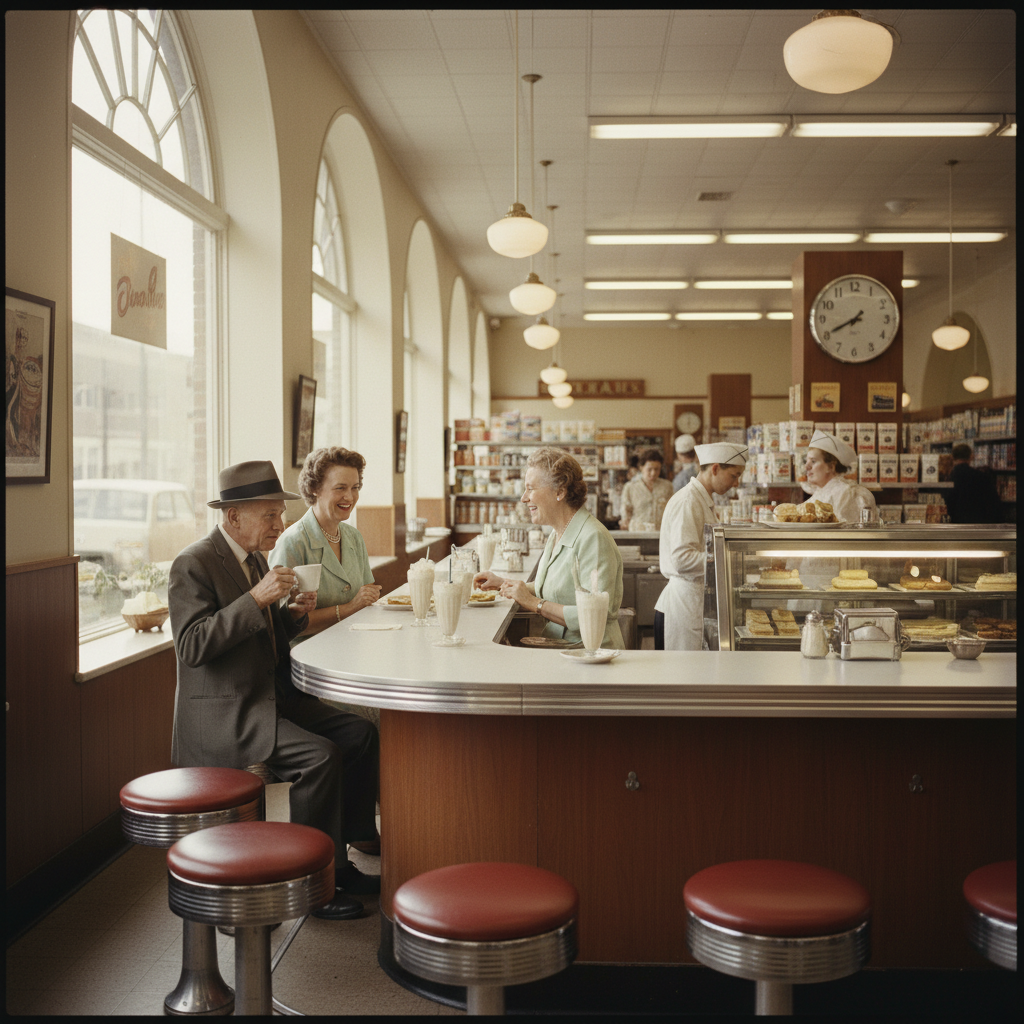
Ordering was straightforward and fast, managed by waitresses in crisp white uniforms who wore small change aprons tied tightly around their waists. They jotted orders down on small paper pads with stubby pencils, holding menus printed on stiff cardboard that listed club sandwiches, grilled cheese, and daily specials like beef pot pie or creamed chipped beef on toast. The kitchen equipment sat right behind the counter in plain view. A flat-top grill sizzled constantly under a weighted press, while a multi-spindle milkshake mixer churned thick blobs of ice cream and syrup into frosted metal cups.
A chocolate malted arrived in a tall, heavy glass accompanied by the metal mixing tin, which always held enough extra foam to fill a second small glass. The ice clinked sharply against the thick walls of the glassware, and drinking required a heavy paper straw that softened if left too long in the rich liquid. For children, a lunch counter visit was the primary incentive for enduring hours of shoe fittings and dress measurements. For adults, it offered a pragmatic pause between errands, a chance to review shopping lists and sort through receipts without returning to the street.
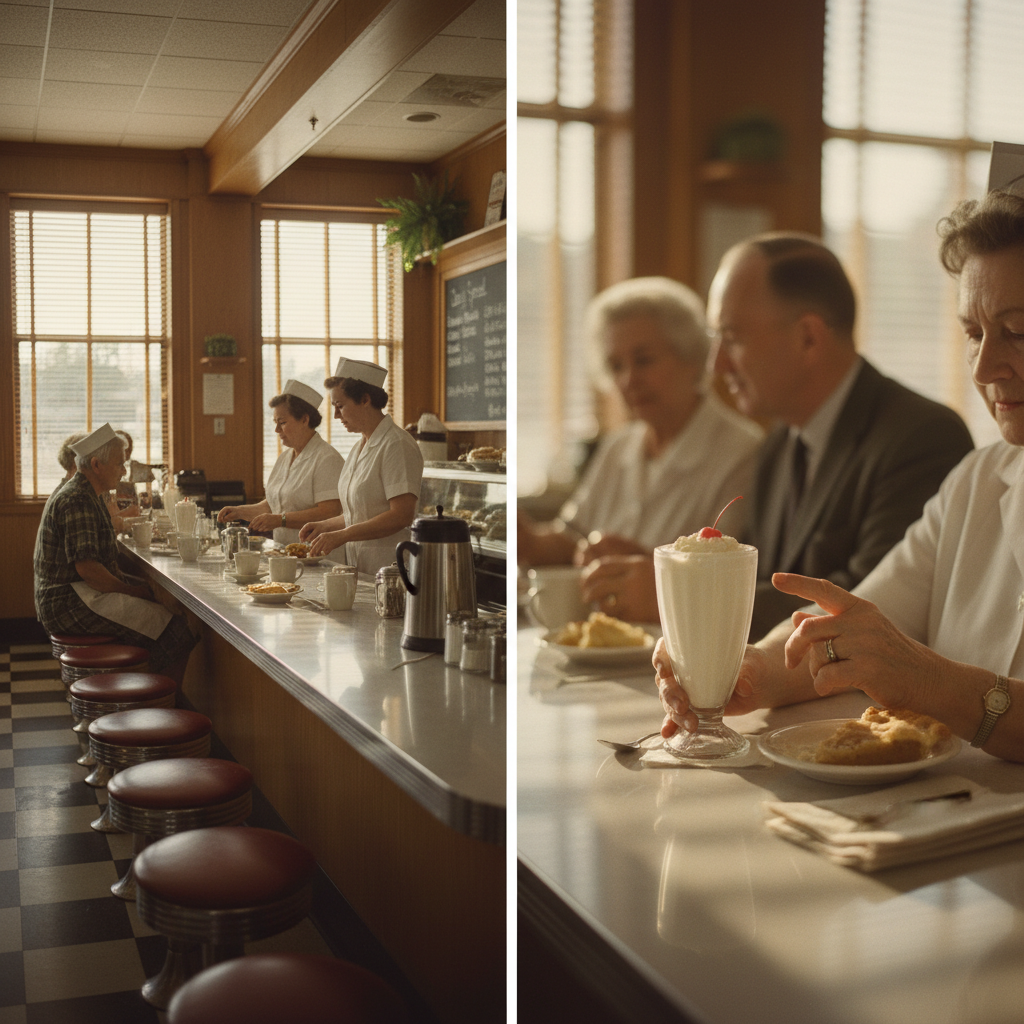
These spaces functioned as reliable social anchors for downtown shoppers and local workers alike. Regulars occupied specific stools at predictable hours, exchanging brief nods with the staff while reading the midday edition of the local paper. Teenagers crowded the corners after school to share french fries and nickel jukebox selections. No one rushed a customer who was nursing a single cup of coffee, and the steady clatter of silverware against stoneware provided a comforting backdrop to conversations about neighborhood news and household purchases.
As downtown retail shifted toward suburban malls and streamlined efficiency during the 1970s and 1980s, the economics of these counters dissolved. Department stores faced rising real estate costs and growing pressure to maximize selling square footage for high-margin goods rather than food service. Management replaced the long counters with self-service snack bars, and eventually removed food operations entirely to make room for expanded cosmetics lines or register banks.
Today, those polished chrome stools and heavy ceramic mugs survive only in regional archives and personal snapshots. The open-floor layout of modern retail leaves little room for a tucked-away sanctuary where a shopper could sit quietly over a grilled cheese sandwich and watch the afternoon drift by.
Does this bring back memories?
Share this story with someone who would remember.
Relive the Memory
Find Vintage Treasures on eBay
Searching for: vintage department store lunch counter
Shop the Memory on eBayAs an eBay Partner, WistMem may earn from qualifying purchases.